CBD for Seniors: What Older Adults in NC Should Know (2026)
This article is for informational purposes only and does not constitute legal, medical, or product advice. Consult a qualified professional for guidance specific to your situation.
Cannabis use among Americans over 65 is rising fast. Past-month cannabis use among US adults aged 65 and older climbed from 4.8% in 2021 to 7.0% in 2023, according to an analysis of 15,689 National Survey on Drug Use and Health respondents published in JAMA Internal Medicine (Han et al., June 2, 2025).
North Carolina sits right in the middle of that trend. The state has roughly 1.8 million residents aged 65 and older, and many of them are walking into a hemp shop for the first time.
This guide is written for them, and for the adult children who get asked about it at Sunday dinner. It covers what the clinical evidence actually supports, which prescription medications deserve a conversation with a doctor first, why "start low and go slow" means something different at 72 than it does at 27, and what to expect the first time you walk into an NC hemp shop.
Past-month cannabis use among adults 65+ rose from 4.8% to 7.0% between 2021 and 2023 (JAMA Internal Medicine, 2025). More than 4 in 10 adults 65+ take five or more prescription medications (JAMA, 2024), and CBD inhibits liver enzymes that process a large share of them, so the medication list conversation comes first. The 2025 AHRQ evidence review found oral CBD alone was not associated with improved pain or function versus placebo, while combination THC and CBD products showed small pain improvements along with a large increase in dizziness and sedation (AHRQ, 2025). Hemp products remain legal to buy in North Carolina today. This is educational information, not medical advice, and nothing here is a substitute for your own physician or pharmacist.
Why More Older Adults Are Trying Hemp
The JAMA Internal Medicine numbers are not a uniform rise. Some of the steepest increases came from higher-income, college-educated, and chronically ill older adults.
Older adults with household incomes of $75,000 or more went from 4.2% to 9.1% in two years. College-educated older adults went from 4.9% to 8.3%. And the single sharpest jump came from older adults living with COPD, whose past-month use more than doubled from 6.4% to 13.5%. Adults managing two or more chronic conditions rose from 3.5% to 8.2% (Han et al., 2025).
What are they using it for? The 2024 National Poll on Healthy Aging surveyed 3,379 adults aged 50 and older and found 21% had used cannabis in the past year. Among users, the most common reasons were relaxation (81%), sleep (68%), enjoyment (64%), pain (63%), and mood (53%) (National Poll on Healthy Aging, 2024).
That same poll found something more important than any usage number: 44% of older adults who used cannabis monthly or more had not discussed it with a health care provider. That is the single riskiest statistic in this entire article, and the rest of this guide is largely about why.
North Carolina Is Aging Fast, and Wake County Fastest
North Carolina is not a bystander in this trend. The state demographer's office reports that roughly one in six North Carolinians, about 1.8 million people, is 65 or older, and that more than 100,000 residents have turned 65 every year since 2012. That population is projected to reach 2.7 million by 2040, and to exceed the state's childhood population by 2031 (NC Office of State Budget and Management, November 2023).
The Triangle is where that curve is steepest. OSBM projects Wake County's 65-and-older population will grow from 145,237 in 2021 to 319,097 in 2041, a 120% increase, larger in absolute terms than Mecklenburg's. Mecklenburg goes from 138,129 to 262,579 (NC OSBM, November 2023).
The practical version: the Triangle's hemp retail market and its older-adult population are growing on the same map at the same time. If you are 68 and curious, you are not an outlier here. You are the demographic the industry is quietly building toward.
What the Research Actually Supports
This is the section most CBD marketing skips. The honest answer is that the evidence is thinner and more mixed than a shelf tag suggests, and it is thinnest of all for people over 65.
The most rigorous source available is the Agency for Healthcare Research and Quality living systematic review on cannabis for chronic pain, whose 2025 update landed in July 2025. Its finding on the product most seniors ask about first is blunt: low THC-to-CBD ratio products, including CBD alone, were not associated with improved pain or function versus placebo, at moderate strength of evidence (AHRQ, 2025).
Products combining THC and CBD in comparable ratios did better, showing a small improvement in pain severity and a slight, below-small improvement in function. They also carried a large increased risk of dizziness and sedation and a moderate increased risk of nausea, and high THC-to-CBD products carried a large increased risk of nausea and dizziness (PubMed abstract). AHRQ also flagged the limitation that matters most here: there is insufficient evidence for older adults specifically.
Topicals are the one area where a senior-relevant signal exists. A 2024 open-label feasibility trial of a 4% CBD gel delivering roughly 30 mg per day for four weeks in hand osteoarthritis found current pain fell by 1.91 points on a 0-to-10 scale (p < 0.0001) and grip strength in the treated hand improved significantly. The cohort skewed older, with 53.3% aged 60 to 69 (Bawa et al., Scientific Reports, 2024). The caveat is real: 15 participants, no placebo arm, and the trial's own hand-function score did not move.
| What people hope for | What the strongest evidence shows | How to read it |
|---|---|---|
| Oral CBD alone for chronic pain | Not associated with improved pain or function vs placebo (moderate evidence) | AHRQ 2025 living review, the most rigorous synthesis available |
| Comparable THC and CBD together for pain | Small improvement in pain severity, slight improvement in function | Comes with a large increased risk of dizziness and sedation, plus more nausea |
| Topical CBD for hand and thumb arthritis | Pain fell 1.91 points on a 0-10 scale in a small open-label trial | 15 participants, no placebo arm, function score unchanged |
| Sleep and relaxation | Most-cited reason for use, but the trial evidence in adults 65+ is thin | Reported benefit is real to users; it is not the same as proven efficacy |
| Anything framed as treating a disease | No hemp product sold in an NC shop is FDA-approved to treat anything | Epidiolex, a prescription drug for certain seizure disorders, is the only FDA-approved drug made from plant-derived CBD |
None of that means people are imagining what they feel. It means the published trial evidence has not caught up to the enthusiasm, and that a 74-year-old is entitled to know that before spending $60 on a tincture. If you want the deeper dives, we have separate guides on CBD for pain relief, hemp products and sleep, and CBD and THC for anxiety.
The Medication Conversation Has to Come First
Here is the part that separates a 70-year-old shopper from a 30-year-old shopper, and it is not subtle.
More than 4 in 10 adults aged 65 and older take five or more prescription medications, nearly double the roughly 24% who did in 1999-2000 (JAMA, July 2024). CBD is a meaningful inhibitor of the cytochrome P450 enzyme families that clear a very large share of those drugs. The CYP3A and CYP2C families alone are implicated in the metabolism of roughly 30% and 25% of medications respectively (Brown and Winterstein, Journal of Clinical Medicine, 2019).
Slow down the enzyme and you raise the blood level of the drug it was supposed to clear. For most medications that is a shrug. For a drug with a narrow therapeutic window, it is the whole ballgame.
The warfarin literature illustrates why dose matters more than the yes-or-no framing. A 2022 case report followed an 85-year-old man on a stable 22.5 mg weekly warfarin dose who used an oromucosal medical cannabis product delivering roughly 5.3 to 5.9 mg of CBD daily for nearly a year. His INR stayed stable and his warfarin dose never changed. The same paper catalogued five prior published cases where INR did rise, and those involved substantially larger exposures, including one patient on prescription CBD titrated up to 35 mg/kg per day (Thomas et al., Journal of Cannabis Research, 2022).
The takeaway is not "CBD and warfarin never mix." It is that the amount you take is the variable, that nobody can tell you your number from behind a retail counter, and that your prescriber can. If you take a blood thinner, a seizure medication, an immunosuppressant, or anything your doctor monitors with regular blood work, that conversation is not optional. Our CBD oil guide covers the interaction question in more detail.
There is a liver signal worth knowing about on its own terms, too. An FDA-led randomized trial gave 5 mg/kg of CBD per day, roughly 400 mg for an average adult, to 151 healthy participants for 28 days. Eight of them (5.6%) developed liver enzyme elevations more than three times the upper limit of normal, versus zero in the 50-person placebo group, and seven met criteria for potential drug-induced liver injury. Almost none had symptoms, and enzymes returned to normal within one to two weeks of stopping (Florian et al., JAMA Internal Medicine, July 7, 2025). That dose is higher than a typical single-dropper serving, but the FDA researchers chose it because some consumers take that much, and "asymptomatic" is exactly the word that should make an older adult on multiple medications talk to a doctor rather than self-monitor.
Start Low and Go Slow, and Mean It
"Start low and go slow" is repeated so often in cannabis retail that it has lost its meaning. For older adults it has a specific one.
Aging changes how the body handles almost every compound. Liver and kidney clearance slow. Body composition shifts toward fat, which matters because THC and CBD are fat-soluble and can linger longer. Baseline blood pressure regulation gets less forgiving, so the mild orthostatic drop that a 30-year-old shrugs off can become a stumble at 75. Add the polypharmacy picture above and the margin for error narrows considerably.
Three rules that follow from that:
Pick a format you can measure. A tincture with a graduated dropper or a gummy you can cut in half gives you control that a shared vape pen or a piece of flower never will. Precision matters more than potency.
Change one thing at a time. If you start a hemp product the same week you start a new blood pressure prescription, you will have no idea which one caused whatever happens next. Give any new product a week on its own.
Write it down. Date, product, milligrams, time of day, and what you noticed. A written log turns three weeks of guessing into something you can actually hand your doctor.
Timing deserves its own note. Take a first dose in the evening rather than the morning, after you are done driving for the day and when a few hours of drowsiness would cost you nothing. Take it with food if the product is an edible or a capsule, because fat improves absorption and, more usefully, makes the onset more predictable than an empty stomach does. And avoid alcohol on the same evening. Both are sedating, the combination is more sedating than either alone, and unsteadiness is the outcome that matters most here.
It also helps to tell one other person. Not because anything dramatic is likely, but because a spouse, a neighbor, or an adult child who knows you tried something new tonight is a meaningful safety margin that costs nothing. Older adults who live alone should be especially deliberate about a first dose: phone within reach, lights on, nothing on the stove.
Below is a conservative starting framework used widely in hemp retail for adults new to these products. It is a general education aid, not a prescription, and it assumes you have already cleared the medication question with your prescriber.
| Step | Typical amount | Wait before adjusting | What you are watching for |
|---|---|---|---|
| Step 1, CBD only | 5 to 10 mg once daily, evening | 5 to 7 days | Drowsiness, appetite change, any interaction with existing medications |
| Step 2, CBD only | Same amount twice daily if step 1 was uneventful | 5 to 7 days | Whether the effect you wanted appears at all |
| Step 3, first THC exposure | 1 to 2.5 mg total THC, evening, at home, nothing else new | Full 24 hours, then 3 to 4 days | Dizziness, unsteadiness, racing heart, disorientation |
| Step 4, adjust | Increase by no more than 1 to 2.5 mg THC at a time | 3 to 4 days per change | Whether benefit grows faster than side effects |
| Stop point | Any dizziness, confusion, chest symptoms, or a fall | Stop and call your doctor | Do not push through it |
Edibles are where first-timers of every age get into trouble, because onset can take two hours and the temptation to take more at the 90-minute mark is enormous. Our edibles guide and the tinctures versus edibles comparison both walk through the onset timing in detail.
Which Product Formats Actually Suit Older Adults
Not every format is equally friendly to someone with arthritis in their hands, a sensitive stomach, or a pulmonologist.
Three physical realities do most of the sorting. The first is dexterity. A dropper cap and a childproof jar are harder to manage with arthritic hands than a foil blister pack, and a product you cannot open without help is a product you will use inconsistently. The second is eyesight. Milligram counts are printed small, and the difference between a 2.5 mg piece and a 25 mg piece is one digit. It is entirely reasonable to photograph a label with a phone and zoom in at the counter rather than squint at it. The third is lung health. Inhaled products act fastest and are the easiest to titrate by feel, which is exactly why they appeal to beginners, but they are a poor fit for anyone managing COPD, asthma, or heart disease.
With those in mind, here is how the common formats compare.
| Format | Onset | Dose control | Practical notes for older adults |
|---|---|---|---|
| Tinctures | 15 to 45 minutes | Excellent, graduated dropper | Easiest to titrate in small steps. Look for a large-print label and a dropper you can read. |
| Topicals and balms | Localized, 30 to 60 minutes | Good, apply to the area | The only category with a senior-skewing clinical trial behind it. No intoxication at typical use. |
| Low-dose gummies | 30 to 90 minutes | Good if scored, poor if not | Buy 2.5 to 5 mg pieces, not 25 mg. Check sugar content if you manage diabetes. |
| Capsules | 30 to 90 minutes | Excellent, fixed dose | Fits an existing pill routine, but you cannot take a partial dose. |
| Beverages | 15 to 45 minutes | Fair, per can | Convenient and social. Watch total volume if you manage fluid intake. |
| Vapes | 2 to 10 minutes | Poor for beginners | Fastest feedback, but inhalation is a bad fit for anyone with COPD, asthma, or heart disease. |
| Flower | 2 to 10 minutes | Poor | Requires combustion and dexterity. Least suitable starting point for most older adults. |
For most people over 65 starting from zero, a low-milligram tincture or a topical is the sensible entry point, and a 2.5 mg gummy is a reasonable third. Our guides on tinctures, CBD oil, and vapes cover each in depth.
One more thing to check before you buy anything: the label may be wrong. An analysis of 202 commercially available CBD products found that 74% deviated from their labeled CBD content by more than 10%, and 26% did not match the product type they claimed to be, with one product containing 565% of its stated CBD (Gidal et al., Frontiers in Pharmacology, 2024). A current certificate of analysis is the only thing that closes that gap. Our walkthrough on how to read a COA takes about five minutes and is the highest-value thing an older shopper can learn.
Side Effects, Falls, and What the Emergency Room Data Shows
The risk older adults most need to hear about is not addiction. It is falling.
Researchers at UC San Diego examined cannabis-related emergency department visits among California adults aged 65 and older and found they rose from 366 visits in 2005 to 12,167 in 2019, and the visit rate climbed from 20.7 to 395.0 per 100,000 ED visits, an increase of about 1,800% (Han et al., Journal of the American Geriatrics Society, January 9, 2023).
Part of that curve is simply more people using cannabis. But the study's authors pointed to specific vulnerabilities: cannabis can impair reaction time and attention in ways that lead to injuries and falls, it raises the risk of confusion and paranoia, and it can interact with prescription medications and aggravate cardiovascular and pulmonary conditions.
Sedation is the mechanism to respect. In the controlled trials behind Epidiolex, the one FDA-approved prescription CBD medicine, the incidence of somnolence and sedation including lethargy was 32% among treated patients versus 11% on placebo (in trials of mostly children and young adults with epilepsy, at doses far above retail), it was dose-related, and it caused 3% of patients on the higher dose to discontinue treatment. The label instructs patients not to drive or operate machinery until they have gained sufficient experience with the drug (FDA prescribing information, 2025). Those are prescription doses far above retail, but the instruction applies just as sensibly to a hemp gummy.
Practical guardrails: take a first dose at home in the evening, with someone aware of it. Do not drive that night. Stand up slowly for the first few hours. Clear the path to the bathroom. And if you feel unsteady, sit down rather than walking it off.
Shopping an NC Dispensary Without Feeling Out of Place
North Carolina's hemp shops are retail stores, not clinics and not head shops from 1974. Most Triangle shops are bright, orderly, and staffed by people who spend a lot of their day explaining basics.
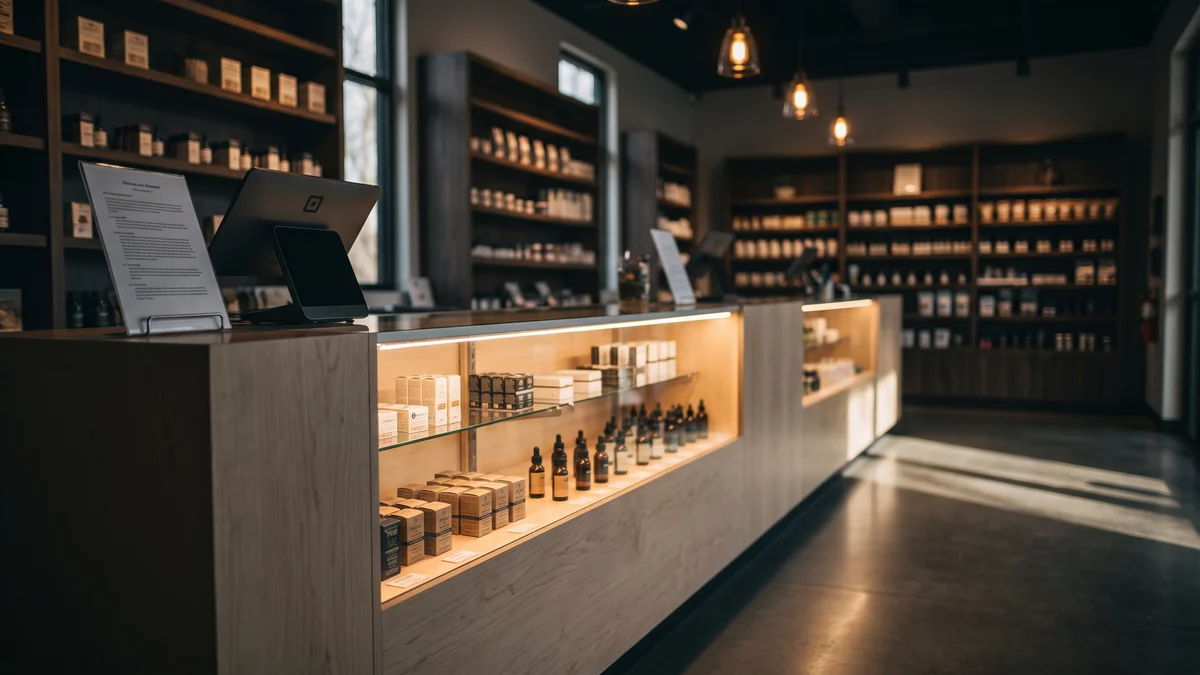
What to expect and what to bring:
Bring your ID. Nearly every Triangle shop cards at 21 as store policy regardless of what state law currently requires. Bring a driver's license or passport even if you are obviously past the age.
Bring your medication list. Not for the staff to interpret, but because writing it out beforehand forces you to have the doctor conversation first.
Say it is your first time. Good budtenders change their entire approach when they hear this. It is the fastest way to avoid being sold something too strong.
Ask for the COA. Ask to see the certificate of analysis for the specific product and check that the batch number on the label matches the one on the report. A shop that cannot produce it is telling you something.
Ask for the lowest-dose option in the category. Say the words "what is the lowest milligram version you carry." That single question prevents most first-visit mistakes.
Buy one thing. Not a starter bundle. One product, small size, and come back in two weeks.
If walking into a store feels like a lot, hemp delivery in the Triangle is an option, though it removes the chance to ask questions in person. Our guides on what to expect at your first dispensary visit and what to look for in an NC dispensary go deeper, and you can browse shops by town in our Triangle dispensary directory or start with the Raleigh guide.
What North Carolina Law Says Right Now
Hemp-derived products remain legal to buy in North Carolina today. There is no medical card, no registry, and no doctor's note involved, and the state sets no minimum age. Marijuana itself remains illegal in the state.
That said, the legal picture is genuinely in motion, and an older adult planning around a product they like should know the calendar. At the state level, the HB 328 hemp bill is waiting on the House:
North Carolina status, October 10, 2026: HB 328, the state hemp crackdown, passed the Senate in July but still awaits a House vote, which can come in the reconvened sessions between October 26 and December 18. Today North Carolina sets no minimum age for hemp products, though many shops card at 21. Details in our NC hemp bill tracker.
Federally, P.L. 119-37 rewrites the definition of hemp, and the date that matters for nearly every product on the shelf is December 11, 2026:
Update, October 10, 2026: The federal hemp deadline referenced below has shifted. H.R. 6500 became Public Law 119-103 on September 2, 2026, and its Section 2019 delays most of the new hemp definition, including the 0.4mg per container THC cap and the total-THC test that counts THCa, to December 11, 2026. A narrow piece covering cannabinoids the plant cannot naturally produce still begins November 12, 2026. Still current as of this update. Track it in our NC hemp bill tracker.
| What it is | Where it stands | What it would change |
|---|---|---|
| NC hemp products today | Legal to buy, no card required | Nothing yet |
| NC marijuana | Illegal | No medical program exists |
| HB 328 (state) | Passed the Senate in July 2026; awaits a House vote | Would make 21 the legal purchase age and add a total-THC standard |
| P.L. 119-37 (federal) | Enacted; a narrow piece applies November 12, 2026, everything else December 11, 2026 | Redefines hemp, adds a 0.4 mg per container THC cap |
We track every bill and every date in the 2026 NC hemp bill tracker, and the consumer-side implications in our P.L. 119-37 guide and is weed legal in NC.
Frequently Asked Questions
Is CBD safe for seniors?
There is no blanket answer, and the honest one depends on your medication list more than your age. CBD inhibits liver enzymes that clear a large share of common prescriptions, and more than 4 in 10 adults 65 and older take five or more of them (JAMA, 2024). For an older adult on no medications, low-dose CBD is generally well tolerated. For someone on a blood thinner, a seizure medication, or anything monitored with regular blood work, the answer requires a prescriber. Sedation and fall risk are the practical concerns to plan around.
What is the best CBD product for an older adult starting out?
For most people, a tincture with a graduated dropper or a topical balm. Tinctures let you measure 5 mg accurately and adjust in small steps, and topicals are the one category with a clinical trial in a mostly-60s cohort behind them (Scientific Reports, 2024). Skip vapes and flower at the start, especially with any lung or heart condition, and skip 25 mg gummies entirely.
What medications should not be taken with CBD?
This is a doctor question, not an internet question, but the categories that come up most are blood thinners such as warfarin and clopidogrel, benzodiazepines and prescription sleep aids, statins, some blood pressure medications, antidepressants, antiepileptics, and proton pump inhibitors (Journal of Clinical Medicine, 2019). Published case reports show the effect is dose-dependent, meaning a small daily amount and a large one are not the same question.
What are the side effects of CBD in older adults?
The ones reported most often in clinical trials of prescription CBD are somnolence, decreased appetite, diarrhea, transaminase (liver enzyme) elevations, and fatigue (FDA prescribing information, 2025). Drowsiness matters more with age because it compounds fall risk. If a product makes you unsteady, that is a stop signal, not something to push through.
Do I need a medical card to buy hemp products in North Carolina?
No. North Carolina has no medical marijuana program and no patient registry. Hemp-derived products are sold in ordinary retail shops, and many Triangle stores card at 21 as store policy. See our guide to medical cards and THCa in NC for the full explanation.
Will a hemp product make me high?
CBD-only products are not intoxicating. Products containing THC, including delta-8, delta-9, and THCa, are. If you do not want any intoxication, ask specifically for a CBD isolate or broad-spectrum product and verify it on the certificate of analysis rather than trusting the front label, since 26% of tested products did not match their claimed type (Frontiers in Pharmacology, 2024).
Should I tell my doctor I am using hemp products?
Yes, and many older adults do not. The 2024 National Poll on Healthy Aging found 44% of adults 50 and older who used cannabis monthly or more had not discussed it with a health care provider (National Poll on Healthy Aging, 2024). Doctors need it on the list for the same reason they need your supplements: it changes how other things behave.
The Bottom Line
Cannabis use among older adults is rising fast, and North Carolina, with 1.8 million residents over 65 and a Wake County population projected to more than double by 2041, is squarely in that wave.
The right posture is neither dismissal nor enthusiasm. It is care. Clear the medication list with your doctor first. Pick a format you can measure. Start at a dose that seems almost pointlessly small. Verify the label against a certificate of analysis. Write down what happens. And treat unsteadiness as a stop sign rather than a phase to get through.
Here are those same steps as a single checklist:
Nothing in this article is medical advice, and no hemp product sold in North Carolina is approved to treat any condition. Talk to your physician or pharmacist before adding anything new, particularly if you take prescription medications.
These statements have not been evaluated by the Food and Drug Administration. Hemp products are not intended to diagnose, treat, cure, or prevent any disease. Nothing on this site is medical advice; talk to a clinician.