Do You Need a Medical Card to Buy THCa in North Carolina?
This article is for informational purposes only and does not constitute legal, medical, or product advice. Consult a qualified professional for guidance specific to your situation.
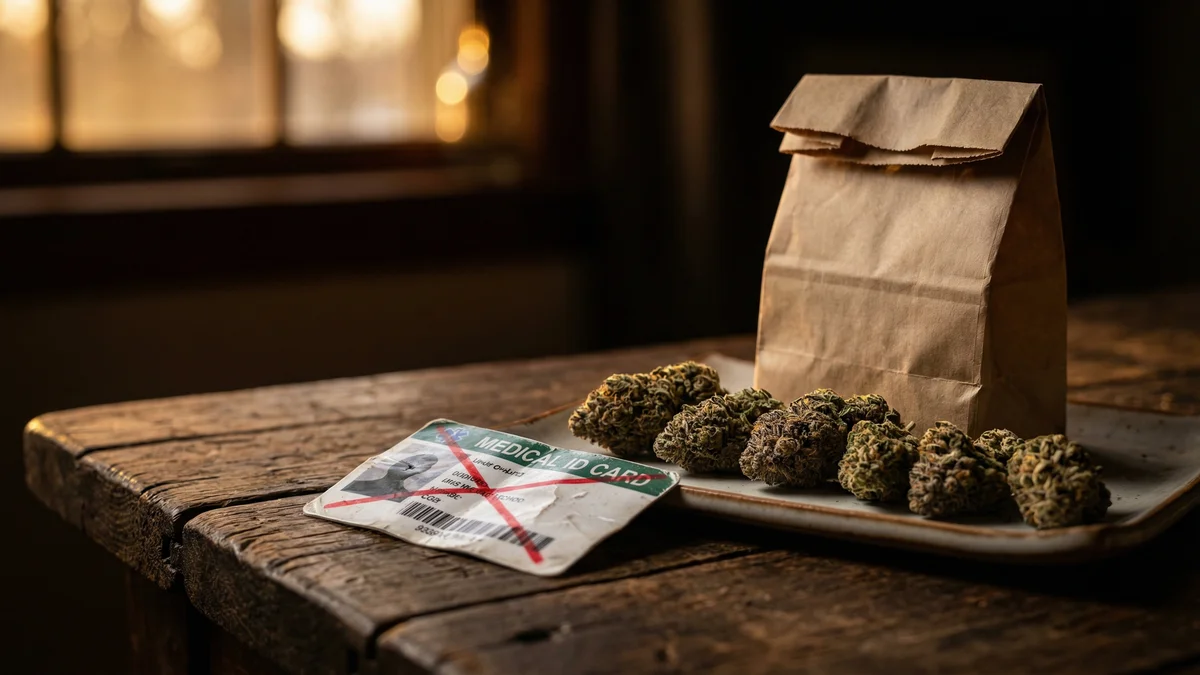
No. You do not need a medical card, prescription, doctor's recommendation, or any special authorization to buy THCa products in North Carolina. There's no medical marijuana program in NC to get a card from in the first place.
THCa is sold as a legal hemp product at dispensaries across the Triangle. You can walk in, browse the selection, and buy it, same as you'd buy CBD oil or any other hemp product. Here's why.
Federal update: A federal final order announced April 23, 2026 (effective April 28) moved state-licensed medical marijuana to Schedule III, but the order does not apply to NC because NC has no state medical marijuana program. See what changed for medical marijuana federally and what stays the same for NC consumers.
NC has no medical marijuana program, so there are no medical cards to get. THCa products are legal hemp under the 2018 Farm Bill and NC SB 455 because the hemp definition counts only Delta-9 THC, not THCa. No age requirement exists in state law (21+ is voluntary retailer policy). This changes on December 11, 2026 when P.L. 119-37 switches to total THC testing under Section 2019 of P.L. 119-103 (enrolled text), which would effectively ban THCa flower federally; NC's pending HB 328 would do the same under state law from November 12 if the House adopts it. NC's hemp industry supports nearly 9,000 jobs and up to $1.1 billion in sales (Port City Daily, citing Whitney Economics, 2025).
Update, October 10, 2026: The federal deadline discussed on this page has moved, and the move is now law. H.R. 6500 became Public Law 119-103 on September 2, 2026. Its Section 2019 keeps only the narrowest piece of the new hemp definition on November 12, 2026, covering cannabinoids the plant cannot naturally make, and delays the rest to December 11, 2026, including the 0.4mg total THC per container cap that reaches most finished products (Section 2019, enrolled text). For nearly everything sold at a Triangle hemp shop, delta-8 included, December 11, 2026 is the date that matters. Nothing has changed it since September, but it falls on the same day federal funding runs out, so watch the next funding bill. See our NC hemp bill tracker for current status, and our December 11 report for how many Triangle shops sell what it reaches.
North Carolina status, October 10, 2026: HB 328, the state hemp crackdown, passed the Senate in July but still awaits a House vote, which can come in the reconvened sessions between October 26 and December 18. Today North Carolina sets no minimum age for hemp products, though many shops card at 21. Details in our NC hemp bill tracker.
Why No Medical Card Is Needed
Two reasons, both simple:
1. NC doesn't have a medical marijuana program. The Compassionate Care Act passed the NC Senate as SB 711 (36-7, June 2022) and as SB 3 (36-10, March 2023) but died in the House both times and was never enacted. As of October 2026, there is no medical cannabis licensing system, no patient registry, and no medical card to apply for.
2. THCa is classified as legal hemp, not marijuana. Under the 2018 Farm Bill and NC Session Law 2022-32 (SB 455), hemp is Cannabis sativa L. with no more than 0.3% Delta-9 THC by dry weight. The critical detail: NC's definition counts only Delta-9 THC. THCa is a different molecule (it has an extra carboxyl group), so it's not counted toward that 0.3% limit.
That means THCa flower with 25% THCa and 0.15% Delta-9 THC is legal hemp, even though smoking it produces effects indistinguishable from marijuana.
What Exactly Is THCa?
THCa (tetrahydrocannabinolic acid) is the raw, non-psychoactive precursor to Delta-9 THC found in all cannabis plants. When you apply heat, smoking, vaping, or cooking, a process called decarboxylation converts THCa into Delta-9 THC, producing psychoactive effects identical to marijuana. A single gram of 25% THCa flower yields roughly 219mg of active THC when smoked.
This is why THCa flower is the most popular product at Triangle dispensaries, and the biggest gray area in hemp law. For a deep dive into the chemistry, strains, dosing, storage, and pricing, see our THCa Flower Guide. For the full legal analysis, read Is THCa Legal in North Carolina?
THCa Flower: What You're Actually Buying
THCa flower is the product category that drives this entire conversation. It looks, smells, and, when smoked, feels like marijuana. The NC State Bureau of Investigation has warned that hemp and marijuana look the same and have the same odor.
Here's what typical THCa flower looks like on paper:
- THCa content: 20-30% (comparable to mid-to-high-grade marijuana)
- Delta-9 THC content: 0.1-0.3% (under the legal limit in raw form)
- Total THC when smoked: 175-264mg per gram (after decarboxylation)
- Effects: Equivalent to marijuana when heated
The practical takeaway: THCa flower delivers marijuana-strength effects through a product classified as legal hemp. No card, no prescription, no qualifying condition required. You walk into a dispensary and buy it.
What About Age Requirements?
Here's something that surprises most people: North Carolina has no state law setting a minimum age to buy THCa or any hemp-derived product. Governor Stein confirmed this as a core issue in June 2025, stating that "today all across North Carolina, there are unregulated intoxicating THC products available for purchase: just walk into any vape shop" (Governor's Office, 2025).
The 21+ age check you encounter at reputable dispensaries is voluntary store policy, not state law. It's actually one of the clearest signals that you're buying from a responsible retailer.
Two pending bills would change this. The HB 328 conference report, adopted by the Senate 37-6 on July 2, 2026, would make sale to or possession by anyone under 21 a Class 2 misdemeanor, and SB 328 would do the same; both can still pass in the reconvened sessions that end December 18, 2026 (NC General Assembly). An earlier licensing bill, House Bill 607, would have added a 21+ requirement with ALE enforcement, edible caps of 25mg per serving (10mg per serving and 100mg per package for drinks), and COA requirements, but it never left committee and cannot move this year (NC General Assembly).
How NC Compares to States with Medical Programs
In states like Florida, Maryland, or Ohio, buying cannabis products requires:
- A qualifying medical condition (chronic pain, PTSD, cancer, etc.)
- A doctor's recommendation or certification
- A state-issued medical card ($50-$300+ per year in fees)
- Purchasing only from state-licensed dispensaries
- Possession limits and renewal requirements
In North Carolina, buying THCa requires:
- Walking into a dispensary
- That's it
This is because NC classifies THCa as hemp, not as medical cannabis. There's no medical program to opt into, no conditions to qualify for, and no cards to carry. The product sits on the shelf next to CBD tinctures and Delta-8 vapes.
The irony is that some consumers in medical-card states face more restrictions buying THCa than NC consumers do, because those states regulate all THC-containing products, including hemp-derived ones.
Why COAs Matter More Without Medical Oversight
Without a state medical program overseeing production and testing, the burden of quality assurance falls on consumers and retailers. This is where Certificates of Analysis (COAs) become essential.
A proper COA from a third-party accredited lab should show:
- Cannabinoid potency: Confirms the THCa percentage and verifies Delta-9 THC is under 0.3%
- Pesticide screening: Detects harmful chemicals used during cultivation
- Heavy metals testing: Checks for lead, arsenic, mercury, and cadmium
- Microbial analysis: Tests for mold, bacteria, and yeast
- Residual solvents: Relevant for concentrates and extracts
- Mycotoxin testing: Screens for toxic fungal compounds
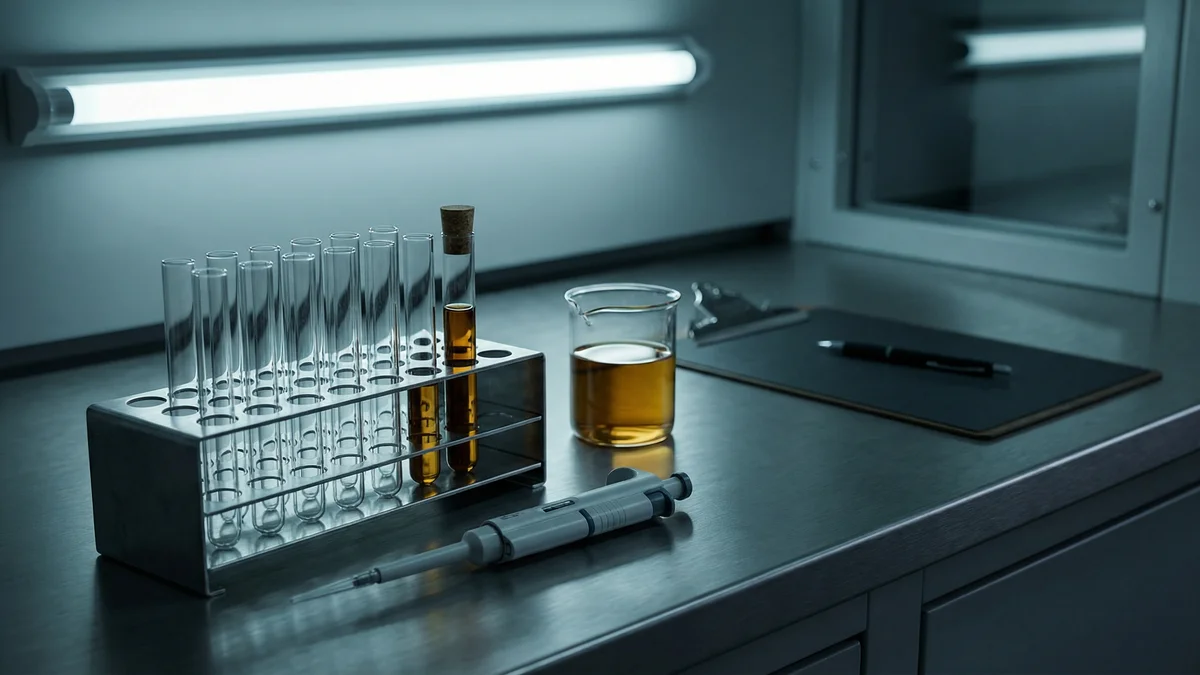
If a dispensary can't show you a COA for a THCa product, don't buy it. That test is the only thing standing between you and an untested product in an unregulated market.
The FDA received 104 adverse event reports involving Delta-8 THC products from December 2020 through February 2022, and 55% required intervention, such as evaluation by emergency medical services, or hospital admission (FDA, 2022). By its later count, FDA received over 300 reports from January 2021 through December 2023, and nearly half involved hospitalization or emergency department visits (FDA, 2024). While those numbers are specific to Delta-8, they illustrate the risks of consuming unregulated cannabinoid products without proper testing.
For a detailed walkthrough of lab reports, see our guide on how to read a Certificate of Analysis.
The December 11, 2026 Deadline
The federal Continuing Resolution (P.L. 119-37), signed November 12, 2025, changes everything for THCa. Its hemp rewrite takes full effect December 11, 2026, after Section 2019 of P.L. 119-103 held most of it back from November 12 (enrolled text). The new law measures total THC, including THCa, Delta-8, Delta-9, and all other THC variants, instead of Delta-9 alone. The limits: 0.3% total THC by dry weight and 0.4mg per finished container (Perkins Coie, 2025).
For THCa flower, the math is devastating. A gram of 25% THCa flower contains approximately 219mg of total THC (after applying the 0.877 conversion factor). The new federal cap is 0.4mg per container. That's 547 times over the limit.
UNC School of Government professor Phil Dixon noted in January 2026 that NC state law hasn't changed and hemp products "remain legal as a matter of state law." But once the federal ban kicks in, state-federal conflict creates real enforcement uncertainty (UNC SOG, 2026).
Drug Testing: A Critical Warning
Standard drug tests cannot distinguish between THCa-derived THC and marijuana-derived THC. When you smoke THCa flower, your body metabolizes it into THC-COOH, the same metabolite produced by marijuana. Standard immunoassay tests detect this at a cutoff of 50 ng/mL.
Detection windows in urine depend on how often you use, according to a 2017 Mayo Clinic Proceedings review (Moeller et al.):
- Single use: about 3 days
- Moderate (about 4 times/week): 5-7 days
- Daily: 10-15 days
- Long-term heavy use: more than 30 days
If your employer drug tests, using legal THCa products creates the exact same risk as using marijuana. There is no commercially available test that can tell the difference. This applies to Delta-8, Delta-9 gummies, and any other THC-containing hemp product.
Where to Buy THCa in the Triangle
The Triangle has a strong network of dispensaries stocking lab-tested THCa flower and products.
In Raleigh: Sherlocks Glass & Dispensary (4.9 stars, 880+ reviews) on Hillsborough Street is known for premium THCa flower and live hash rosin. Modern Apotheca offers free delivery. Browse all Raleigh dispensaries.
In Durham: Sherlocks Glass & Dispensary Durham carries THCa flower alongside its glass gallery, and Oak City Hemp stocks THCa flower and offers delivery. See all Durham dispensaries.
In Wake Forest: Sherlocks Glass & Dispensary carries the widest product range downtown, while Trek CBD and The Hemp Company cover other corners of town. See our Wake Forest dispensary guide for all 5 shops.
In Apex & Holly Springs: Hemp Generation leads on product range and reviews, and Trek CBD runs locations in both towns with a CBD-forward wellness focus. See our Apex & Holly Springs dispensary guide for all 4 shops.
Across the Triangle: Use our full dispensary directory to find THCa flower near you, filtered by city, product type, or features like delivery.
Frequently Asked Questions
Does North Carolina have medical marijuana?
No. The Compassionate Care Act passed the NC Senate as SB 711 in 2022 and as SB 3 in 2023 but died in the House both times. As of October 2026, NC has no medical marijuana program, no patient cards, and no qualifying conditions list. Its only carve-out lets people with intractable epilepsy possess hemp extract with less than 0.9% THC and at least 5% CBD (G.S. 90-94.1). Governor Stein's Advisory Council on Cannabis issued an interim report in April 2026 in which its co-chairs recommend an adult-use market with protections for medical consumers, but no legislation has been enacted.
Is THCa legal in North Carolina?
Yes. THCa products are legal hemp under the 2018 Farm Bill and NC Session Law 2022-32 (SB 455). NC's hemp definition counts only Delta-9 THC, and THCa is not Delta-9 THC until it's heated. For the full legal breakdown, see our guide on THCa legality in NC.
Will THCa get me high?
In raw form, no, THCa is non-psychoactive. But when heated (smoking, vaping, cooking), THCa converts to Delta-9 THC through decarboxylation and produces psychoactive effects equivalent to marijuana. THCa flower with 25% THCa will produce effects comparable to mid-to-high-grade marijuana when smoked.
How old do you have to be to buy THCa in NC?
There is currently no state law setting a minimum age. The 21+ policy at reputable dispensaries is voluntary. The HB 328 conference report and SB 328 would both make 21 the legal age; either could still pass in the reconvened sessions before December 18, 2026. In the meantime, a store checking your ID is a sign you're buying from a responsible retailer.
Can I grow my own THCa hemp in North Carolina?
Growing hemp in NC requires a USDA hemp producer license; North Carolina's state pilot program ended December 31, 2021, and the NC Department of Agriculture no longer licenses growers (NCDA&CS). Personal cultivation of hemp is not permitted without a license. This is different from some states that allow personal cultivation. Possession of a cannabis plant exceeding 0.3% Delta-9 THC would be classified as marijuana cultivation, which is a felony in NC.
Is THCa the same as THC?
THCa (tetrahydrocannabinolic acid) is the chemical precursor to THC. They're closely related but not identical. THCa has an extra carboxyl group that prevents it from binding to CB1 receptors, so it's non-psychoactive in raw form. Heat removes that group (decarboxylation), converting THCa to Delta-9 THC at a ratio of 0.877. The legal distinction matters: THCa is not counted under NC's current Delta-9-only definition, which is why hemp flower can legally contain high THCa while staying under the 0.3% Delta-9 limit.
The Bottom Line
You don't need a medical card to buy THCa in North Carolina, because there's no medical program and THCa is classified as legal hemp. No prescription, no qualifying condition, no card fees. Just walk into a reputable dispensary and ask.
But buy smart. Look for COAs, stick to established retailers, and understand that what you're consuming will show up on a drug test exactly like marijuana. The legal classification is "hemp." The chemical reality, once heated, is THC.
And keep an eye on December 11, 2026. The federal total-THC standard will fundamentally change what's available, and NC's HB 328 could bring a similar state standard as early as November 12 if the House adopts it.
Ready to find THCa near you? Browse our full directory of Triangle dispensaries to find verified retailers with lab-tested products.
This article is for informational purposes only and does not constitute legal advice. Cannabis laws change frequently at both the state and federal level. Consult a licensed attorney for advice on your specific situation. Information is current as of October 10, 2026.