Is Delta-8 Legal in North Carolina? (2026 Update)
This article is for informational purposes only and does not constitute legal, medical, or product advice. Consult a qualified professional for guidance specific to your situation.
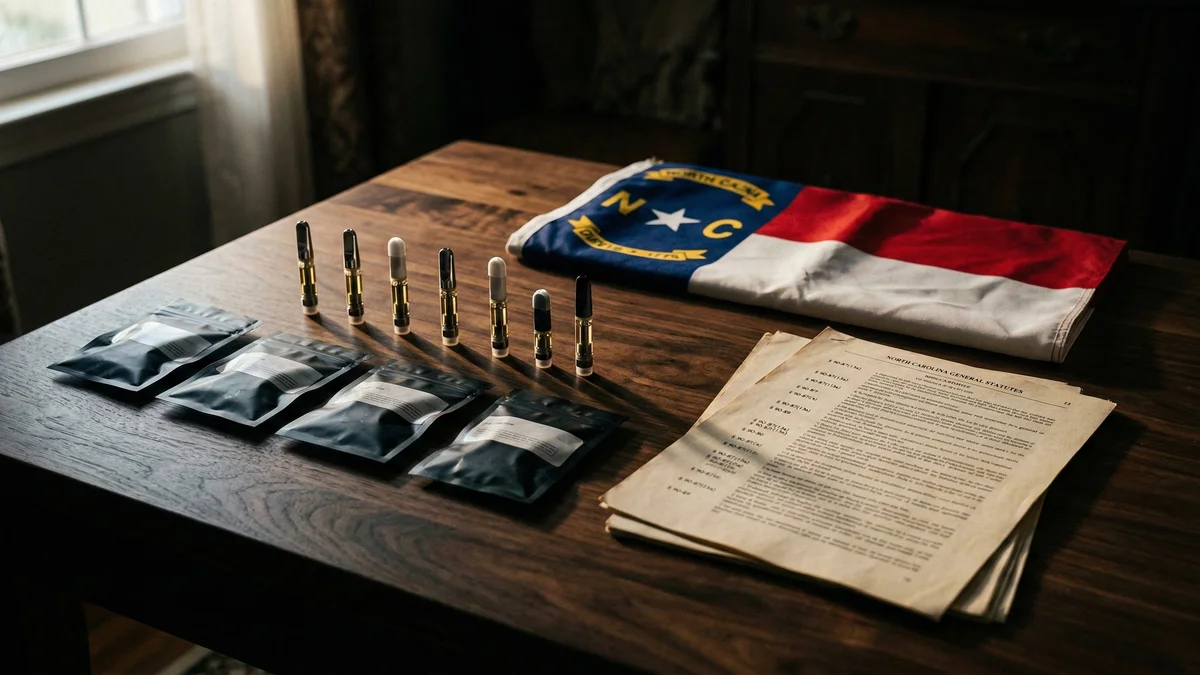
Yes, Delta-8 THC is currently legal in North Carolina. Hemp-derived Delta-8 products are protected under both federal law (the 2018 Farm Bill) and state law (Session Law 2022-32, enacted via SB 455). As long as the product comes from hemp containing less than 0.3% Delta-9 THC on a dry weight basis, it's legal to buy, sell, and possess in NC.
But there's a major change coming. A federal law signed in November 2025 redefines hemp based on total THC content, which would effectively ban most Delta-8 products starting December 11, 2026. Here's everything you need to know right now.
Delta-8 THC is legal in North Carolina today under SB 455 and the 2018 Farm Bill. However, a new federal law (P.L. 119-37) caps total THC at 0.3% and 0.4mg per container, effectively banning Delta-8 products nationwide starting December 11, 2026. NC's hemp industry is worth about $3.2 billion and employed nearly 16,000 people in 2025 (Whitney Economics via WFAE, 2026).
Update, October 10, 2026: The federal deadline discussed on this page has moved, and the move is now law. H.R. 6500 became Public Law 119-103 on September 2, 2026. Its Section 2019 keeps only the narrowest piece of the new hemp definition on November 12, 2026, covering cannabinoids the plant cannot naturally make, and delays the rest to December 11, 2026, including the 0.4mg total THC per container cap that reaches most finished products (Section 2019, enrolled text). For nearly everything sold at a Triangle hemp shop, delta-8 included, December 11, 2026 is the date that matters. Nothing has changed it since September, but it falls on the same day federal funding runs out, so watch the next funding bill. See our NC hemp bill tracker for current status, and our December 11 report for how many Triangle shops sell what it reaches.
What Is Delta-8 THC?
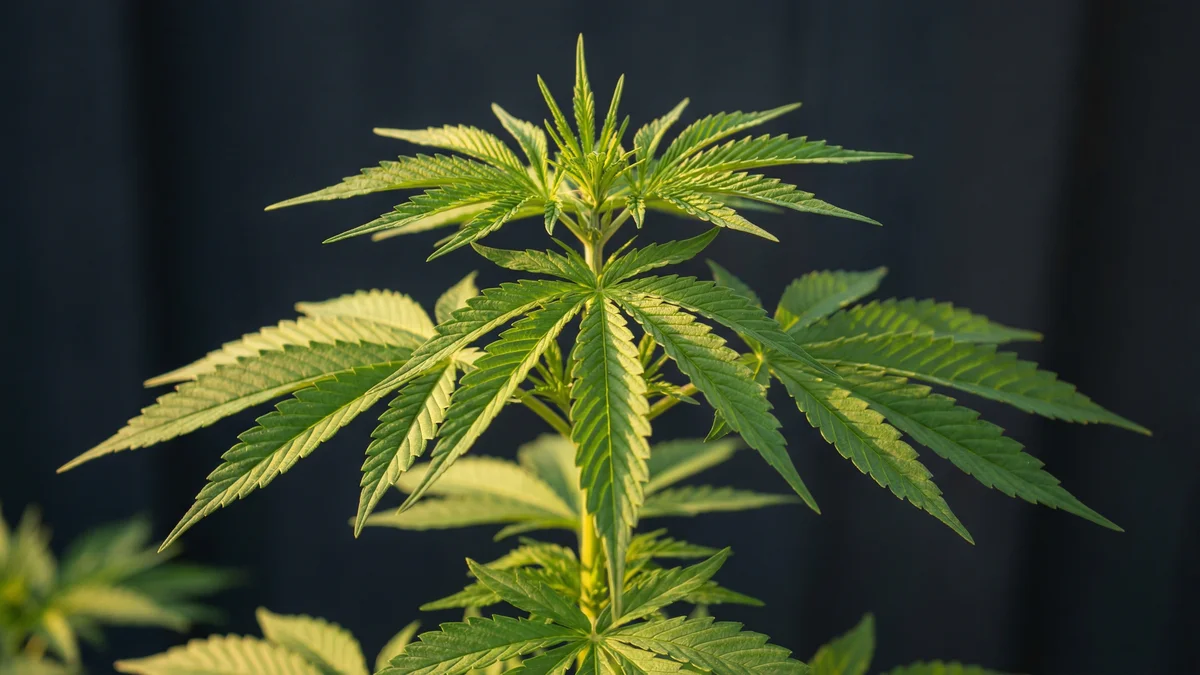
Delta-8 THC is a naturally occurring cannabinoid found in hemp and cannabis plants. It's chemically similar to Delta-9 THC, the primary psychoactive compound in marijuana, but with a slightly different molecular structure. Most consumers describe Delta-8's effects as milder than Delta-9, with less anxiety and a clearer headspace.
Here's where it gets interesting. Delta-8 occurs naturally in very small concentrations. The Delta-8 products you'll find at Triangle dispensaries are typically converted from CBD through a chemical process called isomerization. That manufacturing process is one reason the FDA has raised safety concerns, noting that some producers use "potentially unsafe household chemicals" in uncontrolled settings (FDA, 2022).
That's why buying from reputable, established dispensaries matters. Ask any shop to show you the third-party lab report, the Certificate of Analysis, for the exact product and batch you are buying; a good shop will have it ready.
How Did Delta-8 Become Legal in NC?
Two key laws created the framework that makes Delta-8 legal here.
The 2018 Farm Bill removed hemp from the federal Controlled Substances Act. It defined hemp as Cannabis sativa L. with a Delta-9 THC concentration of no more than 0.3% on a dry weight basis. Because the law specified only "Delta-9" THC, other cannabinoids like Delta-8, Delta-10, and THCa weren't restricted. The 9th Circuit Court of Appeals backed this reading in AK Futures LLC v. Boyd Street Distro (2022), a trademark case in which it held that delta-8 vape products were likely lawful hemp products under the Farm Bill.
NC Session Law 2022-32 (SB 455) aligned North Carolina's state law with the federal framework. Signed by Governor Roy Cooper on June 30, 2022, it amended G.S. 90-94, as enacted, to exclude "tetrahydrocannabinols found in hemp or hemp products" from the NC Controlled Substances Act. This is the law that made Delta-8 explicitly legal at the state level.
A quick note on accuracy: many cannabis websites cite "SB 352" as the law that legalized hemp products in NC. That's incorrect. SB 352 passed the NC Senate 49-0 in May 2019 but stalled in the House Rules Committee and was never enacted (NCGA). SB 455, passed in the 2021-2022 session, is the actual law. You can verify this on the NC General Assembly's website.
The timeline below runs from those two laws to the federal change now on the calendar.
What's Changing? The December 2026 Federal Ban
On November 12, 2025, President Trump signed a stopgap funding law, P.L. 119-37, whose Section 781 fundamentally changes how hemp is defined at the federal level.
The new law switches from measuring only Delta-9 THC to measuring total THC, which includes Delta-8, Delta-10, THCa, and all other THC variants. The new limits are strict: 0.3% total THC on a dry weight basis AND no more than 0.4 milligrams of total THC per finished container (Perkins Coie, 2025).
That 0.4mg-per-container cap effectively eliminates most Delta-8 edibles, vapes, and tinctures from the legal market. The new definition also excludes cannabinoids that the plant can make but that were synthesized outside it, which is where delta-8 made from CBD falls. The rewrite was originally due November 12, 2026, but P.L. 119-103 moved almost all of it, delta-8 included, to December 11, 2026. Only cannabinoids the plant cannot naturally produce lose hemp status on November 12.
North Carolina's own statute is unchanged unless the General Assembly acts, so once the federal ban kicks in, a gap between state and federal law creates real enforcement uncertainty. The state could also act first:
North Carolina status, October 10, 2026: HB 328, the state hemp crackdown, passed the Senate in July but still awaits a House vote, which can come in the reconvened sessions between October 26 and December 18. Today North Carolina sets no minimum age for hemp products, though many shops card at 21. Details in our NC hemp bill tracker.
The stakes for North Carolina are enormous. A January 2026 Whitney Economics study valued the state's hemp industry at about $3.2 billion and found it employed nearly 16,000 people in 2025 (WFAE, 2026). NC ranked 6th nationally in hemp-derived product production in a 2023 study, with over 800 licensed growers (WFAE, 2026).
How Does NC Compare to Other States?
North Carolina is among the majority of states that currently allow Delta-8 sales. According to the Marijuana Policy Project, 13 states have fully banned Delta-8 THC, including Colorado, New York, and Vermont. Another 7 states regulate or restrict it, and 4 states are reviewing their policies, according to MPP's tracker, which carries no update date (MPP).
The remaining states, NC among them, are not on MPP's banned or restricted lists, though some have changed their rules since the tracker was compiled. Either way, the December 11, 2026 federal deadline levels the playing field. Every state will need to decide how to handle enforcement once the new federal definition takes effect.
North Carolina's legislature is working on it too. Licensing bills that would have created a Chapter 18D framework (HB 607, SB 265) stalled in 2025 and cannot move in 2026. The live bill is HB 328: its conference report would make 21 the legal purchase age, adopt a total-THC standard, and exclude chemically converted cannabinoids, which covers most delta-8, from North Carolina's hemp definition, with no licensing system (HB 328 on ncleg.gov). Governor Stein announced a State Advisory Council on Cannabis in June 2025, saying that "today all across North Carolina, there are unregulated intoxicating THC products available for purchase: just walk into any vape shop" (Governor's Office, 2025).
For the national picture, here is how MPP's tracker sorts the 50 states.
Are There Age Requirements to Buy Delta-8 in NC?
Here's something that surprises most people: North Carolina currently has no state law setting a minimum age to purchase Delta-8 or other hemp-derived THC products. Governor Stein confirmed this in June 2025, identifying it as a core issue that the legislature needs to address.
Most reputable dispensaries in the Triangle voluntarily enforce a 21+ policy. That's store policy, not state law. When you shop at established retailers like Modern Apotheca or Sherlocks, they'll check your ID, a good sign you're buying from a responsible seller.
Two pending bills would make 21 the legal age: HB 328, which passed the Senate in July 2026 and awaits a House vote, and SB 328, which needs only a final Senate concurrence vote. Neither is law yet. Until one passes, the voluntary age check is one indicator that a dispensary takes compliance seriously.
What Should You Look for When Buying Delta-8?
The lack of state-level manufacturing oversight means product quality varies widely. An FDA case series covering 2019 to 2023 counted 610 adverse event cases involving hemp cannabinoid products, 355 of them involving Delta-8; about 40% of all cases, and nearly half of the Delta-8 cases, involved an emergency department visit or hospitalization (FDA; PMC, 2024). National poison control centers received 2,362 Delta-8 exposure cases between January 2021 and February 2022, and 41% involved children under 18.
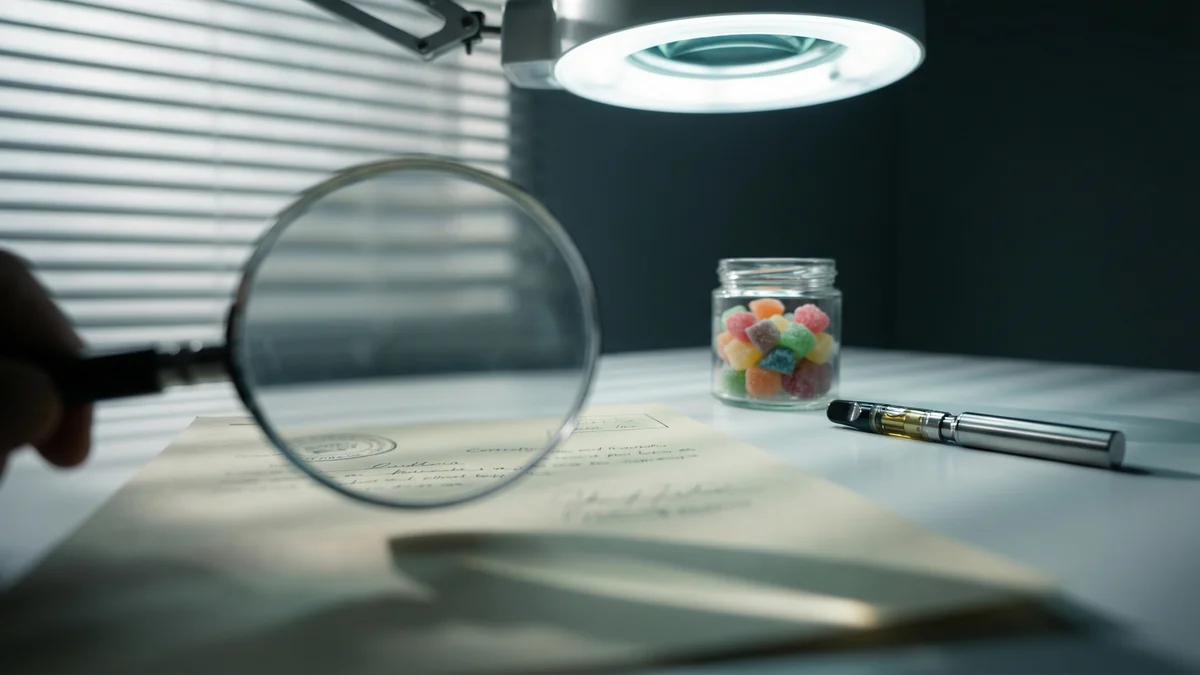
Those numbers aren't meant to scare you, they're meant to show why buying from the right source matters. Here's what to look for:
- Certificate of Analysis (COA): Every product should have a third-party lab test showing cannabinoid content, residual solvents, pesticides, and heavy metals. If a shop can't show you the COA, walk out.
- Established retailers: Buy from established dispensaries, not gas stations or convenience stores. Our dispensary directory lists verified retailers across the Triangle.
- Child-resistant packaging: Legitimate products come in proper packaging. The FDA has specifically warned against products mimicking candy or snack brands.
- Clear labeling: Look for accurate cannabinoid content, batch numbers, and manufacturer information.
- QR codes linking to lab results: This is becoming the industry standard, so a product without one deserves a closer look.
For a deeper dive on reading lab reports, see our guide to reading a COA.
Where to Buy Delta-8 in the Triangle
The Raleigh-Durham-Chapel Hill area has a strong network of hemp dispensaries carrying tested Delta-8 products. Here are some options:
In Raleigh: Nature's Releaf on Hollyridge Dr and The Hemp Store on Farmwell Rd both list Delta-8 among their products. Note that not every shop carries it: Sherlocks Glass & Dispensary, for example, says on its own site that you won't find any Delta-8 there. Call ahead to confirm stock, and browse all Raleigh dispensaries.
In Durham: Hempie's Durham and Redhead Hemp both list Delta-8 among their products. See all Durham dispensaries.
Across the Triangle: Use our full dispensary directory to search by city, product type, or features like delivery and late-night hours.
NC Enforcement Actions: What's Actually Happening
While Delta-8 is legal, enforcement actions in NC highlight the gray areas that still exist.
In June 2023, the FDA and FTC jointly issued a warning letter to NC Hemp Shoppe in Raleigh for selling Delta-8 products in packaging that mimicked children's snacks, including "Stoner Patch Gummies" and "Stoneo Oreo Cookies" (FDA, 2023).
In April 2024, a multi-agency crackdown led by the Onslow County Sheriff's Office, "Operation Vapor Trail," targeted about 100 vape shops, charged 71, and seized more than 3,000 pounds of THC products and $855,557 in cash (WITN, 2024). Several shop owners subsequently sued, alleging their products were legal hemp with valid Certificates of Analysis (Port City Daily, 2024).
These cases show why documentation matters. If you're buying Delta-8, keep your receipts and make sure the products come with COAs. And if you're a dispensary owner, investing in proper lab testing and compliance isn't optional, it's protection.
Frequently Asked Questions
Is Delta-8 THC the same as marijuana?
No. Delta-8 THC is a hemp-derived cannabinoid that's chemically distinct from Delta-9 THC, the primary compound in marijuana. Under federal law, hemp products must contain less than 0.3% Delta-9 THC. While Delta-8 does produce psychoactive effects, they're generally described as milder than Delta-9. North Carolina's Session Law 2022-32 explicitly excludes hemp-derived THC from the state Controlled Substances Act.
Will Delta-8 show up on a drug test?
Yes, Delta-8 THC will likely cause a positive result on standard drug tests. Most drug screenings test for THC metabolites, and your body processes Delta-8 and Delta-9 similarly. Standard screening tests cannot tell Delta-8 from Delta-9, so a Delta-8 user will usually screen positive. Some confirmation labs can separate the two, but many employers do not order that test.
How long will Delta-8 remain legal in NC?
Under current NC law, Delta-8 is legal with no set end date. Federally, P.L. 119-37 redefines hemp using total THC and excludes cannabinoids synthesized outside the plant, and for delta-8 that takes effect December 11, 2026. After that date, most Delta-8 products won't meet the federal definition of hemp. At the state level, HB 328, which still awaits a House vote, would remove chemically converted cannabinoids, which covers most delta-8, from NC's hemp definition if it is adopted. For updates on THCa and hemp legality in NC, follow our blog.
Can you order Delta-8 online and have it shipped to NC?
Until December 11, 2026, generally yes: Delta-8 is legal under current federal and state law, so online sales and shipping to NC addresses are permitted. After that date, CBD-derived Delta-8 no longer counts as federal hemp, so the Farm Bill's protection for shipping hemp across state lines no longer covers it. However, buying online means you can't inspect COAs in person or verify product quality before purchase. We recommend buying from local Triangle dispensaries where you can ask questions and see lab results firsthand. Browse verified dispensaries near you.
Is Delta-8 safe?
The FDA has not approved Delta-8 products for any use and has documented adverse event reports. Safety depends heavily on product quality and source. Products from reputable dispensaries with third-party lab testing are significantly safer than unregulated products from gas stations or convenience stores. Always check for a Certificate of Analysis and buy from established retailers.
The Bottom Line
Delta-8 THC is legal in North Carolina right now, protected by both the 2018 Farm Bill and NC Session Law 2022-32. But the clock is ticking. The federal ban that takes effect December 11, 2026 will reshape the entire market, and NC's own regulatory framework is still taking shape. For shop owners navigating this transition, our dispensary preparation guide for December 2026 covers what to do before the deadline hits.
If you're buying Delta-8 in the Triangle, buy smart: stick to reputable dispensaries with lab-tested products, ask for COAs, and stay informed as the laws change.
Ready to find a dispensary? Browse our full directory of verified Triangle dispensaries to find tested Delta-8 products near you.
This article is for informational purposes only and does not constitute legal advice. Cannabis laws change frequently at both the state and federal level. Consult a licensed attorney for advice on your specific situation. Information is current as of October 2026.