THCa Flower Guide: What NC Consumers Need to Know in 2026
This article is for informational purposes only and does not constitute legal, medical, or product advice. Consult a qualified professional for guidance specific to your situation.
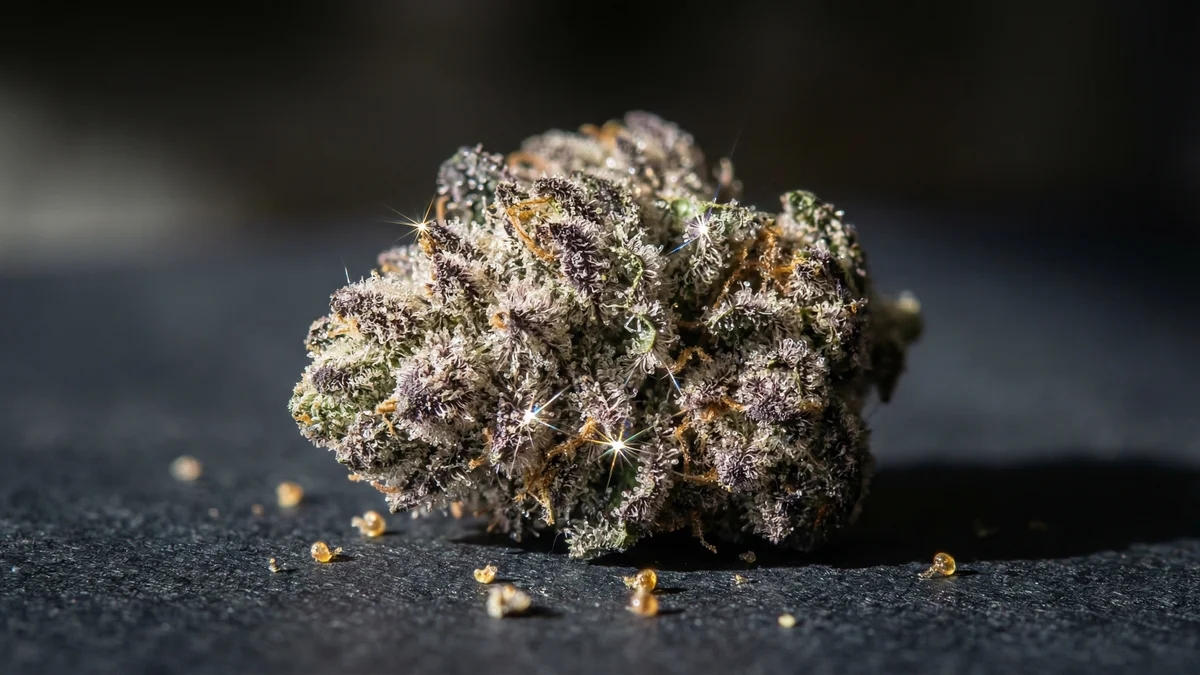
THCa flower is the most popular product at North Carolina hemp dispensaries, and for good reason. It's legal hemp flower that, when smoked or vaped, produces effects comparable to traditional marijuana. It looks, smells, and smokes the same because it's the same plant, bred for high THCa content while maintaining the legal Delta-9 THC threshold.
This guide covers everything you need to know as a NC consumer: what THCa flower actually is, how it works, what strains to look for, how to store it, what to pay, and where to buy it in the Triangle.
THCa flower is hemp bred for high THCa content (20–30%). It's legal in NC under SB 455 because only Delta-9 THC counts toward the 0.3% limit. When smoked, THCa converts to Delta-9 THC at an 87.7% rate, producing full psychoactive effects. Expect to pay $30–$60 per eighth at Triangle dispensaries. A federal law (P.L. 119-37) will effectively ban THCa flower starting December 11, 2026, by switching to a total THC measurement (Arnold & Porter, 2025).
Update, October 10, 2026: The federal deadline discussed on this page has moved, and the move is now law. H.R. 6500 became Public Law 119-103 on September 2, 2026. Its Section 2019 keeps only the narrowest piece of the new hemp definition on November 12, 2026, covering cannabinoids the plant cannot naturally make, and delays the rest to December 11, 2026, including the 0.4mg total THC per container cap that reaches most finished products (Section 2019, enrolled text). For nearly everything sold at a Triangle hemp shop, delta-8 included, December 11, 2026 is the date that matters. Nothing has changed it since September, but it falls on the same day federal funding runs out, so watch the next funding bill. See our NC hemp bill tracker for current status, and our December 11 report for how many Triangle shops sell what it reaches.
What Is THCa Flower?
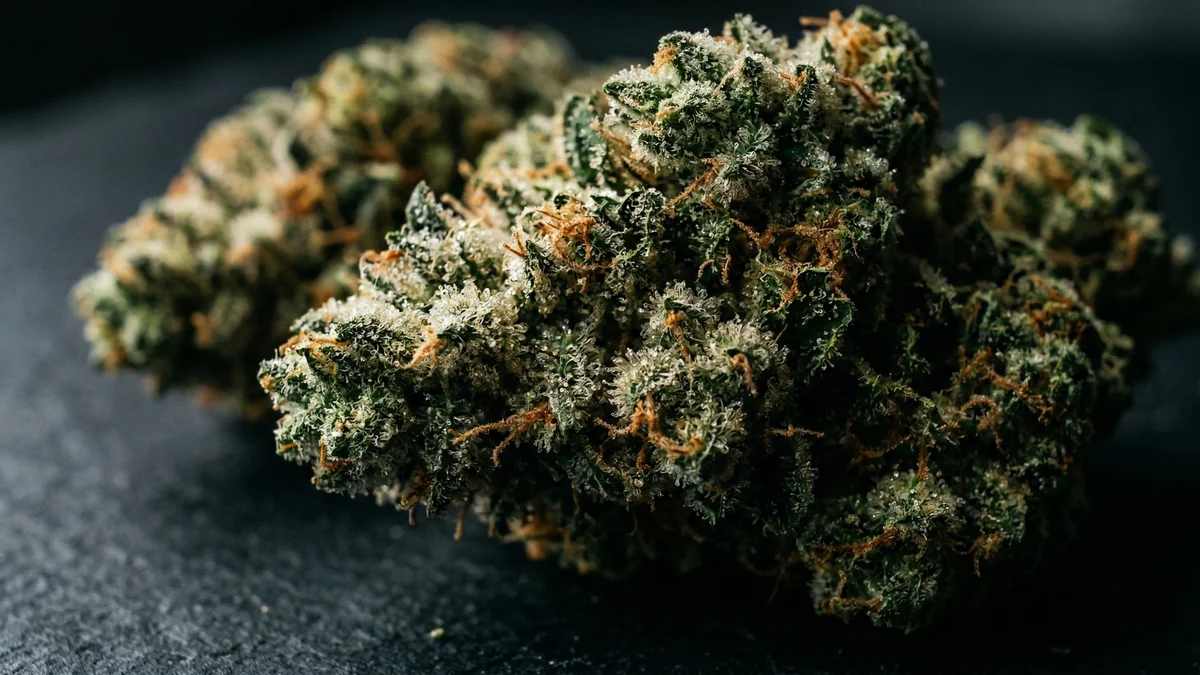
THCa flower is cannabis flower that contains high levels of THCa (tetrahydrocannabinolic acid), the raw, non-psychoactive precursor to Delta-9 THC. A typical THCa flower product contains 20–30% THCa but less than 0.3% Delta-9 THC, which keeps it within the legal definition of hemp under both the 2018 Farm Bill and NC Session Law 2022-32 (SB 455).
Here's the key: THCa itself doesn't get you high. The carboxyl group (-COOH) on the THCa molecule prevents it from binding to the CB1 receptors in your brain that produce psychoactive effects. But when you apply heat, smoking, vaping, or baking, that carboxyl group breaks off as CO2 in a process called decarboxylation, converting THCa into Delta-9 THC.
This conversion happens instantly when you light a bowl or take a vape hit. The result is an experience functionally identical to smoking marijuana.
The Chemistry: How THCa Becomes THC
The conversion is straightforward chemistry. THCa (molecular weight: 358.48 g/mol) loses its carboxyl group as CO2 (44.01 g/mol), leaving behind Delta-9 THC (314.47 g/mol). The conversion factor is 0.877, meaning 87.7% of the THCa weight becomes THC, while 12.3% is lost as carbon dioxide (Confidence Analytics).
The formula used on lab reports: Total THC = (THCa × 0.877) + Delta-9 THC
So flower testing at 25% THCa with 0.2% Delta-9 THC has an effective potency of: (25 × 0.877) + 0.2 = 22.1% THC when smoked.
Important nuance: While decarboxylation during smoking is essentially complete, actual THC delivery is lower because some is lost to combustion. Lab smoking studies recover only about 30% of the THC in the smoke (Filer, PMC, 2022), and one review puts maximum systemic absorption from smoking at about 25% (Permanente Journal, 2024). Vaping is more efficient because it heats flower below the combustion point.
If you eat raw THCa flower, nothing happens. Human metabolism does not convert THCa to THC internally. Raw THCa may have anti-inflammatory properties, a 2020 study in the British Journal of Pharmacology found THCa alleviated arthritis symptoms in mice via CB1 receptor and PPARgamma pathways (PMC, 2020), but it won't produce a high.
Popular THCa Strains
You'll see strains labeled as indica, sativa, or hybrid at dispensaries. A quick note on that: a 2021 study in Nature Plants found that "indica" and "sativa" labels do not track genome-wide genetics and line up mainly with a small number of aroma compounds (Nature Plants, 2021). Strain names are still how shops sort flower, so treat them as a shopping shorthand rather than a prediction of effects.
Here are four popular THCa strains you'll find at Triangle dispensaries:
A tip for beginners: If you're new to THCa flower, start with a balanced hybrid like Gelato or MAC 1. They offer a mix of relaxation and euphoria without being heavily sedating. Save the indica-dominant strains for when you want help sleeping.
How to Consume THCa Flower
THCa flower is versatile. Here are the main ways to use it:
Smoking (Joint, Pipe, Bong)
The most common method. Combustion instantly decarboxylates THCa into THC. Effects begin within 1–5 minutes and typically last 2–4 hours. Pre-rolls are the easiest entry point, no equipment needed beyond a lighter.
Dry Herb Vaping
A dry herb vaporizer heats flower to 350–430°F, hot enough to decarboxylate THCa and release vapor, but below the combustion point. This means fewer harmful byproducts, better flavor (you taste the terpenes more clearly), and more efficient THC extraction. Vaporizers cost $50–$250 depending on quality. For oil vape cartridges and disposables, see our hemp vapes guide.
Raw Consumption (Non-Psychoactive)
Eating raw THCa flower, in smoothies, salads, or juices, preserves the THCa in its acid form. You won't get high, but research suggests potential anti-inflammatory and neuroprotective benefits. A 2023 study found that THCa decreased amyloid-beta and phosphorylated tau in an Alzheimer's mouse model, improving cognitive function (MDPI, 2023).
Cooking and Baking (Requires Decarboxylation)
To make edibles with THCa flower, you must decarboxylate it first, spread ground flower on a baking sheet and heat at 220–245°F for 30–40 minutes. Then infuse the decarboxylated flower into butter or oil for cooking. Onset is 30–90 minutes, duration is 4–8 hours.
What to Look for When Buying
Not all THCa flower is equal. Here's how to evaluate quality:
Check the COA
Every THCa product should have a Certificate of Analysis from a third-party lab. The COA confirms THCa percentage, verifies Delta-9 THC is below 0.3%, and screens for contaminants. If a shop can't show you a COA, don't buy. For a full walkthrough, see our guide to reading COAs.
Evaluate the Flower Visually
- Trichome coverage, Look for a visible coating of crystal-like trichomes (the "frosty" appearance). This is where cannabinoids and terpenes concentrate. More trichomes generally means higher potency.
- Color, Fresh, well-cured flower is green with possible purple, orange, or amber accents. Brown flower is old or poorly cured.
- Bud structure, Dense, well-trimmed buds indicate quality cultivation. Loose, leafy buds may be lower grade.
Smell It
Good flower has a strong, complex aroma. The specific smell depends on the terpene profile, citrusy (limonene), piney (pinene), earthy (myrcene), or peppery (caryophyllene). If flower has no smell or smells like hay, it's old, poorly cured, or low quality.
Ask About Cultivation
Indoor-grown flower is typically higher quality (more controlled environment) but more expensive. Greenhouse flower offers a middle ground. Outdoor flower is cheapest but often less potent and less visually appealing.
Pricing at NC Dispensaries
THCa flower pricing varies by quality, cultivation method, and shop. Here's what to expect in the Triangle:
Wholesale prices move too. Hemp Benchmarks reported that the average THCa flower price rose nearly 13% per pound in November 2025 (Hemp Benchmarks, 2025). Wholesale swings like that eventually flow through to retail pricing.
How to Store THCa Flower
Proper storage preserves potency and freshness. A UNODC study found that cannabis stored at room temperature lost 16.6% of its THC after one year and 26.8% after two years (UNODC, 1997). That degradation turns THC into CBN, which is mildly sedating but much less psychoactive.
Here's how to slow it down:
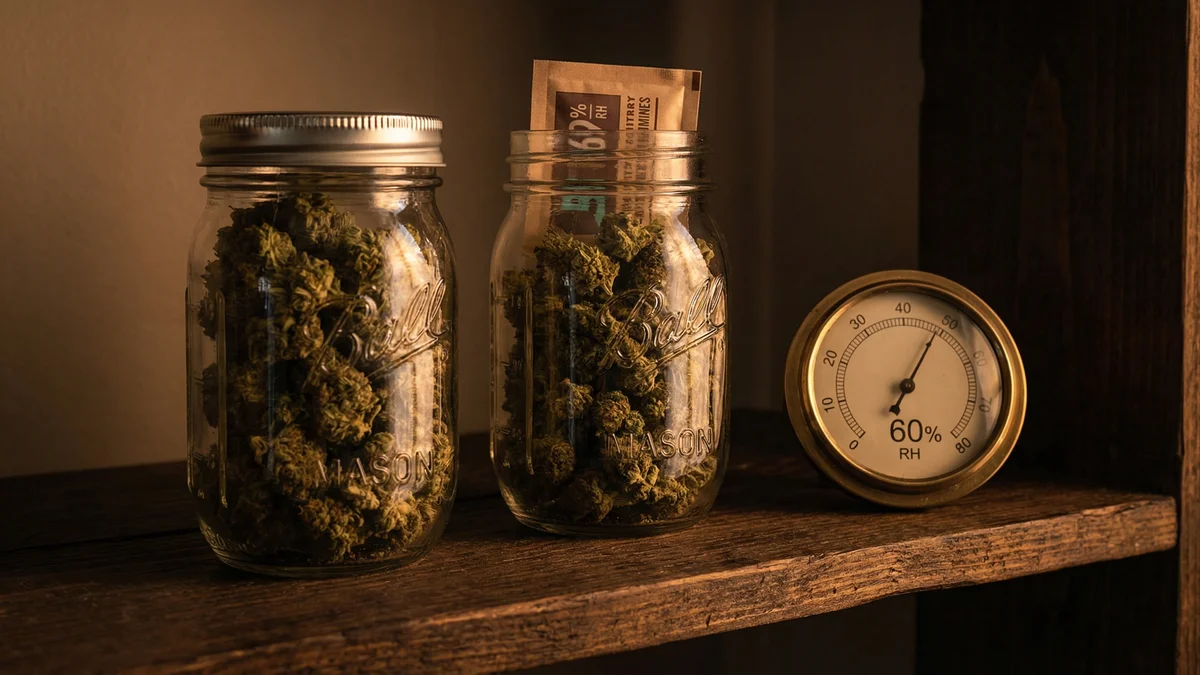
- Container: Glass mason jars with airtight seals. Glass doesn't leach chemicals, doesn't create static (which pulls trichomes off flower), and blocks airflow.
- Humidity: 58–62% relative humidity. Use Boveda or Integra Boost 2-way humidity packs inside the jar. Too dry and the flower crumbles; too humid and mold grows.
- Temperature: 55–65°F (13–18°C). Never above 70°F. A cool closet or drawer works, avoid the fridge (humidity fluctuations) and freezer (trichomes become brittle and break off).
- Light: Complete darkness. UV light degrades cannabinoids faster than any other factor. Keep jars in a dark cabinet or use opaque containers.
Properly stored flower lasts 6–12 months at full quality. You can push it to 2 years, but expect noticeable potency loss.
Legal Status in NC
THCa flower is legal in North Carolina under the 2018 Farm Bill and NC Session Law 2022-32 (SB 455). The law defines hemp as cannabis containing ≤0.3% Delta-9 THC on a dry weight basis. Because THCa is a different molecule than Delta-9 THC, flower with 25% THCa and 0.2% Delta-9 is legal hemp, even though smoking it produces psychoactive effects equivalent to marijuana.
What's changing: P.L. 119-37 (signed November 2025) switches the federal definition from Delta-9 THC only to total THC, calculated as (THCa × 0.877) + Delta-9. Under this formula, flower with 25% THCa would have a total THC of ~22%, far exceeding the 0.3% limit. Finished products are also capped at 0.4mg of total THC per container.
This law takes effect December 11, 2026. After that date, essentially all THCa flower on the market becomes illegal under federal law. For the full legal breakdown, see our detailed guide on THCa legality in NC.
NC state law (SB 455) hasn't changed to match the federal shift. UNC School of Government professor Phil Dixon noted in January 2026 that "state law in this area has not changed and all the hemp products discussed above remain legal as a matter of state law" (UNC SOG, 2026). How this state-federal conflict plays out in enforcement remains to be seen, and a pending state bill could close the gap.
North Carolina status, October 10, 2026: HB 328, the state hemp crackdown, passed the Senate in July but still awaits a House vote, which can come in the reconvened sessions between October 26 and December 18. Today North Carolina sets no minimum age for hemp products, though many shops card at 21. Details in our NC hemp bill tracker.
Drug Testing Warning
THCa flower will cause a positive result on standard drug tests. When you smoke THCa flower, the THCa converts to Delta-9 THC, which your body metabolizes into THC-COOH, the same metabolite that standard immunoassay drug tests detect. There is no difference between smoking THCa flower and smoking marijuana as far as a drug test is concerned.
Detection windows:
- Single use: ~3 days
- Moderate use (a few times per week): 5–7 days
- Daily use: 10–15 days
- Chronic heavy use: 30–60+ days
If you're subject to workplace drug testing, THCa flower is not the product for you. Consider CBD products (and verify the COA shows 0.0% THC). For more on drug testing and hemp, see our hemp vs. marijuana guide.
Where to Buy THCa Flower in the Triangle
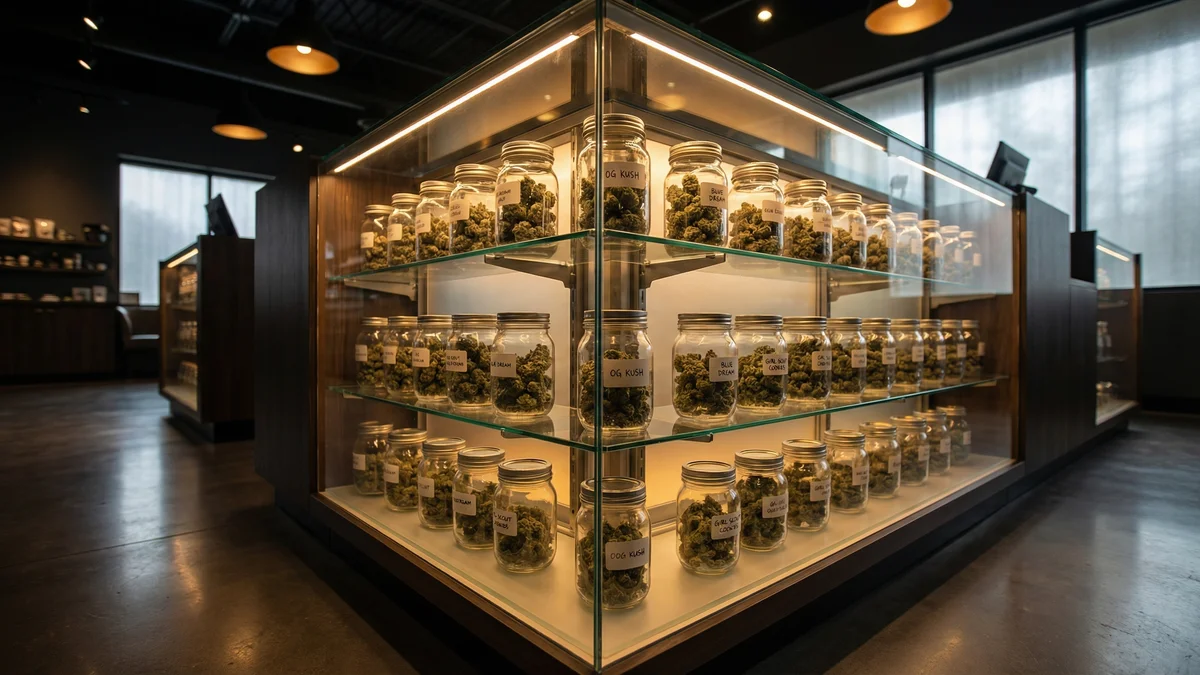
Most dedicated dispensaries in the Triangle carry THCa flower. Here are some notable options:
Sherlocks Glass & Dispensary on Hillsborough Street in Raleigh, 4.9 stars from more than 880 reviews. Carries THCa, Delta-9, and CBD alongside an artisan glass gallery.
Bull City Dispensary at 102 E Main St in downtown Durham. Focuses on THCa flower, Delta-9, and CBD, and takes orders online.
NC Hemp Shoppe on Creedmoor Rd, Voted Best of Raleigh. Carries a full THCa flower menu.
Nature's Releaf on Hollyridge Drive in northwest Raleigh, family-owned with a large selection of flower. A second Raleigh location is on Western Boulevard.
Browse the full Triangle dispensary directory to find a shop near you by city, hours, or features.
Frequently Asked Questions
Is THCa flower the same as marijuana?
Genetically and visually, yes, they're the same plant. Legally, no. THCa flower is classified as hemp because it contains ≤0.3% Delta-9 THC on a dry weight basis, as required by the 2018 Farm Bill and NC SB 455. However, when smoked, THCa converts to Delta-9 THC and produces the same effects as marijuana. For more on this distinction, see our hemp vs. marijuana guide.
Does THCa flower smell like marijuana?
Yes. THCa flower and marijuana have the same terpene profiles, which produce the same aroma. The NC State Bureau of Investigation warned in 2019 that law enforcement cannot distinguish between hemp and marijuana (The Assembly, 2025). Keep this in mind when carrying flower in public.
Will THCa flower show up on a drug test?
Yes. Smoking THCa flower converts THCa to Delta-9 THC, which metabolizes to THC-COOH, the same compound detected by standard drug tests. The test cannot distinguish between THCa flower and marijuana use.
How much THCa flower should a beginner use?
Start with 1–2 small puffs from a joint or pipe. Wait 10–15 minutes before taking more. THCa flower with 20–25% THCa is comparable in potency to mid-shelf marijuana, it's not something to underestimate. For detailed dosing guidance, see our first-time dispensary guide.
Do I need a medical card to buy THCa flower in NC?
No. THCa flower is legal hemp, no medical card, prescription, or special license is required. Many dispensaries enforce a 21+ age policy, but this is store policy, not state law. For the full explanation, see our guide on whether you need a medical card for THCa in NC.
How long does THCa flower stay fresh?
Properly stored (glass jar, 58–62% humidity, 55–65°F, complete darkness), THCa flower maintains full quality for 6–12 months. After 1 year at room temperature, expect roughly 17% potency loss. After 2 years, about 27%.
Ready to try THCa flower? Browse our full directory of Triangle dispensaries to find shops with lab-tested flower. Or check out the best dispensaries in Raleigh and Durham for specific recommendations.
This article is for informational purposes only and does not constitute legal, medical, or product advice. Hemp-derived products are legal under current federal and NC state law. Individual responses to cannabinoids vary, start with low doses and consult a healthcare provider if you have concerns. Last updated October 10, 2026.