How to Read a COA: Verify Any Hemp Product in 5 Minutes
This article is for informational purposes only and does not constitute legal, medical, or product advice. Consult a qualified professional for guidance specific to your situation.
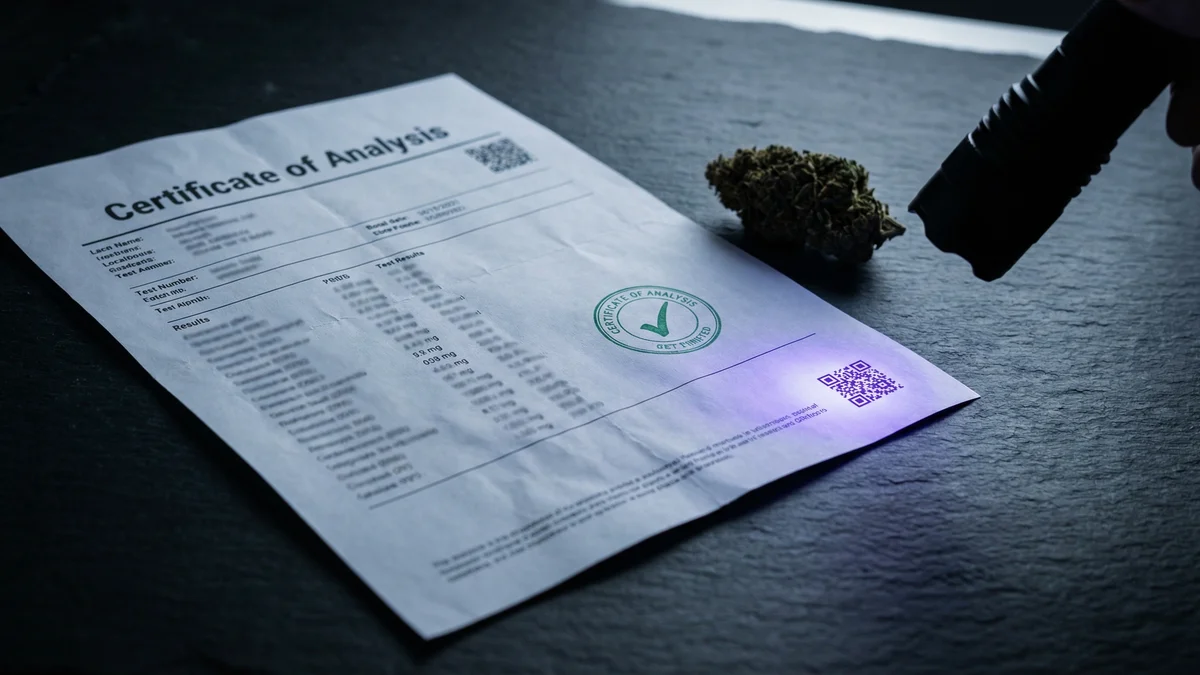
A Certificate of Analysis (COA) is the most important document in the hemp industry. It's a lab report from an independent, third-party laboratory that tells you exactly what's in a product, and what isn't. It confirms potency, verifies legal THC levels, and screens for contaminants like pesticides, heavy metals, and residual solvents.
In a state like North Carolina, where there's no mandatory testing or dispensary licensing, the COA is your only guarantee that a product is safe and legal. If a shop can't show you one, you should leave.
A COA is a third-party lab report showing what's in a hemp product. Look for five key sections: cannabinoid profile (confirms THC ≤0.3%), pesticide screening, heavy metals testing, residual solvents, and microbial contaminants. Always verify the lab is ISO 17025 accredited, the batch number matches the product, and the test date is recent (within 12 months). If a shop can't provide a COA, don't buy from them.
Update, October 10, 2026: The federal hemp deadline referenced below has shifted. H.R. 6500 became Public Law 119-103 on September 2, 2026, and its Section 2019 delays most of the new hemp definition, including the 0.4mg per container THC cap and the total-THC test that counts THCa, to December 11, 2026. A narrow piece covering cannabinoids the plant cannot naturally produce still begins November 12, 2026. Still current as of this update. Track it in our NC hemp bill tracker.
What Is a COA?
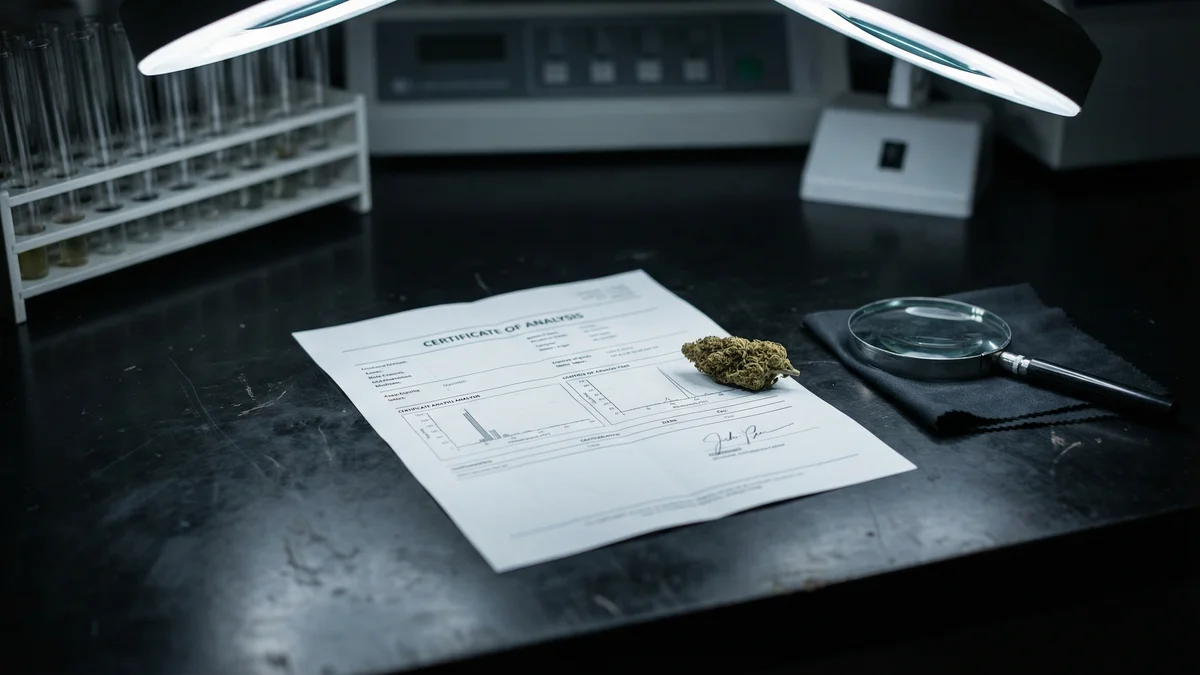
COA stands for Certificate of Analysis. It's a document issued by a laboratory after testing a sample of a product. For hemp, the lab tests for cannabinoid content (how much THC, CBD, CBG, etc.), contaminants (pesticides, heavy metals, solvents), and microbial safety (mold, bacteria).
The key word is third-party. A legitimate COA comes from an independent laboratory, not the company that manufactured the product. In-house testing creates an obvious conflict of interest, the manufacturer has a financial incentive to make results look good. Third-party labs have no such incentive.
Here's why this matters: a 2024 study published in Frontiers in Pharmacology tested 202 CBD products sold across the US and found that 74% deviated from their label claims by more than 10%, 46% contained more cannabinoids than labeled, and 28% contained less (Frontiers in Pharmacology, 2024). A 2025 analysis of 56 CBD gummy products found that 70% had CBD concentrations significantly different from labels, and 39% tested positive for THC (NORML, 2025). This mislabeling problem isn't a fringe issue, it's the industry default. A COA is the only way to know what's actually in the product you're buying.
The FDA received 104 adverse event reports involving Delta-8 products between December 1, 2020 and February 28, 2022, and 55% of those cases required intervention, such as evaluation by emergency medical services, or hospital admission (FDA, 2022). Between January 1, 2021 and February 28, 2022, national poison control centers received 2,362 Delta-8 exposure cases, and 41% involved patients under 18. By the end of 2023 the FDA's count had passed 300 adverse event reports, and nearly half involved hospitalization or emergency department visits (FDA, July 16, 2024).
The 5 Sections of a Complete COA
Every proper COA should contain at least these five test panels. Let's break each one down.
1. Cannabinoid Profile
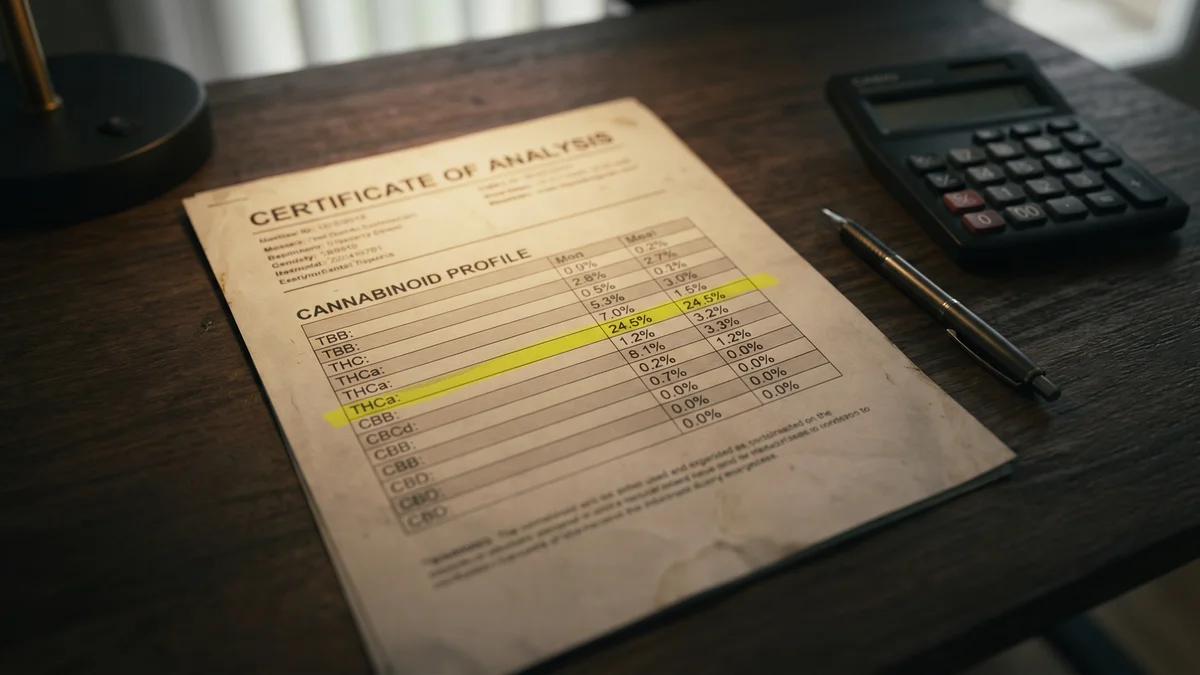
This is the most important section. It shows the concentration of every cannabinoid in the product:
- Delta-9 THC, Must be ≤0.3% on a dry weight basis for the product to be legal hemp. This is the number that determines whether the product is legal under the 2018 Farm Bill and NC SB 455.
- THCa, Non-psychoactive in raw form but converts to Delta-9 THC when heated. Under current NC law, THCa content doesn't count toward the 0.3% limit. Under P.L. 119-37, whose total-THC test takes effect December 11, 2026, it will.
- CBD, The most common non-psychoactive cannabinoid. Should match what's on the label.
- CBG, CBN, CBC, Minor cannabinoids with their own effects. Some products are formulated for specific cannabinoid ratios.
- Total THC, Calculated as: (THCa × 0.877) + Delta-9 THC. This number matters for federal compliance after December 2026.
What to look for: Does the Delta-9 THC percentage match the legal limit? Does the CBD or THCa content match what's on the product label? If the label says "25% THCa flower" but the COA shows 18%, someone is being dishonest.
Understanding the units: COAs report concentrations in different ways:
- Percentage (%), Standard for flower. "25% THCa" means 250mg per gram.
- Milligrams per gram (mg/g), Common for concentrates.
- Milligrams per serving or per package, Standard for edibles. A "10mg Delta-9 gummy" should show approximately 10mg on the COA per serving.
2. Pesticide Screening
Hemp plants can absorb pesticides from soil, water, and sprays used during cultivation. The pesticide panel tests for dozens of chemicals, including:
- Myclobutanil (a fungicide that releases hydrogen cyanide when heated, especially dangerous in flower meant for smoking)
- Bifenthrin (an insecticide toxic to the nervous system)
- Abamectin, chlorpyrifos, and dozens more
The COA will list each pesticide tested with a result: either "ND" (not detected), "Pass," or a specific concentration in parts per billion (ppb). You want to see "ND" or "Pass" across the board.
How common is pesticide contamination? The 2024 Frontiers in Pharmacology study found 26 different pesticides detected across 15% of the 202 CBD products tested (Frontiers in Pharmacology, 2024). That's roughly 1 in 7 products on shelves with detectable pesticide residues.
Why this matters: When you smoke flower, you're inhaling combustion byproducts. Pesticide residues concentrate during this process. A trace amount on a leaf becomes a more significant dose when smoked.
3. Heavy Metals Testing
Hemp is a bioaccumulator, it absorbs metals from the soil exceptionally well. That's actually useful for soil remediation, but it means hemp grown in contaminated soil can contain dangerous levels of:
- Lead, neurotoxic, no safe exposure level
- Arsenic, carcinogenic
- Mercury, damages nervous system, kidneys, immune system
- Cadmium, accumulates in kidneys, linked to cancer
The COA should show concentrations in parts per million (ppm) or micrograms per gram (μg/g), with each metal below the lab's action limit. "Pass" or "ND" is what you want.
A 2022 study in Science of the Total Environment tested 121 edible CBD products and found lead in 42%, mercury in 37%, arsenic in 28%, and cadmium in 8% (PubMed, 2022). The same Frontiers in Pharmacology study found heavy metals in 22% of all products tested, with 5 products exceeding regulatory thresholds for lead (Frontiers in Pharmacology, 2024).
4. Residual Solvents
This section is especially important for concentrates, vape cartridges, and tinctures, products made through extraction processes that use solvents to strip cannabinoids from plant material. Vape cartridges carry additional risks from hardware metals leaching into vapor. Our hemp vapes guide covers what to check on a vape-specific COA.
Common solvents include:
- Butane and propane, used in BHO (butane hash oil) extraction
- Ethanol, common in tincture production
- Hexane, pentane, industrial solvents
- Isopropyl alcohol, sometimes used in lower-quality extractions
Proper manufacturing removes these solvents through purging processes, but residual amounts can remain. The COA tests for their presence. Again, "ND" or "Pass" across the board.
The numbers here are sobering: the 2024 Frontiers in Pharmacology study detected residual solvents in 90% of the 202 CBD products tested, 446 solvent detections across 181 products (Frontiers in Pharmacology, 2024). That makes residual solvents the most common contaminant in hemp products by a wide margin.
Why this matters for vapes especially: Vape cartridges heat liquid to create vapor that you inhale directly into your lungs. Residual solvents in vape products are inhaled with every puff. The FDA specifically flagged concerns about Delta-8 vape products made with "potentially unsafe household chemicals" in uncontrolled settings (FDA, 2022).
5. Microbial Contaminants
This panel tests for biological contaminants:
- Total yeast and mold count, Hemp stored improperly can develop mold. Aspergillus species are particularly dangerous when inhaled.
- E. coli, indicates fecal contamination, typically from poor handling
- Salmonella, serious foodborne pathogen, especially relevant for edibles
- Total aerobic bacteria, general measure of microbial load
Results are reported in colony-forming units (CFU) per gram. Lower is better. "Pass" means the count is below the action limit.
Bonus panel: Mycotoxins. Some labs also test for mycotoxins, toxic compounds produced by certain molds. This is above and beyond the standard panel but indicates a more thorough testing approach. If a product's COA includes mycotoxin testing, that's a good sign about the manufacturer's commitment to safety.
How to Verify a COA Is Legitimate
Not all COAs are created equal. Here's how to spot a real one versus a fake or misleading report.
Check the Lab
The COA should clearly show the lab's name, address, and contact information. Look for:
- ISO 17025 accreditation, This is the international standard for testing laboratories. It means the lab has been independently audited for competence and accuracy. Many COAs will display the accreditation logo or number.
- DEA registration, Labs handling Schedule I controlled substances (which includes some forms of THC for testing purposes) need DEA registration.
- State licensing, Some states require labs to hold specific cannabis testing licenses.
You should be able to find the lab online. If the lab name doesn't return any results when you search for it, the COA may be fabricated.
Match the Batch Number
Every COA is linked to a specific batch or lot of product. The batch number on the COA should match the batch number on the product's packaging. If they don't match, the COA may be from a completely different product run.
Check the Date
COAs have a test date. A report from two years ago doesn't tell you much about what's in today's product. Look for test dates within the past 12 months. For flower products, fresher is better, within 6 months is ideal.
Verify the QR Code
Many products include a QR code that links to the COA. Scan it and check where it goes:
- Good: Links directly to the lab's website with the full report
- Questionable: Links to the brand's own website hosting a PDF
- Bad: Links to nothing, or to a generic page without actual test results
Red Flags on a COA
These should make you think twice:
- "Tested in-house" or no lab name, The manufacturer tested their own product. That's not independent verification.
- Only a cannabinoid profile, If the COA only shows potency without pesticide, metal, solvent, or microbial testing, the product wasn't fully screened.
- Results that are too perfect, Every product has some variation. A COA showing exactly 0.000% for every contaminant across multiple batches may be fabricated.
- Low-resolution or blurry images, Legitimate COAs are crisp documents. A blurry screenshot of a COA suggests it may have been altered.
- Batch number doesn't match, The COA might be from a different (possibly cleaner) batch than what you're buying.
- Very old date, Anything over 12 months old is essentially meaningless for the current product.
How to Read Cannabinoid Numbers: A Practical Example
Let's walk through what the numbers mean in practice. Here's what you might see on a COA for THCa flower:
| Cannabinoid | Result | What It Means |
|---|---|---|
| THCa | 24.5% | Main active cannabinoid. Converts to ~21.5% THC when smoked |
| Delta-9 THC | 0.21% | Below the 0.3% legal limit, this product is legal hemp |
| Total THC | 21.7% | (THCa × 0.877) + Delta-9. Matters after Dec 2026 |
| CBD | 0.08% | Very little CBD in this product |
| CBG | 0.92% | Minor cannabinoid, may contribute to effects |
The legal math: Under current law (2018 Farm Bill + SB 455), only the Delta-9 THC percentage matters. At 0.21%, this flower is legal. But under P.L. 119-37, whose total-THC test takes effect December 11, 2026, the total THC of 21.7% would make this product illegal. For the full breakdown on this change, see our guide on hemp vs. marijuana in NC.
The potency math: THCa converts to THC at a ratio of 0.877 (it loses some molecular weight during decarboxylation). So 24.5% THCa × 0.877 = 21.5% THC when smoked. That's comparable to mid-shelf marijuana in dispensary states. For more on this conversion, see our THCa legality guide.
Where to Find COAs
COAs are available in several places:
- In the store, Ask staff directly. Good dispensaries like Sherlocks keep them accessible.
- QR code on packaging, Scan it with your phone camera. It should link to the full lab report.
- Brand website, Most reputable brands host COAs on their website, searchable by product or batch number.
- Dispensary website, Some shops post COAs for the products they carry.
If you can't find a COA through any of these channels, that product doesn't have verified lab testing. Move on.
Why NC Consumers Need to Be Especially Careful
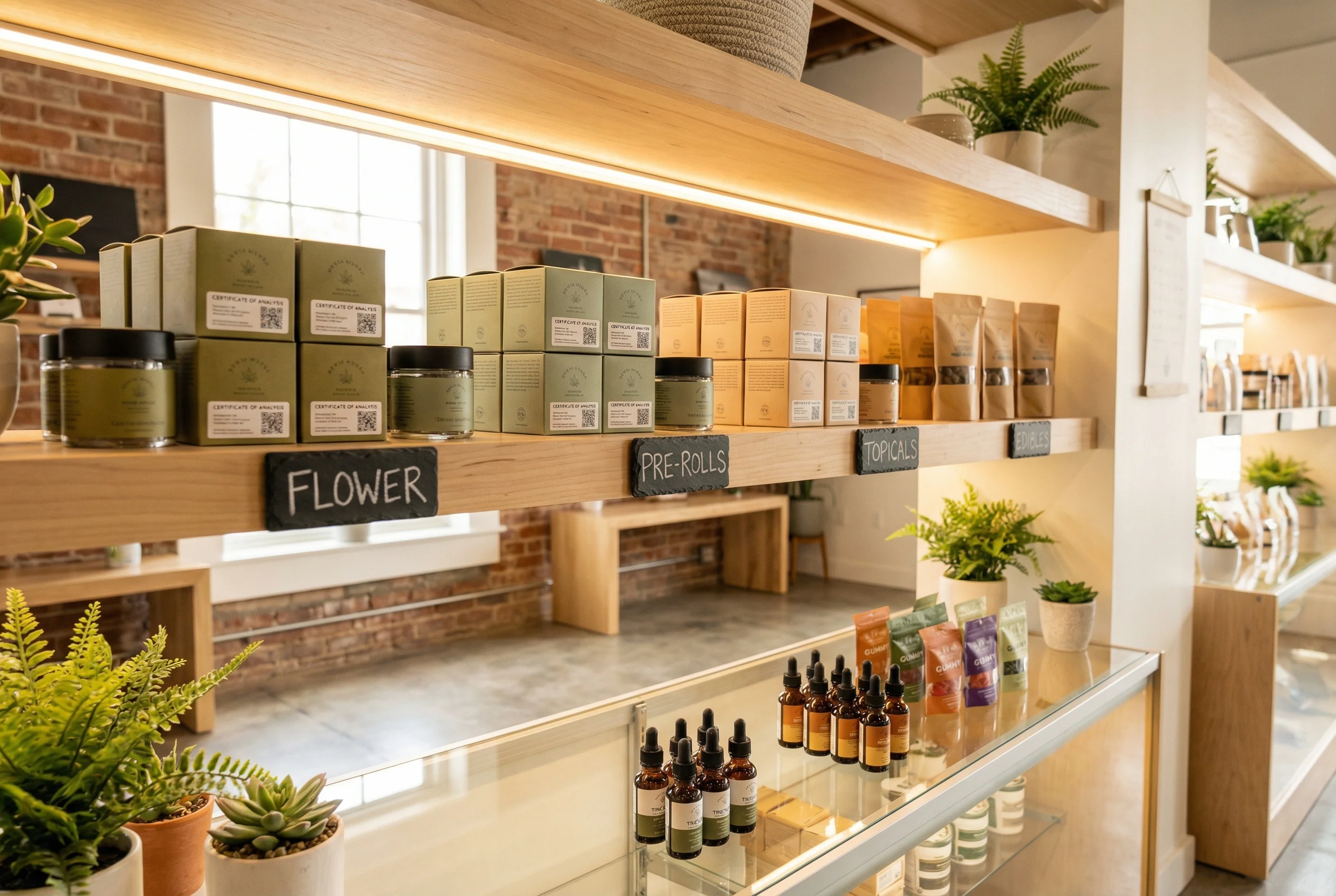
North Carolina currently has no mandatory testing requirements for hemp products. Unlike states like California, Colorado, or Oregon, which require every cannabis product to pass specific lab tests before reaching store shelves, NC relies entirely on voluntary compliance.
Governor Stein acknowledged this gap in June 2025, noting that "today all across North Carolina, there are unregulated intoxicating THC products available for purchase: just walk into any vape shop" (Governor's Office, 2025). Bills that would have required this kind of testing stalled in 2025. SB 265, a licensing bill that would have created a new Chapter 18D and required testing for cannabinoids, heavy metals, mycotoxins, pesticides and residual solvents (National Law Review, 2025), has sat in the Senate Rules Committee since March 12, 2025 (SB 265 on ncleg.gov), and the 2026 adjournment resolution does not allow committee bills like it to move this year (Resolution 2026-6). The hemp bill that is still alive, HB 328, would change the THC math and the purchase age but creates no state licensing system. For now, the responsibility falls on consumers and responsible retailers.
North Carolina status, October 10, 2026: HB 328, the state hemp crackdown, passed the Senate in July but still awaits a House vote, which can come in the reconvened sessions between October 26 and December 18. Today North Carolina sets no minimum age for hemp products, though many shops card at 21. Details in our NC hemp bill tracker.
North Carolina does have DEA-registered hemp testing laboratories. If you want to verify that a product's COA comes from a legitimate lab, the USDA maintains a directory of DEA-registered hemp testing labs. Federal rules call for hemp compliance testing at DEA-registered labs, but USDA is delaying enforcement of that requirement until December 31, 2026 (USDA AMS). NC labs include Delta 9 Analytical in Raleigh, NMS Labs in Winston-Salem, RTP Labs in Raleigh, and USDA National Science Labs in Gastonia.
That's why shopping at a dedicated dispensary matters. Shops that invest in lab-tested products and make COAs available are voluntarily meeting standards that may soon become law. Gas stations, convenience stores, and vape shops selling hemp products as a sideline are much less likely to maintain these practices.
For more on choosing the right shop, see our guide on what to look for in a NC dispensary.
Frequently Asked Questions
What does COA stand for?
COA stands for Certificate of Analysis. It's a lab report from a third-party laboratory documenting the chemical composition of a hemp product, including cannabinoid potency, pesticide levels, heavy metals, residual solvents, and microbial contaminants. It's the only way to verify that a product is safe and legal.
How do I know if a COA is fake?
Check the lab name, it should be a real, searchable company with ISO 17025 accreditation. Verify the batch number matches the product packaging. Check the test date (should be within 12 months). Scan any QR code to confirm it links to the lab's website, not the brand's. If the COA only shows cannabinoid content without contaminant testing, it's incomplete.
Should I ask for a COA every time I buy?
For new products or brands, yes. Once you've verified that a brand consistently provides complete COAs, you can trust them for repeat purchases, but it's still good practice to spot-check occasionally. Product quality can change between batches.
What's the most important thing on a COA?
For legal compliance: the Delta-9 THC percentage (must be ≤0.3%). For safety: the contaminant panels, especially pesticides and heavy metals. A product that passes potency but fails contaminant testing is legal but not safe.
What if the THC percentage is slightly over 0.3%?
Labs have a margin of uncertainty (called "measurement uncertainty" or MU) that's typically noted on the COA. Some results may show 0.31% but still technically pass when MU is factored in. However, as a consumer, you generally don't need to worry about this, the lab and manufacturer handle compliance. If a product is on a store shelf with a COA showing ≤0.3%, it's been deemed legal by the lab.
Do edibles need COAs too?
Absolutely. Edibles should have COAs showing cannabinoid content per serving and per package, plus the same contaminant panels as any other product. For edibles, accurate potency testing is especially important, a gummy labeled 10mg that actually contains 25mg could cause an uncomfortable experience, particularly for beginners. See our Delta-9 gummies guide for more on edible dosing.
Ready to shop with confidence? Browse our full directory of verified Triangle dispensaries to find shops that carry lab-tested products with accessible COAs. Or read our guide on what to look for in a NC dispensary for more quality indicators.
This article is for informational purposes only and does not constitute legal, medical, or product advice. Hemp-derived products that meet the current legal THC limit are legal under federal and NC state law today, but federal and state rules are changing; see our NC hemp bill tracker. North Carolina does not currently mandate lab testing for hemp products. Always verify product quality through available COAs before purchasing. Information last reviewed October 10, 2026.
These statements have not been evaluated by the Food and Drug Administration. Hemp products are not intended to diagnose, treat, cure, or prevent any disease. Nothing on this site is medical advice; talk to a clinician.