Tinctures vs Edibles: Which Hemp Product Is Right for You?
This article is for informational purposes only and does not constitute legal, medical, or product advice. Consult a qualified professional for guidance specific to your situation.
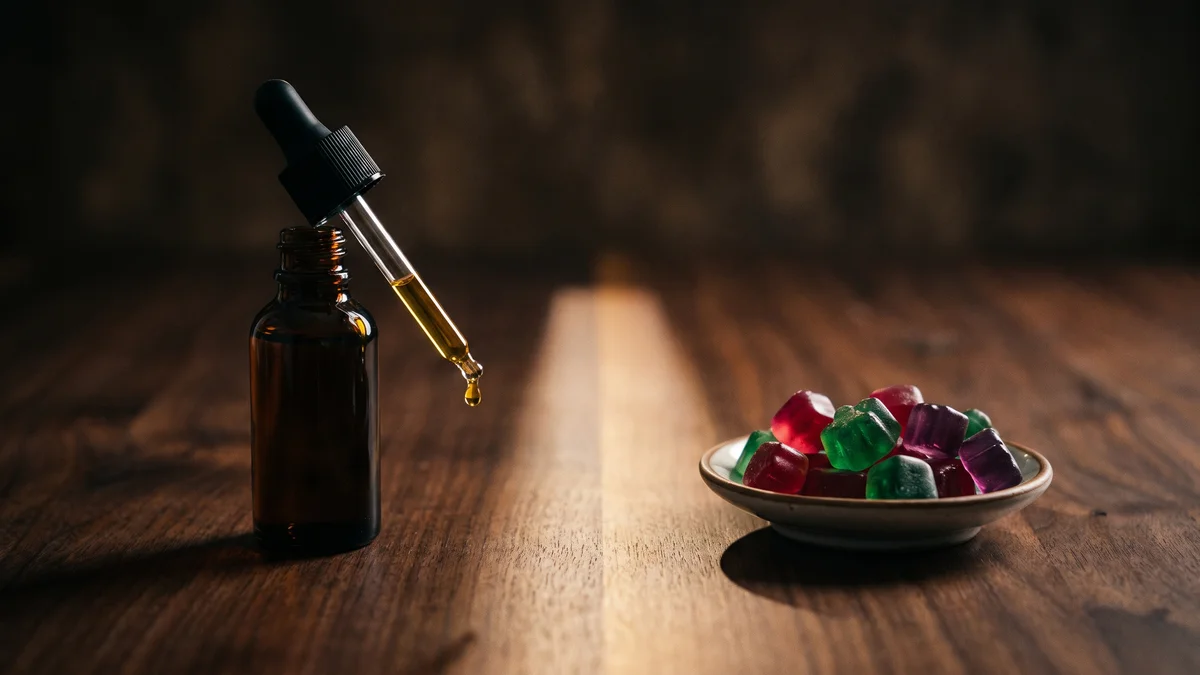
If you have browsed the shelves at a Triangle dispensary, you have probably noticed two product categories that look like they do the same thing: tinctures (small glass bottles with droppers) and edibles (gummies, chocolates, drinks). Both deliver cannabinoids without smoking. Both come in CBD, Delta-8, Delta-9, and THCa formulations. Both are legal in North Carolina under the 2018 Farm Bill and NC Session Law 2022-32 (NCGA).
But they are not interchangeable. Tinctures and edibles take completely different paths through your body, which changes how fast they work, how long the effects last, how precisely you can dose, and which ones survive the federal deadline on December 11, 2026. Picking the wrong format for your needs is one of the most common mistakes new hemp consumers make.
Tinctures are meant to be held under the tongue. In clinical data on a sublingual THC/CBD spray, effects began in 15 to 60 minutes and lasted 4 to 6 hours, while ingested cannabis took 1 to 3 hours to start and lasted 6 to 12 hours (The Permanente Journal, 2024). Oil drops are not a spray, though: much of a tincture dose gets swallowed, and a 2024 study found CBD drops and capsules absorbed the same way (PubMed, 2024). Oral CBD bioavailability is roughly 6 to 14% (PMC, 2024). Both are legal in NC today. After December 11, 2026, P.L. 119-37 caps finished hemp products at 0.4mg total THC per container (CRS), which will remove most THC tinctures and edibles from shelves while leaving pure CBD formulations untouched.
How Tinctures and Edibles Work Differently
The difference between a tincture and an edible is not what is in the bottle or the bag. It is how your body processes it.
A tincture is a concentrated liquid, usually cannabinoid extract suspended in MCT oil or alcohol. You place drops under your tongue using the built-in dropper, hold them there for 60 to 90 seconds, and swallow. The idea is that cannabinoids absorb through the thin mucous membranes under your tongue directly into your bloodstream, skipping the detour through your stomach and liver. Some of the dose can absorb that way, but studies show much of an oil tincture is swallowed, so in practice tinctures often behave more like edibles than the label suggests.
An edible, whether it is a gummy, chocolate, or drink, takes the full digestive route. You chew and swallow. The cannabinoids travel to your stomach, pass through your intestinal lining, and enter the hepatic portal vein, which carries them to your liver before they reach your general bloodstream. In the liver, an enzyme family called CYP converts Delta-9 THC into 11-hydroxy-THC (11-OH-THC), an active metabolite that a standard pharmacokinetics review describes as equipotent with THC (Huestis, PMC, 2007). Swallowed THC produces more of it than inhaled THC does.
That extra active metabolite, plus slow absorption that stretches the effect out, helps explain why edibles can feel strong and last a long time.
One nuance worth noting: if you swallow a tincture immediately instead of holding it under your tongue, it functions as an edible. It takes the full digestive route and you lose the speed advantage. The sublingual hold is the entire point.
Bioavailability: How Much Actually Reaches Your Bloodstream
Bioavailability is the percentage of a consumed substance that makes it into your bloodstream in active form. For cannabinoids, the route of administration is the biggest variable.
Sublingual (tinctures): A 2024 review in Pharmaceuticals reported oral CBD bioavailability of 6 to 14% and found that the profile with oral mucosal delivery "tends to be similar" to swallowing it (PMC, 2024). The theory behind holding drops under the tongue is to skip first-pass liver metabolism, where enzymes break down much of the cannabinoid before it reaches circulation, but for oil drops the evidence for a real advantage is thin.
Oral (edibles): The same review and earlier pharmacokinetic research place oral THC bioavailability at 4 to 20% (PMC, 2007). Oral CBD is similar, at 6 to 14%. The low numbers are not a flaw in the product. They reflect how aggressively your liver metabolizes cannabinoids on their first pass.
What does this mean practically? At 6 to 14%, a 25mg CBD dose puts roughly 1.5 to 3.5mg into your bloodstream, and the evidence so far does not show a tincture reliably beating a gummy on that number.
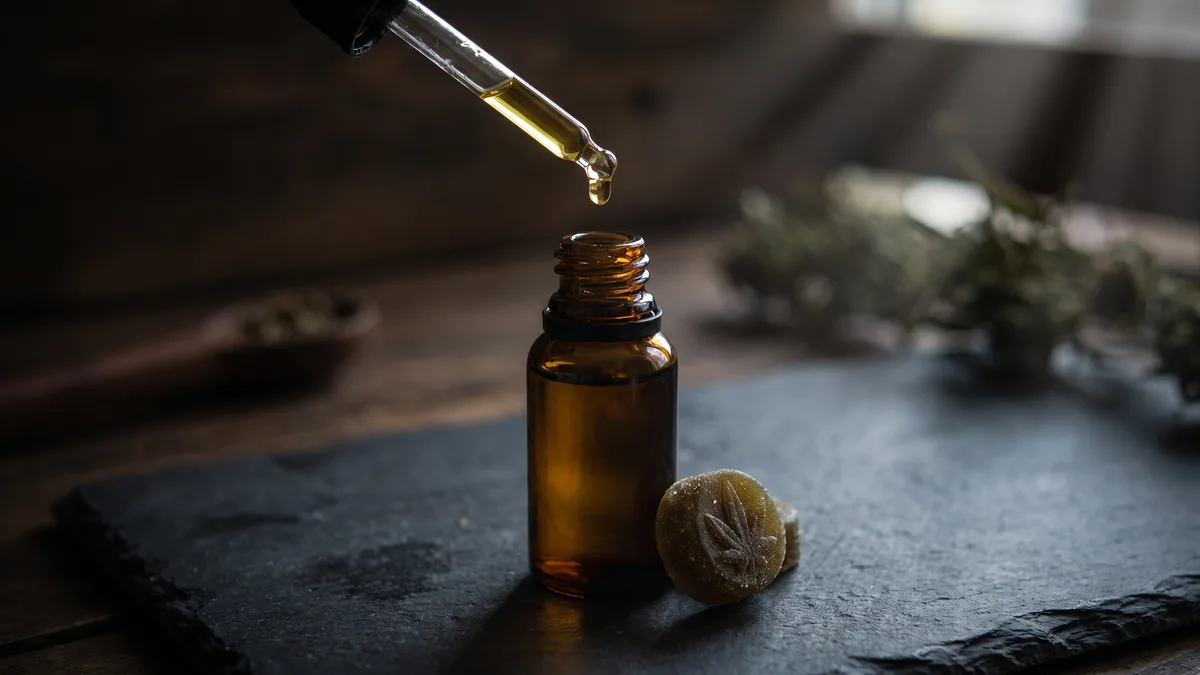
The most direct test: a 2024 study in Cannabis and Cannabinoid Research found that CBD oil taken as sublingual drops showed pharmacokinetic profiles "comparable" to oral capsules, with peak levels around 4 hours for both, which the authors read as the oil being swallowed before much mucosal absorption occurs (PubMed, 2024). If you want whatever sublingual benefit there is, hold the drops under your tongue for a full 60 to 90 seconds, but do not count on it.
Onset, Peak, and Duration
The timing profile is where tinctures and edibles diverge most dramatically. This matters for planning your day, managing symptoms, and avoiding the classic edible mistake of taking a second dose too early.
Tinctures held under the tongue may act sooner than edibles. Clinical data on sublingual THC, mainly Sativex (a THC/CBD spray), show onset within 15 to 60 minutes, peak effects around 45 minutes, and a duration of 4 to 6 hours (The Permanente Journal, 2024). The same review notes that sublingual THC's bioavailability is "very similar to the oral formulations," and an oil tincture you end up swallowing will follow the edible timeline below.
Edibles take longer: the same review puts the onset of ingested cannabis at 1 to 3 hours and its duration at 6 to 12 hours (The Permanente Journal, 2024), varying with dose, body weight, and whether you ate. The extended timeline is a direct consequence of slow GI absorption and the 11-OH-THC produced by liver metabolism.
The practical lesson: if you need relief within the hour, a tincture is the better choice. If you want effects that carry you through an evening or a full night's sleep, an edible's longer duration is the advantage.
Dosing Precision: Drops vs Pre-Dosed Pieces
One of the strongest arguments for tinctures is dosing granularity. A standard 30ml tincture bottle with a 1ml dropper lets you measure doses as small as a quarter-dropper (0.25ml). If the bottle contains 1,000mg of CBD, each full dropper delivers about 33mg, and a quarter-dropper gives you roughly 8mg. You can titrate up or down in small increments until you find the dose that works.
Edibles come pre-dosed. A typical Delta-9 gummy contains 5mg or 10mg per piece. If 5mg is too little and 10mg is too much, you are stuck cutting gummies in half with a knife, which is imprecise and messy. Some brands sell 2.5mg micro-dose gummies, but they are less common at Triangle shops.
For new consumers or anyone managing a specific condition like anxiety or sleep, the ability to adjust by 2 to 3mg at a time makes tinctures the safer starting point. You can find your minimum effective dose without overshooting.
Edibles win on convenience. There is nothing to measure, no dropper to deal with, and the taste is almost always better than oil dropped under your tongue. For experienced users who know their dose, a pre-measured gummy is simpler.
Types Available at NC Dispensaries
Both tinctures and edibles come in every major cannabinoid formulation available in the NC hemp market.
Tinctures you will find:
- CBD tinctures (full-spectrum, broad-spectrum, or isolate), the most common tincture type, carried by nearly every Triangle shop
- Delta-8 THC tinctures, less common than gummies but available at shops like those on our Raleigh and Durham guides
- Delta-9 THC tinctures, hemp-derived, kept under the 0.3% dry weight threshold
- THCa tinctures, rare in the Triangle but occasionally stocked alongside THCa flower
- CBN tinctures, marketed for sleep, often combined with CBD or THC
- Combination formulas, like CBD + CBN for sleep or CBD + CBG for focus
Edibles you will find:
- Gummies (by far the most popular edible format), available in CBD, Delta-8, Delta-9, and THCa
- Chocolates and baked goods, less common but carried by some Triangle dispensaries
- Beverages, including THC-infused seltzers and shots, a fast-growing category
- Capsules and softgels, technically an edible since they go through the digestive route
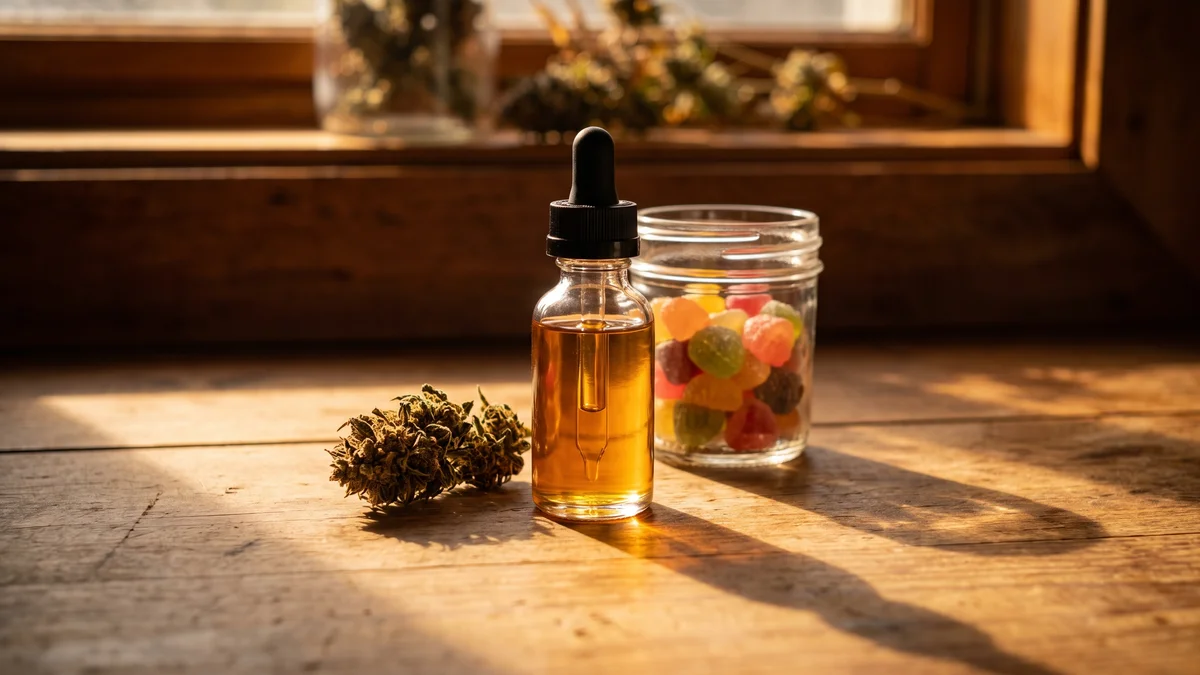
Nationally, edibles account for about 11% of total cannabis dollar sales (Flowhub, 2026); tinctures are a smaller category. On Triangle shelves, gummies take far more space than tinctures, but tinctures appeal to people who want to adjust their dose a little at a time.
Price Comparison at Triangle Shops
Pricing at Raleigh-area dispensaries follows fairly consistent ranges in mid-2026:
Tinctures typically run $30 to $80 for a 30ml bottle. The price depends on the cannabinoid (CBD tinctures are cheapest, THCa most expensive), the concentration (a 500mg bottle costs less than a 2,000mg bottle), and the extraction type (full-spectrum costs more than isolate). On a per-milligram basis, tinctures are usually the most cost-effective way to consume CBD.
Edibles range from $15 to $50 per package. A bag of ten 10mg Delta-9 gummies (100mg total) typically costs $25 to $40 at Triangle shops. CBD gummies are cheaper, often $15 to $30 for a comparable package. Specialty edibles like chocolates and beverages cost more per milligram than gummies.
The sticker price on a tincture looks higher, but a single bottle lasts weeks to months depending on your dose. A bag of gummies lasts days if you take one daily. When you calculate cost per milligram per day, tinctures usually win for regular users.
What Survives After December 2026
This is the question that separates a 2024 buying decision from a 2026 one. P.L. 119-37 redefines hemp on December 11, 2026, capping finished products at 0.4mg of total THC per container (Congressional Research Service). The U.S. Hemp Roundtable estimates roughly 95% of existing hemp products will be affected (Frier Levitt).
Here is what that means for each category:
Tinctures that survive: CBD-only tinctures (isolate, broad-spectrum, and full-spectrum formulas with trace THC under 0.4mg per container) should remain legal. A 30ml bottle of CBD isolate tincture containing zero THC is completely unaffected. Full-spectrum CBD tinctures with very low THC concentrations may also clear the bar depending on the total milligram count per container.
Tinctures that do not survive: Any tincture with meaningful THC content. A typical Delta-8 or Delta-9 tincture contains 500 to 1,000mg of total THC per bottle, thousands of times above the 0.4mg cap. THCa tinctures also fail because THCa counts toward total THC under the new definition.
Edibles that survive: CBD-only gummies with zero or trace THC. Functional mushroom edibles (which contain no cannabinoids at all) are not affected.
Edibles that do not survive: Any gummy, chocolate, or drink containing Delta-8, Delta-9, or THCa above the per-container cap. A single 5mg gummy already exceeds 0.4mg by more than 12 times.
If you are choosing between tinctures and edibles today and want a product you can keep using past December 11, 2026, CBD tinctures are the safest long-term bet. For more on how the deadline works, see our complete P.L. 119-37 consumer guide and what to stock up on before the federal deadline.
NC is also considering its own regulations via HB 328, which would impose a 21+ age limit and align with the federal total-THC standard.
North Carolina status, October 10, 2026: HB 328, the state hemp crackdown, passed the Senate in July but still awaits a House vote, which can come in the reconvened sessions between October 26 and December 18. Today North Carolina sets no minimum age for hemp products, though many shops card at 21. Details in our NC hemp bill tracker.
Which One Is Right for You?
Neither tinctures nor edibles are universally better. The right choice depends on your priorities.
Choose tinctures if:
- You want a chance at faster onset (15 to 60 minutes in sublingual spray data vs 1 to 3 hours swallowed), and you will hold the drops under your tongue
- You need precise dosing control (medical users, first-timers)
- You take cannabinoids for daytime symptom management where a shorter, controllable window matters
- You want the most cost-effective option for daily CBD use
- You want a product that is likely to remain legal after December 2026 (CBD tinctures)
- You dislike the taste of gummies or have dietary restrictions (sugar, gelatin)
Choose edibles if:
- You want effects that last longer (6 to 12 hours, better for sleep)
- You prefer a fixed, pre-measured dose with no measuring required
- You want something that tastes good and feels like a normal snack
- You are an experienced user who knows their dose and does not need to titrate
- You do not mind a slow start; the liver's active metabolite, 11-OH-THC, helps explain why edibles can feel strong
Try both if:
- You are comparing for the first time. Buy a CBD tincture and a low-dose gummy (2.5 to 5mg) and test each on separate occasions
- You use CBD for pain during the day (tincture) and THC for sleep at night (edible)
A tincture and an edible can complement each other. Many regular consumers keep both on hand for different situations.
Frequently Asked Questions
Can I mix tinctures and edibles?
Yes, but start with one at a time so you know how each affects you individually. If you do combine them, reduce both doses. A 15mg tincture plus a 10mg edible is not the same as taking 25mg of either one alone, because the two routes can kick in at different times, so doses taken an hour or two apart can stack. Combining creates a less predictable and potentially stronger experience.
Do tinctures taste bad?
Most tinctures have an earthy, hemp-forward flavor because the extract sits in a carrier oil like MCT (coconut-derived) or hemp seed oil. Some brands add natural flavorings like peppermint, citrus, or berry to mask the taste. If taste is a dealbreaker, flavored tinctures or capsules (which are swallowed like edibles) are alternatives. Ask your local dispensary staff for flavor recommendations.
Are tinctures faster than gummies for anxiety?
Possibly, if you hold the drops under your tongue. Sublingual spray data show onset in 15 to 60 minutes versus 1 to 3 hours for ingested products (The Permanente Journal, 2024), but oil drops are often swallowed, and a 2024 study found CBD drops and capsules absorbed the same way (PubMed, 2024). Separately, a 2019 retrospective chart review of patients taking CBD, mostly as capsules, found anxiety scores decreased within the first month in 79.2% of them (PMC, 2019); that study did not compare tinctures with gummies. See our full guide on cannabis for anxiety in NC.
Will tinctures show up on a drug test?
Yes, if they contain THC. The same drug test rules apply regardless of whether you consume THC as a tincture, edible, or flower. CBD-isolate tinctures with verified zero THC are the safest option for drug-tested employees, but even then, labels slip: a 2024 study of CBD products found 26% did not match the product type on their packaging, and some broad-spectrum products sold as THC-free contained THC (Frontiers in Pharmacology, 2024). Always check the COA.
How should I store tinctures vs edibles?
Tinctures last longest when stored upright in a cool, dark place, away from direct sunlight. Most have a shelf life of 12 to 24 months unopened. The carrier oil can go rancid if exposed to heat or light for extended periods. Edibles (especially gummies) should be stored in their sealed packaging at room temperature. Chocolate edibles may need refrigeration in summer. Both products should be kept away from children and pets. For more on storage and shelf life, see our stock-up guide.