CBD for Pain Relief: What NC Consumers Should Know in 2026
This article is for informational purposes only and does not constitute legal, medical, or product advice. Consult a qualified professional for guidance specific to your situation.
Pain is the #1 reason Americans use CBD. A Gallup poll found that 40% of CBD users take it for pain, ahead of anxiety (20%) and insomnia (11%) (Gallup, 2019). A 2019 Arthritis Foundation survey of 2,600 people found 79% were currently using, had used, or were considering CBD for their condition (Healio, 2019).
But the clinical evidence is more nuanced than most brands want you to believe. CBD has real pharmacological mechanisms for pain, it acts on TRPV-1 receptors, 5HT-1A serotonin receptors, and the endocannabinoid system. The question isn't whether CBD can affect pain. It's how well, for which types of pain, and at what doses.
This guide cuts through the marketing to show you what systematic reviews of clinical trials actually say, and how to use CBD for pain responsibly if you decide it's right for you.
A 2024 systematic review found 7 of 11 human clinical trials reported less pain with CBD and 4 did not (PMC, 2024). The 2025 AHRQ review found oral products with a low THC-to-CBD ratio "may not" outperform placebo, while combination CBD+THC products showed small benefits (NCBI, 2025). Topical CBD for osteoarthritis is early and promising but unconfirmed. Neuropathic pain has the most clinical data, but the benefit is modest: a 2025 review found cannabinoids lowered pain scores by about 6 to 9 points on a 100-point scale. CBD is not FDA-approved for pain.
What the Clinical Evidence Actually Shows
Let's start with the most authoritative source: the 2025 AHRQ Living Systematic Review of randomized trials and observational studies on cannabis products for chronic pain. Its headline finding:
Oral products with a low THC-to-CBD ratio, such as CBD-dominant oils, "may not be associated with improved pain and function" (ODPHP summary; NCBI, 2025). However, products combining THC and CBD in comparable ratios were associated with a small improvement in pain severity (PubMed, 2025).
This is the most rigorous evidence available. It doesn't prove CBD does nothing for pain; it means the evidence for CBD alone as an oral supplement is weaker than the evidence for CBD+THC combinations, and even those benefits are small.
A broader 2024 systematic review of 40 studies included 11 human clinical trials: 7 reported less pain with CBD and 4 did not (PMC, 2024).
Which Types of Pain Have the Most Evidence?
Neuropathic pain
The most studied, but the benefit is modest. A 2025 review found that the strongest data come from neuropathic pain, where cannabinoids reduced pain scores by 6 to 9 points on a 0 to 100 scale and nearly doubled the likelihood of a 30% reduction in pain, while concluding that cannabinoid therapies in chronic pain "provide only modest analgesic benefits" (PMC, 2025). Most of that data involves THC-containing products, not CBD alone.
Osteoarthritis (topical)
A small 2024 open-label trial (18 enrolled, 15 completed, no placebo group) of a 4% CBD gel applied 3 times daily for 4 weeks reported lower hand osteoarthritis pain: current pain (-1.91), average pain (-1.92), and maximum pain (-1.97) on a numeric scale, all with p < 0.0001 (Nature Scientific Reports, 2024). The gains faded during the washout period, and the authors note a placebo-controlled trial is still needed. CBD metabolites were detected in urine, suggesting some of the CBD reached the bloodstream.
Fibromyalgia
Survey data only. In a 2021 online survey of 878 people with fibromyalgia who used CBD, 72% said they had substituted CBD for a pain medication, most often NSAIDs (59%) or opioids (53%), and most of them reported cutting back or stopping that medication (Journal of Pain, 2021). This is self-reported data, not a controlled trial, and some respondents used CBD products containing more than 0.3% THC.
Topical vs. Oral CBD for Pain
This distinction matters more than most consumers realize:
Topical CBD (creams, gels, patches), Applied directly to the skin at the site of pain. Avoids first-pass liver metabolism. In animal studies, CBD applied to the skin reached the bloodstream (PMC, 2024), and the small human gel trial above detected CBD metabolites in urine. Its early evidence is for localized joint pain.
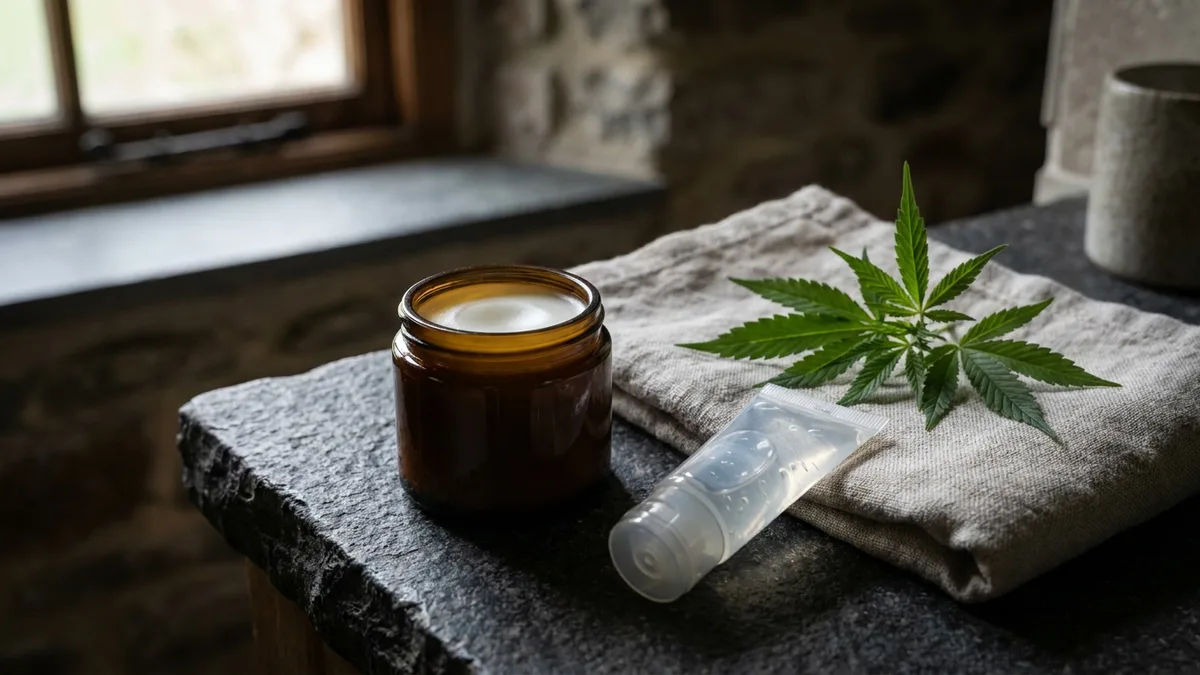
Oral CBD (tinctures, capsules, edibles), Systemic effects but low bioavailability (6–14%). The AHRQ review found oral CBD alone may not outperform placebo. Oral CBD+THC combinations fared better. More suitable for widespread or centralized pain conditions.
Bottom line: If your pain is localized (a specific joint, muscle group, or area), topical CBD is a reasonable first try with fewer drug interaction concerns, though its evidence is still early. For widespread or neuropathic pain, the modest benefits seen in trials mostly came from products that include THC.
CBD vs. Traditional Pain Relievers
CBD isn't a replacement for proven pain treatments. But its safety profile is notable: a review of clinical evidence found CBD "appears exceptionally safe with very few concerns even at doses >300–400 mg" (PMC, 2023). There is no fatal overdose risk and no physical addiction potential, properties that matter in the context of NC's opioid crisis.
The NC Opioid Context
North Carolina's overdose deaths peaked in 2023, when the death rate was roughly double the 2018 baseline of 20.4 per 100,000. By 2025 the state estimated about 2,731 overdose deaths, roughly 8 per day (NC DHHS, 2025).
That is a real improvement: by late 2024 the rate had fallen to 25.7 per 100,000, though that was still about 25% above the 2018 baseline (NCIOM, 2025).
That context is why the risk profiles of common pain relievers matter. Here is how CBD compares with NSAIDs and opioids:
Against this backdrop, a small 2020 study without a control group (97 patients, led by an author affiliated with the product maker) found that 53% of chronic pain patients reduced or eliminated opioids within 8 weeks of adding CBD hemp extract, with 94% reporting quality of life improvements (Postgraduate Medicine, 2020). This doesn't mean CBD replaces opioids for severe pain, but it suggests CBD may play a complementary role for some patients in reducing reliance on higher-risk medications.
Important: Never stop or reduce prescribed pain medications without consulting your doctor. CBD is a supplement, not a substitute for medical care.
How to Dose CBD for Pain
Clinical dosing guidance from a 2021 expert consensus in the Journal of Cannabis Research (Journal of Cannabis Research, 2021):
Start: 5mg CBD twice daily (10mg total)
Titrate: Increase by 10mg every 2–3 days
Ceiling: up to 40mg per day, after which the panel suggests a clinician consider adding THC
That consensus was written for medical cannabis prescribers, so treat it as a cautious reference rather than a proven regimen. For topicals, the small 2024 osteoarthritis trial applied a 4% CBD gel three times daily to the affected joints.
For more on CBD types, bioavailability, and label reading, see our comprehensive CBD oil guide.
Drug Interactions for Pain Patients
If you're taking other pain medications alongside CBD, drug interactions are a real concern. CBD inhibits CYP3A4 and CYP2C9, the same enzymes that metabolize many common pain drugs:
- NSAIDs (ibuprofen, naproxen), Theoretically increased levels, but clinical significance is unclear
- Acetaminophen, Both processed by the liver; monitor for liver function if combining high doses
- Gabapentin/pregabalin, Limited interaction data, but both cause drowsiness, expect additive sedation
- Opioids, CBD may alter opioid metabolism; never adjust opioid doses without medical guidance
- Blood thinners (warfarin), Documented dangerous interaction; INR monitoring essential
For a full list of drug interactions, see our CBD oil guide.
Frequently Asked Questions
Does CBD actually work for pain?
Possibly, but modestly. Neuropathic pain has the most clinical data, though benefits are small and mostly involve THC-containing products, and topical CBD for osteoarthritis is early and unconfirmed. Oral CBD alone showed weaker results than CBD+THC combinations in the most authoritative 2025 review. Individual responses vary, some patients report significant relief, others notice little difference.
Is topical or oral CBD better for pain?
For localized pain (a specific joint or area), topical CBD is a reasonable first try with fewer drug interaction concerns. For widespread pain, oral products may be more appropriate. A small 2024 open-label trial reported less hand osteoarthritis pain with a CBD gel, but it had no placebo group.
How long does CBD take to work for pain?
Users often report noticing topical effects within an hour. With oral CBD, the trials cited here ran for weeks, so give a consistent routine at least two weeks before judging it, and stop if it isn't helping.
Can CBD replace my pain medication?
Do not stop or reduce prescribed medications without consulting your doctor. Surveys and small uncontrolled studies suggest CBD may help some patients reduce reliance on opioids and NSAIDs, but this should always be done under medical supervision. CBD is a complement, not a replacement.
Where can I buy CBD for pain in the Triangle?
Shops with wellness-focused staff include Emerald Medicine Company in Durham, Trek CBD in Raleigh (CBD specialist), and The Hemp Store in Chapel Hill. Ask about topical CBD products specifically if you have localized pain. Browse all shops at the Triangle dispensary directory.
Looking for more? Read our CBD oil guide for types, dosing, and drug interactions. See what to look for in a dispensary to find quality products with proper COAs. Browse the Triangle dispensary directory to find a shop near you.
This article is for informational purposes only. It does not constitute medical advice. CBD is not FDA-approved for pain relief. The research cited is for educational purposes, individual results may vary. Consult a healthcare provider before starting CBD, especially if you take prescription medications or have a chronic pain condition. Never stop or reduce prescribed medications without medical guidance. Information is current as of October 2026.
These statements have not been evaluated by the Food and Drug Administration. Hemp products are not intended to diagnose, treat, cure, or prevent any disease. Nothing on this site is medical advice; talk to a clinician.