THCa Concentrates Guide: Shatter, Wax, Live Rosin & Dabs in NC

This article is for informational purposes only and does not constitute legal, medical, or product advice. Consult a qualified professional for guidance specific to your situation.
THCa concentrates belong to one of the fastest-growing cannabis product types. Among past-year cannabis consumers, concentrate use rose from 17% in 2018 to 25% in 2023, a 47.1% jump, according to International Cannabis Policy Study survey data in a 2024 National Academies report. The global concentrate market hit $1.6 billion in 2025 and is projected to reach about $9 billion by 2036 (Future Market Insights, 2025).
But walking into a North Carolina dispensary and choosing between shatter, wax, live rosin, diamonds, and crumble can feel overwhelming. Add the P.L. 119-37 federal deadline on December 11, 2026, and buyers need clear answers about what's legal, what's safe, and what's worth their money.
This guide covers every concentrate type sold at NC dispensaries, how to use them safely, the legal situation specific to North Carolina, and where to find them in the Triangle.
THCa concentrates (shatter, wax, live rosin, diamonds) are legal in North Carolina today under the 2018 Farm Bill and deliver 60-99% THCa potency compared to 20-30% in flower. They require a dab rig or e-nail and careful temperature control (315-450°F) for safety. Start with a rice-grain-sized portion if you're new. Federal law P.L. 119-37 will likely eliminate most concentrates on December 11, 2026.
What Are THCa Concentrates?
The average cannabis concentrate tested at 69% THC in Washington State's 2022 market data, compared to just 21% for flower (WA State Liquor and Cannabis Board, 2023). That 3x potency gap is what defines concentrates: they're extracted hemp products where the good stuff (cannabinoids and terpenes) has been separated from the plant material.
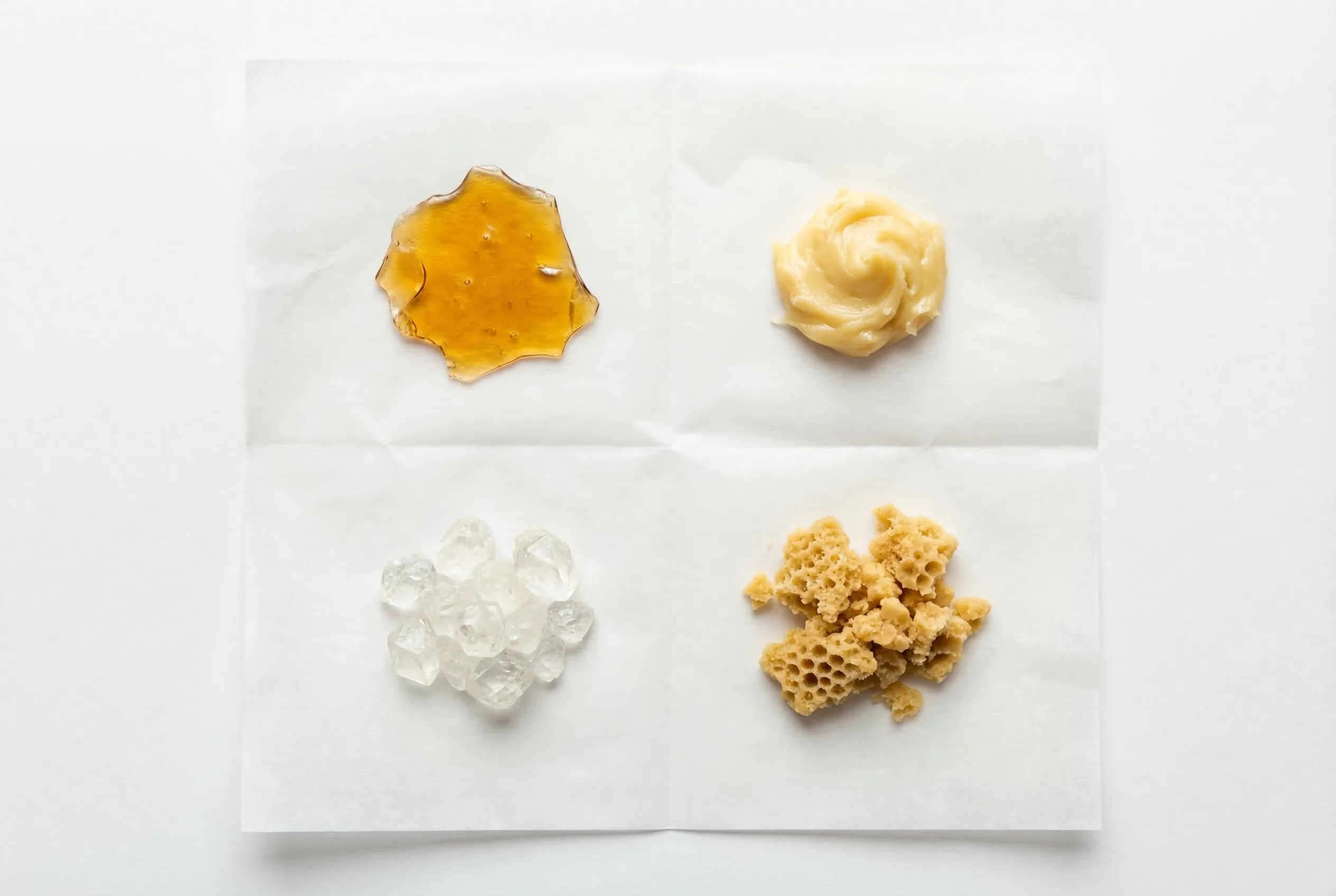
The process works by isolating the trichomes, those tiny crystal-like structures coating hemp flower that contain THCa, terpenes, and other cannabinoids. Different extraction methods produce different textures and potencies, but the end result is always a product far more concentrated than what you'd get from smoking or vaping raw flower.
When you heat a THCa concentrate (by dabbing, vaping, or adding it to flower), the THCa converts to Delta-9 THC through decarboxylation. That's why a concentrate labeled "80% THCa" produces the same type of effects as traditional high-THC cannabis. For a deeper look at how THCa works, see our THCa flower guide.
Among young adults aged 18-25, 7.1% reported dabbing concentrates in the past month according to 2022 NSDUH data, compared with 2.4% of everyone age 12 and older (National Academies, 2024). Dabbing isn't mainstream yet.
All legal hemp concentrates in North Carolina must be derived from hemp containing less than 0.3% Delta-9 THC by dry weight, the same threshold that applies to THCa flower.
Types of THCa Concentrates: Which One Should You Try?
Six main types of THCa concentrates line dispensary shelves, each with a distinct texture, extraction method, and price point. Here's what separates them.
Shatter
Glass-like and translucent, shatter snaps when you bend it (hence the name). It's produced through butane hash oil (BHO) extraction and typically tests between 70-85% THCa. Shatter is one of the most widely stocked concentrates because it's affordable to produce and easy to dose. Prices vary by shop and brand; a gram has typically run about $25-45 in the Triangle.
Here's how shatter's potency range compares with the other five types and with flower.
Wax and Budder
Soft, opaque, and easy to scoop with a dab tool. Wax and budder are made the same way as shatter, but the oil is whipped during purging, introducing air that creates a creamy texture. Potency sits around 65-80% THCa. Beginners often prefer wax because it's easier to handle than brittle shatter.
Live Rosin
The premium option. Live rosin is solventless, meaning no chemicals touch the product at any point. Fresh-frozen flower is pressed with heat and pressure to squeeze out the resin. Many users find live rosin preserves terpenes especially well, which is why it is prized for flavor. Expect 60-80% THCa and prices of $50-80 per gram.
Live Resin
Don't confuse this with live rosin. Live resin uses hydrocarbon solvents (usually butane) to extract from fresh-frozen flower. The "live" part means the starting material was frozen immediately after harvest, preserving volatile terpenes that normally evaporate during curing. Potency ranges from 70-90% THCa with strong, complex flavors.
Diamonds
Crystalline THCa in its purest form. Diamonds are isolated THCa crystals that can test at 90-99% purity, making them the most potent concentrate available. They're often sold swimming in "terp sauce," a terpene-rich liquid that adds flavor back to what would otherwise be a flavorless crystal. Diamonds hit hard and aren't recommended for beginners.
Crumble
A dry, honeycomb-textured concentrate that crumbles between your fingers. It's versatile: you can dab it, sprinkle it on flower, or load it into a vape pen. Potency falls in the 60-80% THCa range. Crumble is the easiest concentrate to work with if you don't have specialized tools.
Quick Reference Table
| Type | Texture | Extraction | THCa Range | Price/Gram | Best For |
|---|---|---|---|---|---|
| Shatter | Glass-like, snaps | BHO (solvent) | 70-85% | $25-45 | Budget-conscious dabbers |
| Wax/Budder | Soft, creamy | BHO (solvent) | 65-80% | $25-45 | Beginners, easy handling |
| Live Rosin | Sticky, golden | Heat + pressure (solventless) | 60-80% | $50-80 | Flavor chasers, purity |
| Live Resin | Saucy, aromatic | BHO from fresh-frozen | 70-90% | $35-60 | Full-spectrum experience |
| Diamonds | Crystalline rocks | Isolation/separation | 90-99% | $45-70 | Experienced users, max potency |
| Crumble | Dry, honeycomb | BHO (solvent) | 60-80% | $20-40 | Versatility, topping flower |
How Are THCa Concentrates Made?
Extraction methods fall into two camps, and the distinction matters for both safety and price.
Solvent-Based Extraction
Butane, CO2, or ethanol strips cannabinoids and terpenes from the plant material. The solvent is then purged (removed) through vacuum ovens and heat. Distillates lead this category, holding about 42% of the global concentrate market by product form (Future Market Insights, 2025).
Pros: Higher yields, lower production costs, and more consistent results. This is why shatter, wax, and crumble are the most affordable concentrates.
Cons: If the producer doesn't purge properly, residual solvents remain in the final product. This is why checking the Certificate of Analysis (COA) is critical for any solvent-based concentrate. Our guide on how to read a COA walks you through what to look for, including residual solvent testing.
Solventless Extraction
No chemicals involved. Ice water hash uses cold water and agitation to separate trichomes. Rosin uses heat and mechanical pressure. The result is a cleaner product that commands premium pricing.
Pros: No risk of residual solvents, preserves the full terpene profile, and appeals to health-conscious consumers. Live rosin in particular has developed a cult following for its flavor complexity.
Cons: Lower yields mean higher prices. A gram of live rosin costs roughly double what shatter costs. Solventless also requires high-quality starting material, so producers can't hide behind the extraction process.
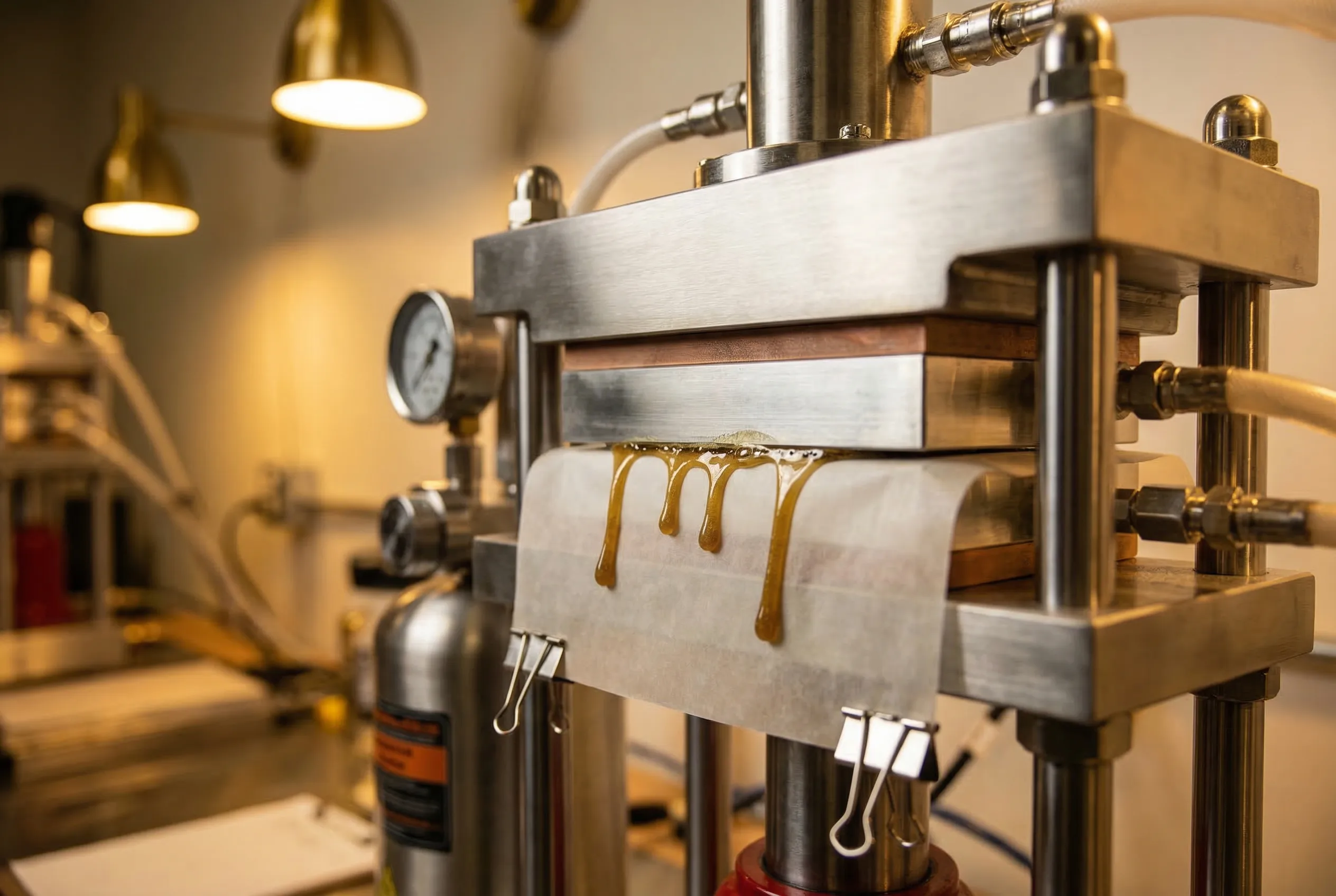
How do you know which method your concentrate used? It should be printed on the label, and the COA will confirm whether residual solvents were tested and at what levels. If a product doesn't list the extraction method, that's a red flag.
How Do You Use THCa Concentrates Safely?
Vape cartridges make up about 38% of concentrate sales (Future Market Insights, 2025), but there are multiple ways to consume concentrates. Temperature control is the single most important safety factor regardless of which you choose.
Dabbing (Dab Rig or E-Nail)
The most common method. You heat a glass, quartz, or titanium "nail" attached to a water pipe, then touch a small amount of concentrate to the hot surface. The concentrate vaporizes instantly, and you inhale through the rig.
Step by step: Heat the nail with a torch (or set your e-nail to the target temperature). Wait 30-45 seconds for it to cool to the right range. Use a dab tool to place a rice-grain-sized amount on the nail. Inhale slowly. Cap the nail with a carb cap to retain vapor.
Vape Pens
Concentrate-compatible vape pens offer a more portable, less intimidating entry point. Load a small amount of wax or crumble into the chamber, or use a pre-loaded cartridge. For more on vape hardware and safety, see our hemp vapes guide.
Topping Flower
The simplest approach: crumble a small piece of concentrate onto a bowl of flower or twist it into a joint. You don't need any special equipment, and you get a noticeable potency boost. This works especially well with crumble and wax.
Why Temperature Matters
This is where safety gets serious. A peer-reviewed study from Portland State University measured methacrolein (a toxic compound) in dab vapor: it reached 185 parts per billion at 526°C (979°F) and was still present at 403°C (757°F). It was undetectable only at the lowest temperature tested, 322°C (612°F) (Meehan-Atrash et al., ACS Omega, 2017).
The practical takeaway? Stay in the 315-450°F range. You'll get smooth, flavorful hits with a lower risk of the toxic byproducts measured in this study, which did not test temperatures that low. E-nails and temperature-controlled rigs make this easy. If you're using a torch, let the nail cool for 30-45 seconds after heating before you dab.
Dosing for Beginners
Start small. A "dab" should be the size of a grain of rice, roughly 10-25mg of product. Remember, concentrates are 3-5x more potent than flower. Wait at least 15-20 minutes before taking another hit. You can always take more, but you can't take less.
Are THCa Concentrates Legal in North Carolina?
Yes, THCa concentrates derived from hemp are currently legal in North Carolina. The 2018 Farm Bill and North Carolina's SB 455 both define legal hemp as any cannabis plant or derivative containing less than 0.3% Delta-9 THC by dry weight. Concentrates made from compliant hemp flower fall squarely within this definition.
The key distinction: legality is measured by Delta-9 THC content, not total THC. A shatter product testing at 75% THCa and 0.2% Delta-9 THC is federally legal today, even though heating it converts most of that THCa into psychoactive THC. For a full breakdown of current law, see our THCa legality guide for North Carolina.
The P.L. 119-37 Problem for Concentrates
This is about to change. Federal law P.L. 119-37, signed in November 2025, shifts enforcement from Delta-9 THC alone to total THC, calculated as: THCa × 0.877 + Delta-9 THC = total THC.
Run that math on a typical concentrate. A shatter testing at 75% THCa would calculate to approximately 65.8% total THC, far above any conceivable legal threshold. In practical terms, P.L. 119-37 eliminates nearly every THCa concentrate on the market when its total-THC test takes effect on December 11, 2026.
Update, October 10, 2026: The federal deadline discussed on this page has moved, and the move is now law. H.R. 6500 became Public Law 119-103 on September 2, 2026. Its Section 2019 keeps only the narrowest piece of the new hemp definition on November 12, 2026, covering cannabinoids the plant cannot naturally make, and delays the rest to December 11, 2026, including the 0.4mg total THC per container cap that reaches most finished products (Section 2019, enrolled text). For nearly everything sold at a Triangle hemp shop, delta-8 included, December 11, 2026 is the date that matters. Nothing has changed it since September, but it falls on the same day federal funding runs out, so watch the next funding bill. See our NC hemp bill tracker for current status, and our December 11 report for how many Triangle shops sell what it reaches.
CBD-only concentrates, very low-THCa products, and isolated terpene extracts will likely survive the transition. But traditional THCa shatter, wax, live rosin, and diamonds? Their days are numbered under current federal law. For the full timeline and what NC legislators are doing about it, read our P.L. 119-37 federal hemp law update.
North Carolina's hemp industry is valued at about $3.2 billion and employed nearly 16,000 people in 2025, according to a Whitney Economics study (WFAE, 2026). State law is also in play: HB 328, which still awaits a House vote, would bring a total-THC standard into North Carolina law as well.
How Do You Spot Quality THCa Concentrates?
A 2025 study of products from 52 licensed Colorado dispensaries found 96% of concentrates within 15% of their labeled THC, versus 56.7% of flower, though both tended to test lower than labeled (Nature Scientific Reports, 2025). That was a regulated marijuana market. NC hemp products face no state testing mandate, so check the COA.
Check the COA First
Every reputable concentrate should come with a third-party Certificate of Analysis. Look for:
- Cannabinoid profile: THCa percentage, Delta-9 THC (must be under 0.3%), and CBD if present
- Residual solvents: Should show "ND" (not detected) or values well below state limits, especially for BHO-extracted products
- Pesticides and heavy metals: These concentrate along with the cannabinoids during extraction. A clean flower source is essential.
- Microbial testing: Mold and bacteria counts
Our complete guide to reading COAs breaks down each section and tells you exactly what numbers to look for.
Visual and Sensory Cues
Color: Quality shatter is amber to golden. Quality wax and budder are light yellow to golden. Dark brown or green concentrates suggest poor purging, old source material, or contamination.
Clarity: Shatter should be translucent. Cloudiness isn't necessarily bad (it can indicate lipid or wax content), but extreme cloudiness combined with dark color is a warning sign.
Smell: Clean concentrates smell terpy and complex. If a concentrate smells like chemicals, plastic, or has no smell at all, proceed with caution. Chemical odors can indicate residual solvents.
Price as a Quality Signal
Very cheap concentrates raise questions. If a gram of shatter costs significantly less than $20, the producer may be cutting corners on testing, using low-quality source material, or skipping proper solvent purging. Premium live rosin costs more for legitimate reasons: solventless extraction, fresh-frozen starting material, and lower yields.
Where Can You Buy THCa Concentrates in the Triangle?
Multiple dispensaries across the Raleigh-Durham-Chapel Hill Triangle carry THCa concentrates, with the widest selection in Raleigh's 36 shops. Not every dispensary stocks every type, though. Shatter and wax are the most widely available, while live rosin and diamonds tend to appear at shops that focus on premium products.
When shopping for concentrates at a Triangle dispensary, ask these questions:
- "Can I see the COA for this product?" Any shop that can't or won't produce a COA should be avoided.
- "Is this solvent-based or solventless?" This tells you the extraction method and helps you understand the price.
- "When was this batch produced?" Concentrates lose potency and flavor over time. Fresh is better.
- "What strain was this extracted from?" Strain origin affects terpene profile and effects.
Raleigh's shops along Hillsborough Street and Capital Boulevard carry the broadest concentrate selections. Durham's dispensaries also stock concentrates, and several Cary shops carry premium options. Browse our full dispensary directory to find shops near you, or check the concentrates product page for shops that specifically carry this category.
For context on how concentrates compare to other product types available at NC dispensaries, see our guides on THCa flower, edibles, and Delta-8 vs. Delta-9 vs. THCa.
Frequently Asked Questions
How strong are THCa concentrates compared to flower?
Concentrates contain 60-99% THCa depending on type, while flower averages 15-20% with high-potency strains reaching 35% (WA State LCB, 2023). That makes concentrates roughly 3-5x more potent per gram. Start with a rice-grain-sized amount if you're transitioning from flower.
What temperature should I dab THCa concentrates?
Stay between 315-450°F for the best balance of flavor, smoothness, and safety. Research from Portland State University detected the toxic byproduct methacrolein at 757°F and above, and found none at 612°F, the lowest temperature it tested (ACS Omega, 2017). E-nails remove the guesswork by letting you set an exact temperature.
Is THCa shatter legal in North Carolina?
Yes, THCa shatter is legal in NC as long as it's derived from hemp containing less than 0.3% Delta-9 THC by dry weight under the 2018 Farm Bill and NC SB 455. However, P.L. 119-37's total-THC test takes effect on December 11, 2026, which would effectively prohibit most THCa concentrates under federal law.
What is the difference between live rosin and live resin?
Live rosin is solventless, extracted using only heat and pressure. Live resin uses hydrocarbon solvents like butane. Both start with fresh-frozen flower for superior terpene preservation, which is why both carry the "live" label. Live rosin costs more ($50-80/g vs. $35-60/g for live resin) because the solventless process has lower yields.
Do THCa dabs show up on a drug test?
Yes. When you dab THCa concentrates, the heat converts THCa to Delta-9 THC, which your body metabolizes into THC-COOH. Standard drug tests detect this metabolite. Our guide on hemp products and drug tests covers SAMHSA cutoffs, detection windows, and legal protections for NC consumers.
How should I store THCa concentrates?
Keep concentrates in an airtight glass or silicone container in a cool, dark place. Heat, light, and air all degrade THCa and terpenes over time. For live rosin and live resin, refrigeration extends shelf life significantly. Avoid storing concentrates in plastic, which can leach chemicals into the product and degrade terpenes.
The Bottom Line
- THCa concentrates deliver 60-99% potency, roughly 3-5x stronger than flower
- Six main types exist: shatter, wax/budder, live rosin, live resin, diamonds, and crumble
- Solventless options (live rosin) are purest but cost more; solvent-based (shatter, wax) are more affordable
- Always dab below 600°F. The 315-450°F range gives the best flavor and the lowest byproduct risk.
- Concentrates are currently legal in NC under the 2018 Farm Bill, but P.L. 119-37 will likely end most THCa concentrate sales on December 11, 2026
- Always check the COA before buying. Look for residual solvents, pesticides, and accurate potency labeling.
Ready to try concentrates? Browse 80+ verified dispensaries across Raleigh, Durham, Chapel Hill, and the Triangle to find shops that carry THCa shatter, wax, live rosin, and more.