Traveling with Hemp in North Carolina: What You Can and Can't Carry
This article is for informational purposes only and does not constitute legal, medical, or product advice. Consult a qualified professional for guidance specific to your situation.
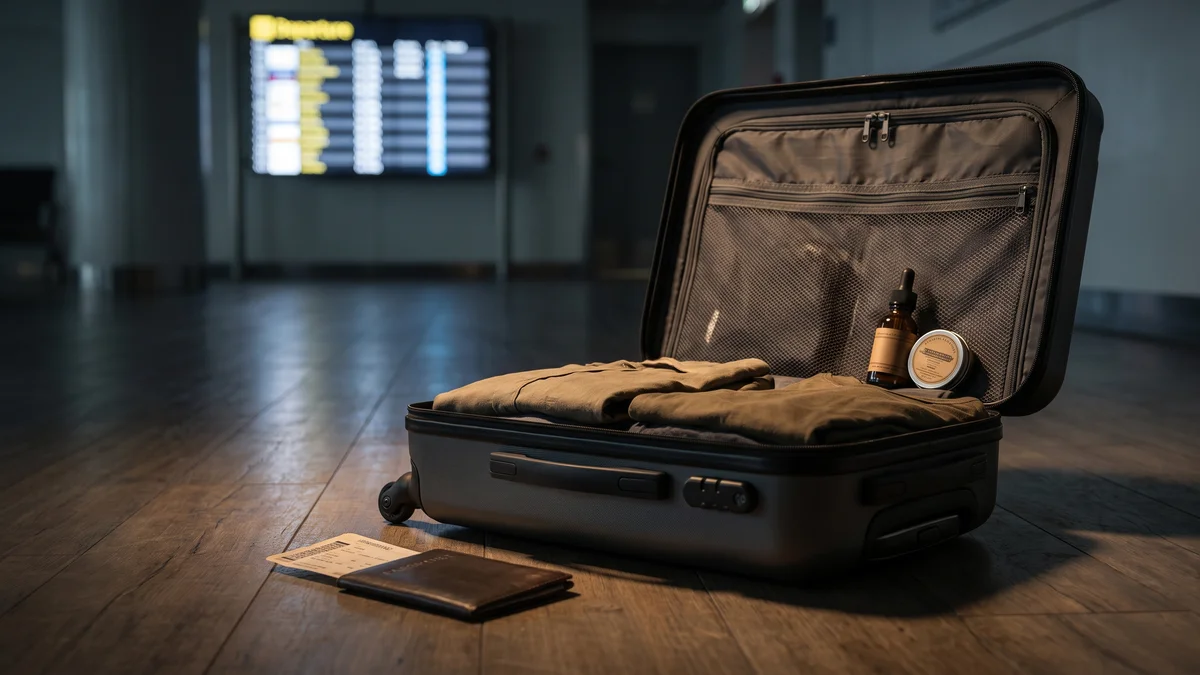
Every summer the same question lands at Triangle hemp counters. Someone is flying out of RDU on Friday, they have a tin of gummies and a CBD tincture in the bathroom drawer, and they want to know whether the tin is going to end their weekend at the checkpoint.
The honest answer is that most people are asking the wrong agency about the wrong risk. TSA is a security screening agency, not a drug enforcement agency, and its published position says so plainly. The real exposure sits somewhere else entirely: in the law of the state you land in, and in what your product physically looks like when a bag gets opened.
TSA's own page says its officers "do not search for illegal drugs," but will refer anything illegal they find to law enforcement (TSA, page updated April 27, 2026). That page currently lists medical marijuana as "Yes (Special Instructions)" with no instructions given, and no mention of hemp, CBD, or the Farm Bill anywhere in its text. What actually governs your bag is destination law. Hemp-derived CBD with no meaningful THC travels with the least friction. THCa flower is the highest-risk item you can pack, because it looks and smells like marijuana and three of North Carolina's four neighbors already count THCA toward their THC limit. On December 11, 2026, the federal definition of hemp switches to total THC and caps finished products at 0.4 milligrams per container (P.L. 119-37, Sec. 781), which will reshape all of this. Nothing here is legal advice.
Update, October 10, 2026: The federal hemp deadline referenced below has shifted. H.R. 6500 became Public Law 119-103 on September 2, 2026, and its Section 2019 delays most of the new hemp definition, including the 0.4mg per container THC cap and the total-THC test that counts THCa, to December 11, 2026. A narrow piece covering cannabinoids the plant cannot naturally produce still begins November 12, 2026. Still current as of this update. Track it in our NC hemp bill tracker.
What the TSA Page Actually Says in 2026
Start with the primary source, because almost every article on this subject quotes language that is no longer there.
TSA maintains a "What Can I Bring?" entry for medical marijuana. As of its April 27, 2026 update, the entire body of that page reads: "TSA's screening procedures are focused on security and are designed to detect potential threats to aviation and passengers. Accordingly, TSA security officers do not search for illegal drugs, but if any illegal substance or evidence of criminal activity is discovered during security screening, TSA will refer the matter to a law enforcement officer" (TSA).
The item is marked "Yes (Special Instructions)" for both carry-on and checked bags. There are no special instructions printed underneath. We checked the live page on August 3, 2026 and again on October 10, 2026 (it still shows "Last Updated" April 27, 2026): the words hemp, CBD, cannabis, THC, FDA, and 0.3 percent do not appear on it at all.
That matters, because the sentence most travel guides still quote was live on TSA.gov for less than two weeks. In late May 2019, after the FDA approved the CBD-based epilepsy drug Epidiolex, TSA briefly posted that "products/medications that contain hemp-derived CBD or are approved by the FDA are legal as long as it is produced within the regulations defined by the law under the Agriculture Improvement Act 2018" (archived May 26, 2019). By June 5, 2019 that line was gone, replaced by a narrower rule covering only products with "no more than 0.3 percent THC on a dry weight basis" or FDA approval (archived June 5, 2019). That narrower version is the one that stood for the next seven years, until the April 2026 update cut it too. Neither sentence is on the page today. And there is no separate CBD entry to fall back on: medical marijuana is the only cannabis-related item among the 494 listings in TSA's "What Can I Bring?" index.
So what is left is the operative rule, and it is a narrow one. TSA screens for threats to aviation. Officers are not hunting your bag for cannabinoids. If they find something they believe is illegal, they hand it to a police officer, and at that point you are dealing with the law of the state you are standing in, not with TSA policy.
| What you are packing | Practical read | Why |
|---|---|---|
| CBD tincture or softgel, negligible THC | Lowest friction | Federally legal hemp today, no intoxicating profile, looks like a supplement |
| CBD topical, balm or cream | Lowest friction | Not consumed, not intoxicating, not visually cannabis |
| Delta-8 or Delta-9 gummies | Moderate | Legal in NC, but several states restrict or count total THC. Keep sealed and labeled |
| Vape cartridges and disposables | Moderate | Airline lithium rules put vapes in carry-on only, never checked |
| THCa flower or pre-rolls | Highest | Visually and aromatically identical to marijuana. See below |
| Concentrates, dabs, rosin | Highest | High potency, unfamiliar packaging, THCA-heavy by nature |
The Rule That Actually Governs Your Bag
Federal law right now defines hemp as cannabis with no more than 0.3 percent delta-9 THC on a dry weight basis (7 U.S.C. 1639o). North Carolina uses the same test. N.C. Gen. Stat. 90-87(13a) defines hemp as the plant and all its derivatives, extracts, cannabinoids, isomers, acids and salts "with a delta-9 tetrahydrocannabinol concentration of not more than three-tenths of one percent (0.3%) on a dry weight basis."
Read that definition closely. It measures delta-9 THC and nothing else. THCA, the acidic precursor that converts to THC when heated, is not counted. That single omission is why THCa flower is legal to buy in North Carolina today while a chemically similar product is contraband a few hours down the interstate.
Marijuana, by contrast, remains illegal in North Carolina. Possession of up to half an ounce is a Class 3 misdemeanor, half an ounce to an ounce and a half is a Class 1 misdemeanor, and more than an ounce and a half is a Class I felony (N.C. Gen. Stat. 90-95(d)(4)). The state has no medical marijuana program, so a card from another state does nothing for you here.
RDU is a useful place to think about this concretely. Millions of passengers a year pass through its checkpoints, operated under federal rules, on North Carolina soil, headed for a destination whose rules may be nothing like ours.
THCa Flower Is the Riskiest Thing You Can Pack
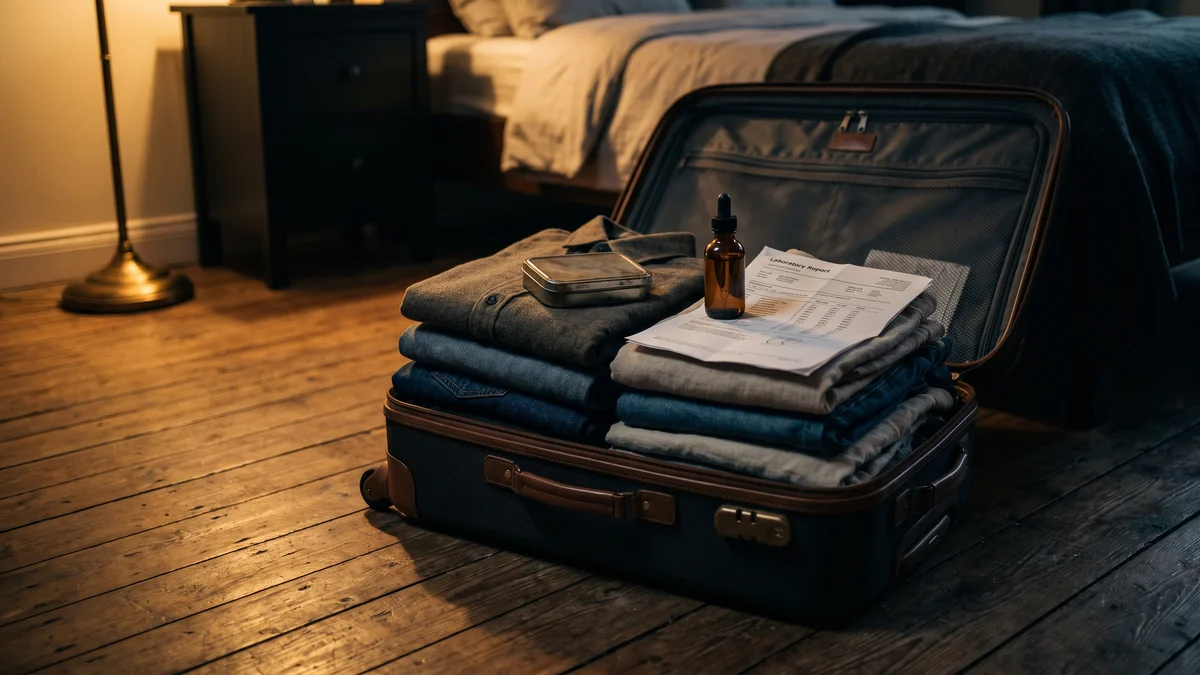
If you take one thing from this guide, take this. The legal argument for THCa flower is a laboratory argument. It depends on a delta-9 number printed on a lab report. Nothing about that argument is visible, and nothing about it is available to an officer at three in the afternoon in a terminal.
THCa flower looks like marijuana. It smells like marijuana. A drug dog trained on cannabis odor cannot distinguish the two, because the terpene profile is the same. The roadside and field presumptive tests commonly used by law enforcement react to THC generally rather than delivering the delta-9-versus-THCA distinction that the statute turns on. Sorting that out requires a laboratory, and laboratory results arrive well after the flight leaves.
That is not a claim that carrying it is illegal in North Carolina. It is legal here today. It is a claim about how the risk actually plays out, which is that possession of a legal product can still cost you a missed flight, a seized tin, and a conversation you did not want to have. The same logic applies to concentrates, which are THCA-dominant by construction and arrive in packaging most officers have never seen.
The lower-risk version of the same trip is boring on purpose. Sealed, labeled, manufacturer-packaged products. Nothing loose. Nothing in a mason jar. Nothing that requires you to explain organic chemistry to a stranger.
Driving Across State Lines from North Carolina
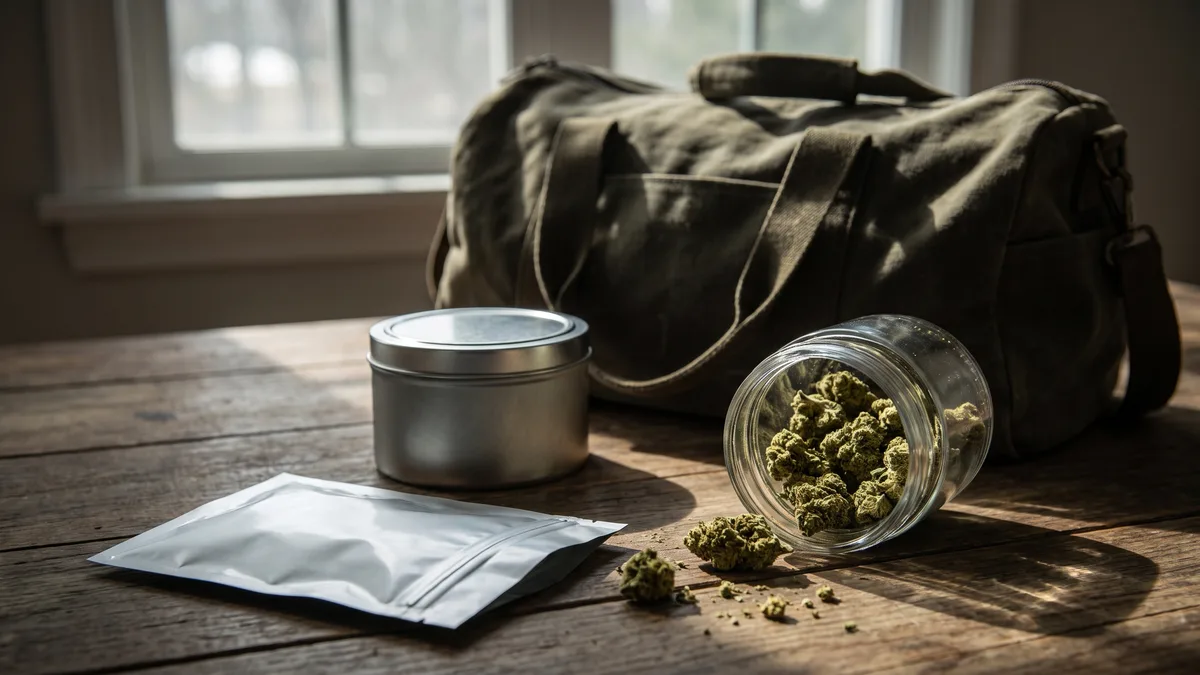
Most Triangle travel is not a flight at all. It is I-95 to the coast, I-77 into Virginia, or US-74 west toward Tennessee. Driving avoids the checkpoint entirely and replaces it with a harder problem: the moment you cross a state line, the definition of hemp changes underneath you.
Virginia is the strictest neighbor. Virginia measures total tetrahydrocannabinol, defined as the sum of THC and tetrahydrocannabinolic acid after conversion, and a hemp product offered at retail must contain no more than 0.3 percent total THC and no more than two milligrams of total THC per package, unless it carries at least 25 times more CBD than THC (Va. Code § 3.2-4112, § 4.1-600). A standard 10 milligram NC gummy fails that test five times over.
Tennessee moved this year. Regulation of hemp-derived cannabinoid products transferred to the Tennessee Alcoholic Beverage Commission on January 1, 2026, and TABC calculates total THC as "(THCA × 0.877) + Δ9-THC," with products above 0.3 percent total THC treated as illegal (Tennessee ABC). THCa flower does not survive that formula.
Georgia counts THCA too. Georgia's Hemp Farming Act defines "THC" as "tetrahydrocannabinol, tetrahydrocannabinolic acid, or a combination" and sets the legal limit as a total delta-9-THC concentration (O.C.G.A. § 2-23-3).
South Carolina is the outlier and the closest match to North Carolina. The South Carolina Hemp Farming Act still defines hemp by "a delta-9 THC concentration of not more than 0.3 percent on a dry weight basis" (S.C. Code § 46-55-10), with no total-THC standard written into the definition. The same definition also points to the hemp THC concentration in federal law, so check whether South Carolina's standard shifts once the federal definition changes.
What Federal Hemp Transport Protection Actually Covers
People reach for one specific line of federal law when this comes up, and it is worth knowing exactly what it says.
Section 10114 of the Agriculture Improvement Act of 2018 is titled "Interstate Commerce." Subsection (b) reads: "No State or Indian Tribe shall prohibit the transportation or shipment of hemp or hemp products produced in accordance with subtitle G of the Agricultural Marketing Act of 1946 ... through the State or the territory of the Indian Tribe" (P.L. 115-334). Congress reinforced that posture in the current appropriations law, barring the use of federal funds to prohibit "the transportation, processing, sale, or use of hemp" grown under those programs (P.L. 119-37, Sec. 737).
Now read the limits. The protection runs to hemp "produced in accordance with" a licensed federal or state production program, and it covers movement through a state. It was written for the trucking and shipping problem, the one where a licensed grower's load gets stopped in transit. It is not a personal carry permit, it does not preempt a state's own possession or retail rules, and it says nothing about a finished gummy in a glovebox.
The practical translation: federal law protects the freight lane. It does not protect the passenger seat.
| Section 10114(b) covers | Section 10114(b) does not cover |
|---|---|
| Transportation or shipment of hemp produced under a licensed federal or state program | A personal carry permit for travelers |
| Movement through a state, the trucking and shipping problem | A state's own possession or retail rules, which it does not preempt |
| A licensed grower's load stopped in transit | A finished gummy in a glovebox |
What a COA Does and Does Not Prove
Every reputable Triangle shop can hand you a certificate of analysis for what you bought, and carrying one is a reasonable habit. Just be clear about what it is.
A COA proves that a specific batch, tested on a specific date by a specific lab, produced a specific cannabinoid profile. That is genuinely useful. It is what makes the legal argument for the product exist at all.
What it does not do is travel with authority. A COA is a document from a private laboratory hired by the manufacturer. It does not certify the contents of the tin in your hand, only the batch it was drawn from. It cannot be verified at a checkpoint. And in a state that counts THCA toward its limit, a perfectly accurate COA showing 22 percent THCA is not a defense. It is the evidence against you.
Carry it anyway. It costs nothing and it helps in the ordinary case where someone simply wants to know what a sealed jar is. Just do not treat it as a shield.
What December 11, 2026 Changes
The travel calculus above has a shelf life. Section 781 of P.L. 119-37 rewrites the federal hemp definition effective 365 days after the law's November 12, 2025 enactment, except that a later funding law, P.L. 119-103, held almost all of it, including everything described in this paragraph, to December 11, 2026 (Section 2019, enrolled text). Hemp becomes cannabis with "a total tetrahydrocannabinols concentration (including tetrahydrocannabinolic acid) of not more than 0.3 percent on a dry weight basis," and final consumer products are excluded from the definition if they contain more than 0.4 milligrams of combined total THC per container, where "container" means the innermost wrapping in direct contact with the product.
Cannabinoids that cannot be naturally produced by the plant, and ones that can be but were synthesized outside it, are excluded outright. That language reaches much of the converted Delta-8 category.
Separately, North Carolina is running its own process. The HB 328 conference report cleared the Senate 37 to 6 on July 2, 2026 and, since July 30, has sat in the House Rules committee awaiting a floor vote (N.C. General Assembly). Nothing has changed on Triangle shelves yet.
North Carolina status, October 10, 2026: HB 328, the state hemp crackdown, passed the Senate in July but still awaits a House vote, which can come in the reconvened sessions between October 26 and December 18. Today North Carolina sets no minimum age for hemp products, though many shops card at 21. Details in our NC hemp bill tracker.
A Word on International Travel
Do not. There is no version of this guide that makes carrying hemp across an international border a reasonable risk. Cannabinoid rules vary enormously by country, penalties in some jurisdictions are severe, and a US lab report carries no weight with a foreign customs officer. Buy what you need after you arrive, if the destination allows it, or go without.
Frequently Asked Questions
Can CBD go through airport security?
TSA's screening is designed to find threats to aviation, and the agency states that its officers do not search for illegal drugs (TSA). Hemp-derived CBD with no more than 0.3 percent delta-9 THC meets the current federal definition of hemp, at least until December 11, 2026, when the total-THC test and the 0.4mg per container cap apply. In practice, a sealed, labeled CBD product is among the lowest-friction things you can pack. Liquids still follow the standard carry-on liquids rule, so a tincture over 3.4 ounces belongs in a checked bag.
Can drug dogs smell CBD oil?
Detection dogs are trained on odor, and hemp and marijuana share essentially the same terpene profile. A dog alerting to a bag is signaling cannabis odor, not making a legal determination about delta-9 content. This is exactly why aromatic products like THCa flower carry more practical risk than an odorless softgel, regardless of what the paperwork says.
Can I fly with THCa flower?
It is legal to buy and possess in North Carolina under the state's delta-9-only definition, but it is the highest-risk item in this guide. It is visually and aromatically indistinguishable from marijuana, presumptive field testing will not resolve the distinction on the spot, and the states you may be landing in often count THCA toward their limits. If the trip matters, leave it home.
Can I drive from Raleigh to Virginia Beach with hemp gummies?
Virginia measures total THC and caps retail hemp packages at two milligrams of total THC, unless the product carries at least 25 times more CBD than THC (Va. Code § 4.1-600; the 25-to-1 alternative is in § 3.2-4112). A typical North Carolina 10 milligram gummy does not meet that standard. A high-CBD, low-THC product is a much closer fit. Verify the current rule before you go, because these statutes are being amended frequently.
Does the 2018 Farm Bill let me carry hemp anywhere?
No. Section 10114(b) bars states from prohibiting the transportation or shipment of hemp produced under a licensed program through their territory (P.L. 115-334). It is a commerce and freight provision. It does not create a personal right to possess hemp products in a state whose own law treats them as controlled substances.
Should I carry the COA?
Yes, but understand its limits. A certificate of analysis documents a batch test by a private lab. It is helpful in the ordinary case and useless as a legal shield in a total-THC state. Keep the product in its original sealed packaging, which does more work than the paperwork does.
The Bottom Line
The mental model most travelers carry is wrong. They picture a TSA rulebook with a hemp chapter in it. What actually exists is a security agency that says it is not looking for your gummies, sitting on top of a patchwork of state definitions that disagree with each other about what THC even means.
So plan for destination law, not for the checkpoint. Sealed and labeled beats loose and homemade. CBD travels easiest, gummies are a judgment call, and flower and concentrates are the things worth leaving in a drawer in Raleigh. Then reread this after December 11, 2026, because the federal standard underneath all of it is scheduled to change.
If you want to stock the low-risk end of that list before a trip, the Triangle directory lists shops that post full lab reports, and our guide to what to look for in an NC dispensary covers how to tell which ones actually do. For the broader legal picture, start with is weed legal in North Carolina.
This article is educational and does not offer legal or medical advice. Hemp products are not intended to diagnose, treat, cure, or prevent any disease. Laws change frequently and vary by jurisdiction. Verify current rules with the relevant state agency or an attorney before traveling. Products discussed are for adults 21 and over.
These statements have not been evaluated by the Food and Drug Administration. Hemp products are not intended to diagnose, treat, cure, or prevent any disease. Nothing on this site is medical advice; talk to a clinician.