2026 NC Hemp Law Update: Guide for Raleigh Consumers
North Carolina's hemp industry is heading into the most turbulent year in its history. Two major regulatory changes are converging in 2026: a federal law that effectively bans most THC products nationwide, and a state bill that would create an entirely new licensing framework for hemp businesses in NC.
If you buy hemp products from dispensaries in Raleigh or anywhere in the Triangle, this directly affects you. Here's what's happening, what it means, and what you should do.
Hemp-derived THC products are still legal in North Carolina today under SB 455 and the 2018 Farm Bill. But two threats loom. Federally, P.L. 119-37 redefines hemp using total THC with a 0.4mg per container cap — effectively banning all current THC products starting November 12, 2026 (Congress.gov). At the state level, NC HB 328 would ban THCa, Delta-8, and HHC while creating a licensed retail framework with $25,000 manufacturer fees — though it's stalled in the House Rules Committee (NC General Assembly). North Carolina's hemp industry supports roughly 9,000 jobs and generates up to $1.1 billion in annual sales (Port City Daily).
The Current Legal Landscape: Still Legal — For Now
As of February 2026, all hemp-derived cannabinoid products remain legal in North Carolina. This includes THCa flower, Delta-8, Delta-9 gummies, HHC, CBD products, and everything else currently sold at Triangle dispensaries.
Two laws created this framework:
The 2018 Farm Bill removed hemp from the federal Controlled Substances Act and defined it as Cannabis sativa L. with a Delta-9 THC concentration of no more than 0.3% on a dry weight basis. Because it measured only Delta-9 THC — not total THC — products containing THCa, Delta-8, and other cannabinoids slipped through.
NC Session Law 2022-32 (SB 455) aligned North Carolina's state law with the federal framework. It amended G.S. 90-94 to exclude "tetrahydrocannabinols found in hemp or hemp products" from the NC Controlled Substances Act. For a deeper dive on this law, read our guides on Delta-8 legality in NC and THCa legality in NC.
The UNC School of Government confirmed in January 2026 that "state law in this area has not changed and all the hemp products discussed above remain legal as a matter of state law" (UNC SOG).
But that's about to change — from two directions at once.
Threat #1: The Federal Ban (P.L. 119-37)
On November 12, 2025, Section 781 of the Continuing Appropriations Act (P.L. 119-37) was signed into law. It fundamentally rewrites how hemp is defined at the federal level and takes effect November 12, 2026 (Arnold & Porter).
Here's what changes:
THC measurement shifts from Delta-9 to total THC. The old law measured only Delta-9 THC in raw plant material. The new law measures all THC-class cannabinoids, explicitly including THCa, Delta-8, Delta-10, and any compound with "THC-like effects."
A 0.4mg per container cap on finished products. For context, a single hemp gummy currently contains 10-25mg of THC. The new federal limit is 0.4mg for the entire container — not per serving, per container. That's roughly 25-60x lower than what's in a single gummy today.
Products that don't comply become Schedule I. Any hemp-derived product exceeding these limits would lose its federal hemp classification and automatically become a Schedule I controlled substance under the Controlled Substances Act (Regulatory Oversight).
The FDA must publish guidance. Within 90 days of enactment (by approximately February 2026), the FDA was required to publish lists of naturally occurring cannabinoids, THC-class cannabinoids, and cannabinoids with THC-like effects.
There's one potential lifeline. Rep. Jim Baird (R-IN) introduced the Hemp Planting Predictability Act (H.R. 7010), which would extend the effective date from November 2026 to November 2028 — giving the industry three years instead of one (Congress.gov). As of February 2026, it hasn't passed.
Important nuance for NC: Even after the federal ban takes effect, North Carolina's state law does not itself criminalize these products. SB 455 remains on the books. This creates a potential federal-state conflict similar to marijuana legalization in other states — products could be illegal federally but not under NC state law. How enforcement plays out remains unclear.
Threat #2: NC HB 328 — The State Regulation Bill
While the federal clock ticks, North Carolina's legislature has been trying to create its own hemp regulatory framework. The lead bill is HB 328, which would establish a new Chapter 18D in the NC General Statutes.
HB 328 passed the NC House 112-0 on April 16, 2025, and the Senate 35-7 on June 19, 2025 — but the House and Senate passed substantially different versions. The Senate rewrote the bill to be far more restrictive, and when it was sent back to the House, it was re-referred to the Rules Committee on June 23, 2025. It has not advanced since (NC General Assembly).
Here's what the Senate version of HB 328 would do:
Cannabinoid Bans
The Senate version broadly defines "prohibited hemp-derived consumable products" as those containing any hemp-derived cannabinoid other than Delta-9 THC intended for ingestion or inhalation. This would effectively outlaw:
- THCa flower and all THCa products
- Delta-8 THC in all forms
- HHC (hexahydrocannabinol)
- Many forms of CBD in consumable products
- All synthetic cannabinoids
Only Delta-9 THC products under 0.3% would remain legal — and only through licensed retailers.
THC Serving Limits
| Product Type | Max Per Serving | Max Per Package |
|---|---|---|
| Solid ingestibles (gummies) | 10mg Delta-9 | 100mg |
| Liquid products (beverages) | 10mg per container | 10mg |
| Inhalable products (vapes) | 3mg | Not specified |
Licensing Fees
| License Type | Initial Fee | Annual Renewal |
|---|---|---|
| Manufacturing | $25,000 | $10,000 |
| Distribution | $5,000 | $1,500 |
| Retail (per location) | $500 | $500 |
For comparison, NC HB 607 — a competing bill — proposed lower fees: $15,000 for manufacturers (reduced to $1,000 if gross income is under $100,000) and $250 per retail location (WUNC).
Enforcement and Penalties
- The ALE Division (Alcohol Law Enforcement) would regulate the industry
- Sale to anyone under 21: Class 2 misdemeanor
- Possession under 21: Class 2 misdemeanor
- Possession of prohibited cannabinoids (THCa, Delta-8, etc.): Class A1 misdemeanor
- Business violations: $500 first offense, escalating to license revocation
- All products must include COAs with QR codes, child-resistant packaging, and batch tracking
Kratom Clause
One controversial addition: the Senate version of HB 328 would add kratom as a Schedule VI controlled substance in North Carolina, effective December 1, 2025 (Kratom Science).
Other NC Hemp Bills to Watch
HB 328 isn't the only bill in play. The 2025-2026 session has produced at least six hemp-related bills:
SB 328 is the narrowest of the bunch. It focuses solely on making it a Class 2 misdemeanor to sell hemp products to anyone under 21 or for anyone under 21 to possess them. It passed the Senate 42-0 and the House 106-1, but is stalled in the Senate Rules Committee awaiting concurrence on the House substitute version (NC General Assembly).
HB 680 (the "Protect Children from Cannabis Act") takes a different approach, routing hemp regulation through the ABC Commission rather than ALE. It was motivated partly by data showing a 600%+ increase in pediatric cannabis-related ER visits since 2019, cited by NC legislators (NC General Assembly).
The bottom line: none of these bills have become law yet, and the short session is the last window for action before the 2025-2026 session ends.
The Governor's Advisory Council on Cannabis

Governor Josh Stein added another piece to the puzzle on June 3, 2025, when he signed Executive Order No. 16 establishing the North Carolina Advisory Council on Cannabis (Governor's Office).
The 24-member council is co-chaired by Dr. Lawrence Greenblatt (State Health Director) and Matt Scott (District Attorney, Robeson County). Members include law enforcement officials, hemp farmers, medical professionals, tribal leaders, legislators, and the CEO of Great Smoky Cannabis Company from the Eastern Band of Cherokee (NCDHHS).
Two key deadlines:
- March 15, 2026: Preliminary recommendations due
- December 31, 2026: Final recommendations due
The council has been meeting actively — at least bi-monthly since July 2025, with subcommittee meetings running through February 2026. Their scope includes youth protection, impaired driving, medical marijuana access, potency limits, retail restrictions, taxation, and even expunging past marijuana convictions.
The preliminary recommendations (due in about three weeks as of publication) could significantly influence whether and how the legislature takes up HB 328 or a competing bill during the short session.
What's at Stake: NC's Hemp Economy
North Carolina has built one of the largest hemp industries in the Southeast. The numbers tell the story:
Nationally, the hemp industry supports over 325,000 jobs and generates an estimated $13.2 billion in wages (Whitney Economics). The industry as a whole represents roughly $79 billion in total economic activity, according to industry advocacy groups.
For the Triangle specifically, the impact is felt in the dozens of dispensaries across Raleigh, Durham, Chapel Hill, Cary, and surrounding communities. These shops employ local staff, pay commercial rent, and contribute to the area's tax base. Whether they survive 2026 depends entirely on what happens in Raleigh and Washington.
Key Dates: The 2026 Timeline
What Raleigh Consumers Should Do Right Now
1. Stock up strategically, but don't panic. Products remain fully legal today and will stay that way for months. Federal enforcement against individual consumers has historically been nonexistent.
2. Buy from reputable dispensaries. Lab-tested products from established Triangle shops like Sherlocks Glass & Dispensary and Carolina Hemp Hut will always be safer than gas station products — regardless of what the law says. Browse our full dispensary directory to find verified shops near you.
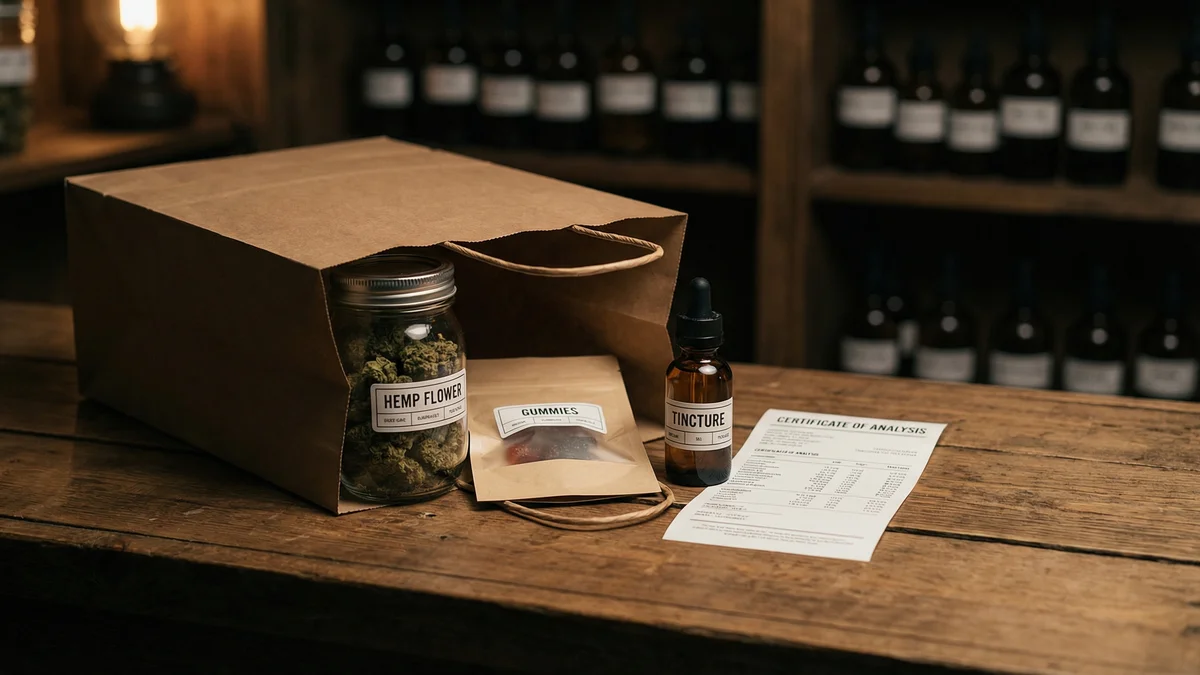
3. Ask for COAs. Certificates of Analysis from third-party labs are your best quality assurance. They verify cannabinoid content, screen for heavy metals and pesticides, and confirm what you're actually consuming. Read our guide on how to read a COA.
4. Understand what you're buying. Learn the differences between Delta-8, Delta-9, and THCa so you know which products might be affected by specific legislation. If HB 328's Senate version becomes law, THCa and Delta-8 would be banned while Delta-9 gummies under 10mg/serving would remain legal.
5. Watch the March 15 Advisory Council report. The preliminary recommendations from the Governor's Advisory Council could signal where NC regulation is heading. We'll update this article as new information becomes available.
6. Support your local dispensary. These businesses are navigating enormous uncertainty. If you value having access to legal hemp products in the Triangle, patronize shops that invest in compliance, testing, and quality. Check out our guides to the best dispensaries in Raleigh and best dispensaries in Durham.
Frequently Asked Questions
Are hemp products still legal in North Carolina in 2026?
Yes. As of February 2026, all hemp-derived cannabinoid products remain legal in NC under Session Law 2022-32 (SB 455) and the 2018 Farm Bill. This includes THCa flower, Delta-8, Delta-9 gummies, edibles, vapes, and CBD products. No state or federal ban has taken effect yet.
When does the federal hemp ban take effect?
P.L. 119-37 takes effect on November 12, 2026 — exactly one year after it was signed. After that date, any hemp product exceeding 0.3% total THC or 0.4mg total THC per container would be federally classified as a Schedule I controlled substance. H.R. 7010 proposes extending this deadline to November 2028, but it hasn't passed.
What does HB 328 mean for THCa flower?
If the Senate version of HB 328 becomes law, THCa flower would be banned in North Carolina. The Senate's definition of "prohibited hemp-derived consumable products" covers any hemp cannabinoid other than Delta-9 THC intended for ingestion or inhalation. THCa, Delta-8, and HHC would all become illegal. Only Delta-9 products under 10mg per serving would remain lawful through licensed retailers.
Will I need to be 21 to buy hemp products in NC?
Almost certainly. Every major hemp bill in the NC legislature (HB 328, SB 328, HB 607, SB 265, HB 680) includes a 21+ age requirement. SB 328, the narrowest bill focused solely on age verification, passed both chambers with overwhelming support (Senate 42-0, House 106-1). While NC currently has no state-level age requirement for hemp (the 21+ rule at most dispensaries is store policy, not law), legislation making it mandatory is widely expected.
How does the federal ban affect North Carolina specifically?
The federal ban creates a complicated situation. NC's SB 455 still makes hemp products legal under state law, and nothing in P.L. 119-37 forces states to adopt the federal definition. This means products could theoretically be legal under NC law but illegal under federal law — similar to recreational marijuana in states like Colorado or California. Federal enforcement against individual consumers has been extremely rare, but businesses face more risk.
What happens to dispensaries if these laws pass?
Under HB 328, dispensaries would need to obtain retail licenses ($500/location), stop selling THCa, Delta-8, and HHC products, and comply with new testing, packaging, and tracking requirements. Under the federal ban, the product landscape would narrow even further. Some dispensaries may pivot to CBD-only or wellness products. Others may not survive the transition. The outcome depends heavily on which version of regulation NC adopts.
This article was last updated on February 26, 2026. Hemp law in NC is evolving rapidly. We'll update this page as new legislation passes, the Advisory Council releases recommendations, or the federal timeline changes. Bookmark this page or browse our blog for the latest.
Have questions about finding hemp products in the Triangle? Browse our dispensary directory to find verified shops in Raleigh, Durham, Chapel Hill, Cary, and more.