Functional Mushrooms & Amanita Products at NC Dispensaries: A 2026 Guide
This article is for informational purposes only and does not constitute legal, medical, or product advice. Consult a qualified professional for guidance specific to your situation.
Walk into a Triangle hemp dispensary in 2026 and you'll find a category that didn't exist there five years ago: mushrooms. Some are wellness staples like lion's mane and reishi. Others, like Amanita muscaria gummies, are unfamiliar enough that most shoppers can't tell whether they're legal, safe, or even psychoactive. The U.S. functional mushroom market is projected to reach $8.57 billion by 2030, growing at 12.1% annually (Grand View Research, 2024). NC dispensaries are riding that wave.
The trouble is that "mushroom products" cover three very different things. Functional mushrooms (lion's mane, reishi, chaga, cordyceps) are legal dietary supplements with real human research behind them. Amanita muscaria is a legal botanical containing muscimol, not psilocybin. And psilocybin "magic mushrooms" remain Schedule I in North Carolina and can't legally be sold anywhere in the state. Confusing the three is easy. The FDA, state legislatures, and budtenders aren't always on the same page.
This guide separates the categories, covers what the science actually supports, walks through NC legal status with sourced detail, and points you to the five Triangle dispensary locations carrying mushroom products today.
Functional mushrooms (lion's mane, reishi, chaga, cordyceps) are fully legal dietary supplements in North Carolina. The best human evidence supports lion's mane for cognition and cordyceps for exercise capacity; reishi has small trials showing less fatigue and better quality of life in cancer patients, but that research did not measure sleep. Amanita muscaria products are also legal in NC because they contain muscimol, not psilocybin, but the FDA's December 2024 letter declared them unapproved food additives, and Louisiana banned them effective August 1, 2025. Five Triangle dispensary locations in our directory list mushroom products. Read labels carefully: many "functional mushroom" products are mycelium grown on grain rather than fruiting body extract, and Nammex testing found those average 35 to 40% starch.
What Mushroom Products Do NC Dispensaries Sell?
Triangle hemp dispensaries carry two distinct mushroom categories: functional mushrooms (lion's mane, reishi, chaga, cordyceps, turkey tail) and Amanita muscaria products (a legal botanical containing muscimol). Psilocybin mushrooms remain Schedule I in NC and can't legally be sold at any shop. The U.S. functional mushroom segment alone is projected to hit $8.57 billion by 2030 (Grand View Research, 2024), riding a broader supplement boom in which 75% of American adults now take some form of dietary supplement (CRN 2024 Consumer Survey, 2024).
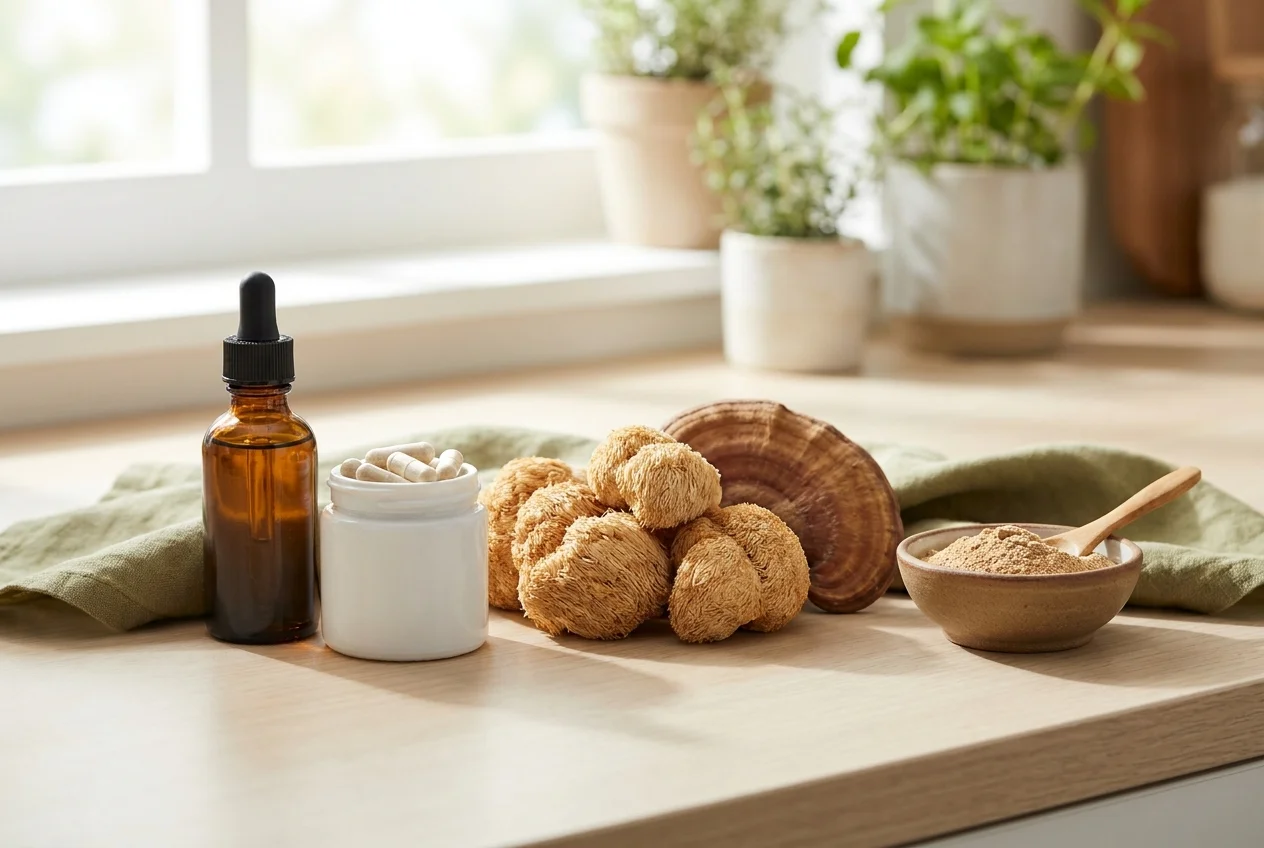
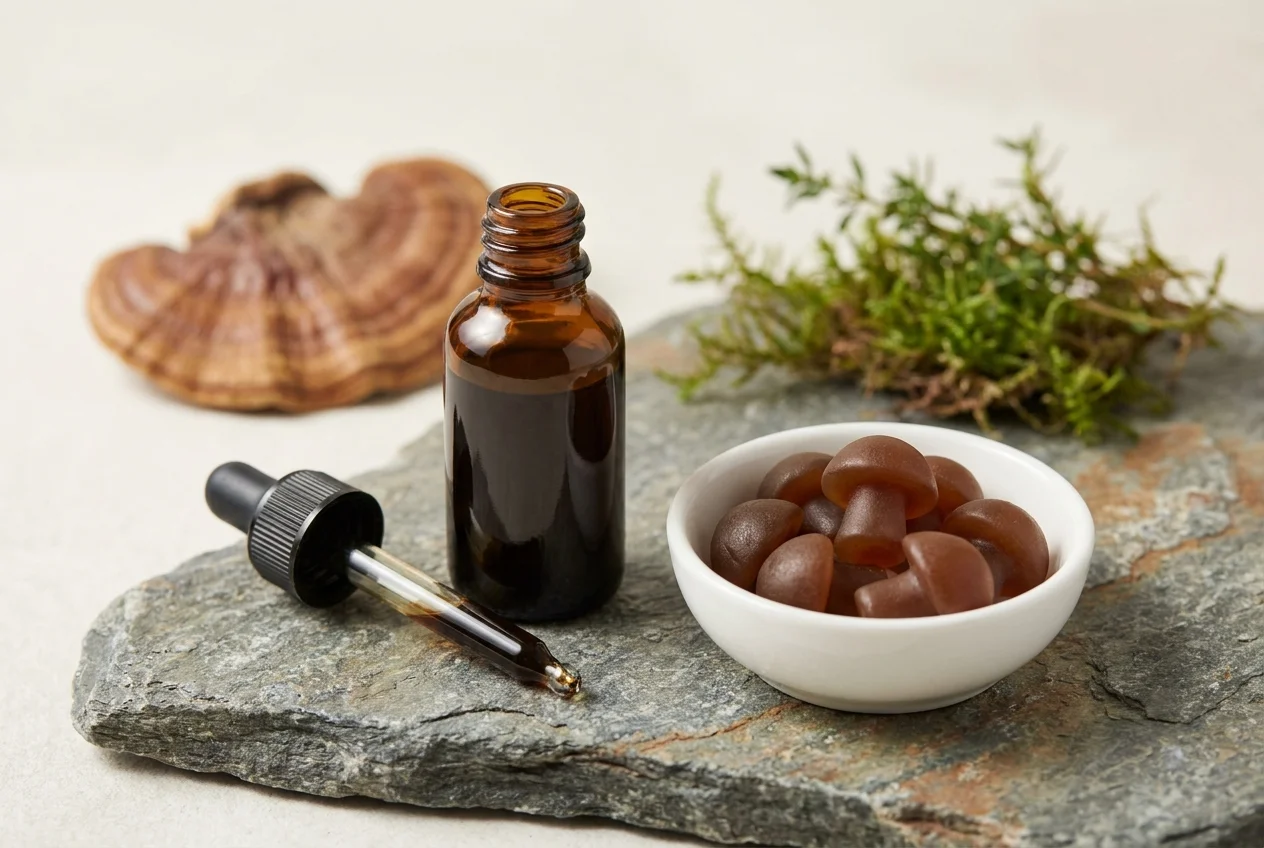
Functional products typically arrive as gummies, capsules, tinctures, and powders. They're sold for their adaptogenic and nootropic profile, not for any psychoactive effect. Amanita products usually appear as gummies, microdose capsules, or alcohol-based tinctures, and they're marketed for "dream-like" or sedative effects produced by muscimol acting on GABA-A receptors. Both categories sit on the same shelf as hemp gummies and CBD oil at most Triangle shops, which makes label-reading more important than ever.
A quick reminder before going further: psilocybin mushrooms are not the same as Amanita muscaria. Psilocybin is illegal in NC. If a label says "psilocybin," "psilocin," or "magic mushrooms," it's either illegal or mislabeled. Walk away.
How Do Functional Mushrooms Actually Work?
Each functional mushroom has a primary evidence-backed use case. Lion's mane has the cleanest cognitive research behind it, reishi has small trials on fatigue and quality of life (many shoppers buy it as a sleep aid, but the trial we cite below did not measure sleep), cordyceps has measurable effects on exercise capacity, and chaga is supported mostly by antioxidant work in the lab. None of them are miracle cures, but the human research is real and worth knowing about.
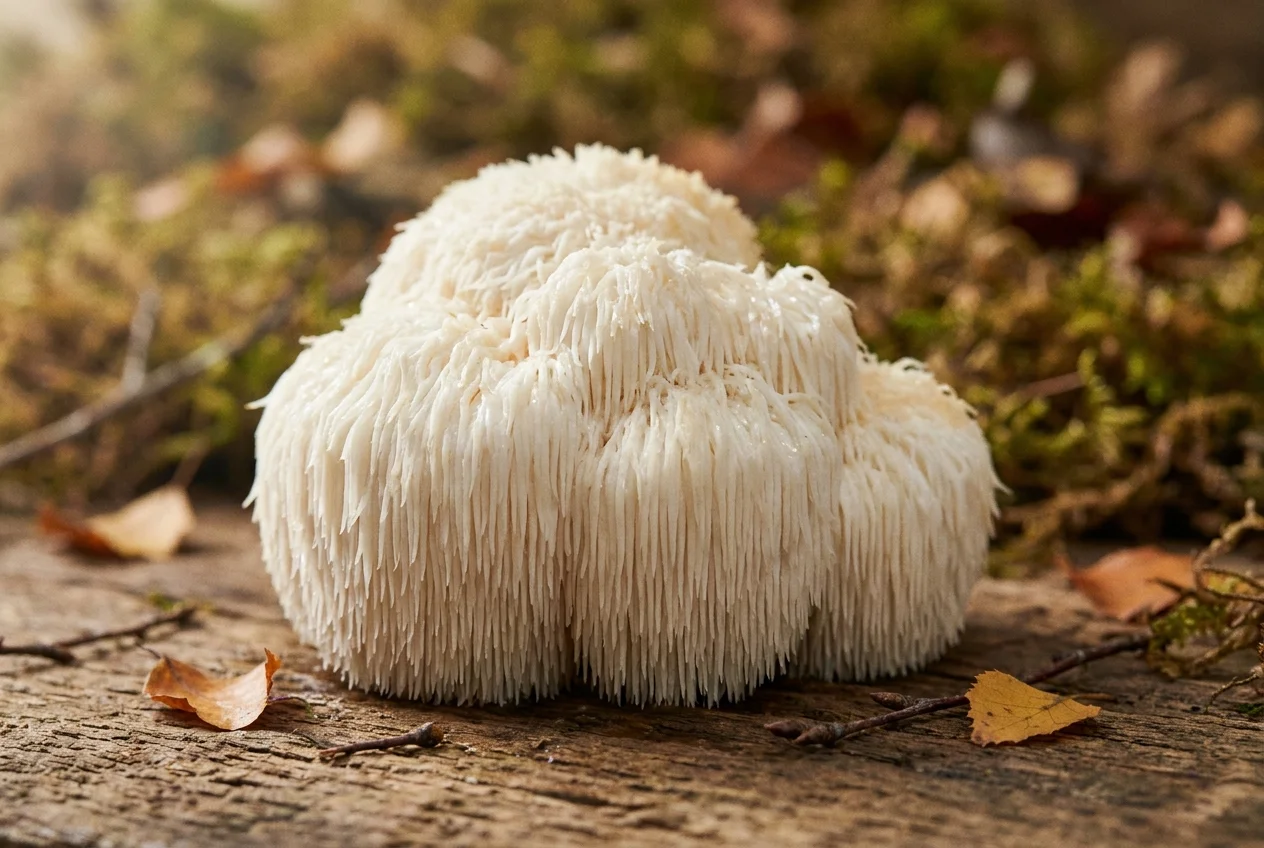
A 2009 randomized controlled trial in adults aged 50 to 80 with mild cognitive impairment found that lion's mane improved cognition scores after 16 weeks of daily supplementation (Mori et al., 2009). More recently, a 2023 study showed that even a single 1.8g dose of lion's mane improved Stroop task speed at the 60-minute mark in healthy adults (Docherty et al., PMC, 2023). The compounds doing the work, called hericenones and erinacines, may support nerve growth factor production, but the mechanism is still being studied.
Reishi has some quality-of-life evidence in clinical populations. A 2012 pilot RCT in 48 breast cancer patients on endocrine therapy found that reishi spore powder taken for 4 weeks improved cancer-related fatigue, physical well-being, anxiety, and overall quality of life compared with a control group (Zhao et al., Evid Based Complement Alternat Med, 2012). That trial did not measure sleep, so it can't tell you whether reishi helps you sleep. Cordyceps has even cleaner exercise data: a 6-week trial in 37 healthy elderly subjects found that 3g per day of Cs-4 cordyceps significantly raised VO2max (Yi et al., Chinese Journal of Integrative Medicine, 2004), and a 2017 trial found that 3 weeks of a cordyceps militaris based mushroom blend (4g per day, also containing reishi, lion's mane, turkey tail, shiitake and king trumpet) raised VO2max in recreationally active young adults compared with placebo (Hirsch et al., PMC, 2017). Chaga's evidence is mostly in vitro: chaga extract reduced oxidative DNA damage by more than 40% in human lymphocytes in a 2004 lab study (Park et al., 2004). Turkey tail's human evidence comes mostly from PSK, a proprietary turkey tail extract that has been used alongside cancer treatment since the mid-1970s and tested in randomized trials in gastric and colorectal cancer (National Cancer Institute).
The catch with all of these: most studies use specific extracts at specific doses for several weeks. Buying a "5-mushroom blend gummy" with 100mg of lion's mane and expecting cognitive miracles in a week isn't realistic. These are slow-build supplements, not pharmaceuticals.
What Is Amanita Muscaria? (And How Is It Different From Psilocybin?)
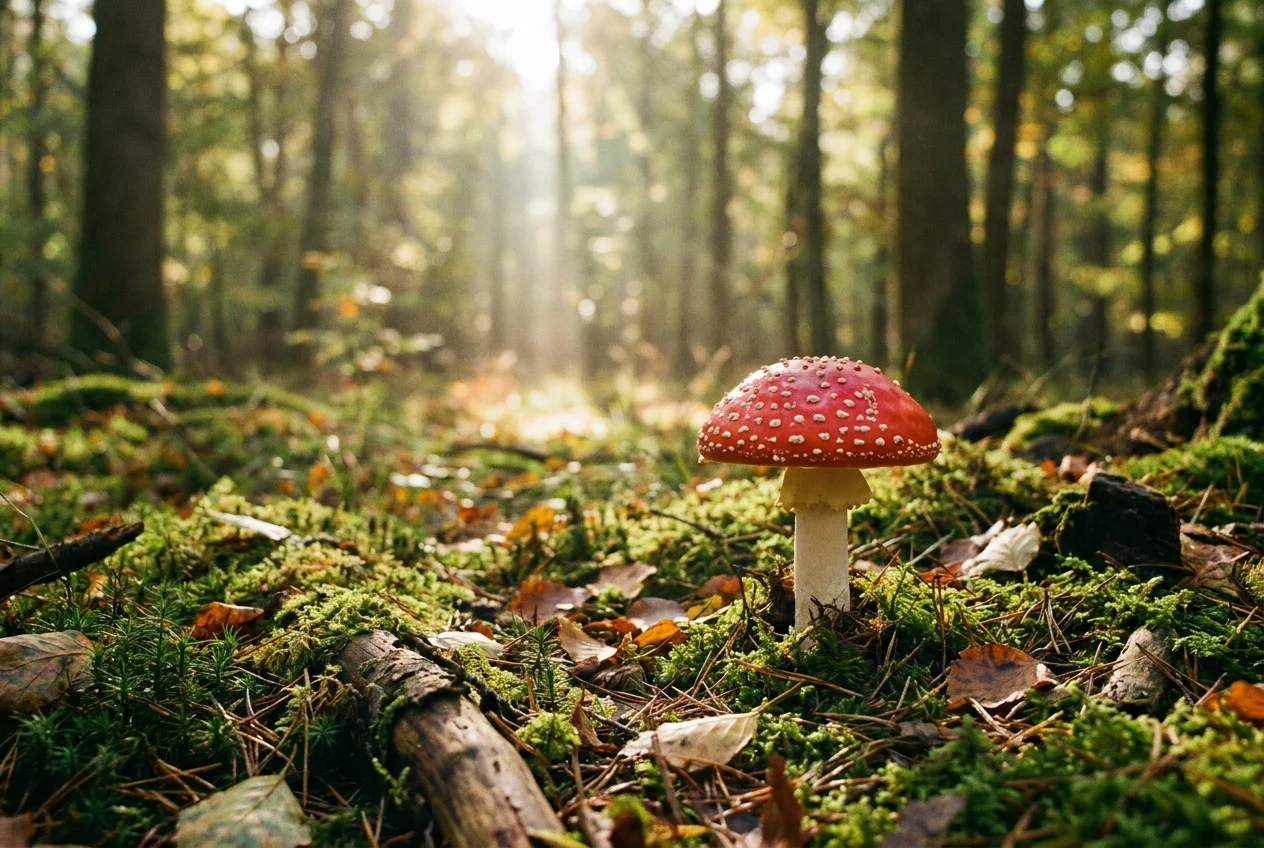
Amanita muscaria, the iconic red mushroom with white spots that you've seen in storybooks, contains muscimol and ibotenic acid, not psilocybin. That distinction matters enormously for both the experience and the legal status. Muscimol is a GABA-A receptor agonist (Johnston, Neurochem Res, 2014); psilocybin, like other classic psychedelics, acts on serotonin (5-HT2A) receptors (Nichols, Pharmacol Rev, 2016). They produce different effects and are scheduled differently under federal and state law.
Subjectively, Amanita is described as dream-like, sedative, and dissociative rather than visually hallucinogenic the way psilocybin is. The active oral threshold for muscimol is approximately 6mg, with the psychoactive dose range typically falling between 8 and 15mg. Onset is usually 30 minutes to 2 hours after ingestion, peak effects come at 1 to 3 hours, and the experience usually lasts 4 to 10 hours, although some effects can persist up to 24 hours, particularly at higher doses or with products containing unconverted ibotenic acid (the compound responsible for the GI-distress side of Amanita's effects) (Wikipedia: Muscimol, retrieved October 2026).
Why does this category exist at hemp dispensaries at all? Two reasons. First, Amanita products fill a "legal alternative to psilocybin" niche that consumers searching for non-traditional psychoactive experiences have created. Second, hemp shops were already dealing with a legally ambiguous regulatory environment for cannabinoids, so adding another federally-unscheduled botanical fits the existing risk profile. Most Triangle shops carrying Amanita stock it as a side category, not a focus.
Now the legal piece. Muscimol and ibotenic acid are not scheduled by the DEA, and they're not on North Carolina's Controlled Substances Schedule. Adult sale and possession are legal in NC. But "legal" doesn't mean "approved as food." In December 2024, the FDA issued a Letter to Industry classifying Amanita muscaria, muscimol, ibotenic acid, and muscarine as unapproved food additives, citing more than 600 reviewed publications and adverse events including seizures, hospitalization, and CNS depression. In September 2025, the FDA followed up with a warning letter to Blue Forest Farms LLC over Amanita microdose capsules, magic potion tinctures, and chocolates the agency considered adulterated.
So Amanita products exist in a real regulatory gap: state-legal to sell, federally unscheduled, but not lawfully marketable as food or supplement under federal law. Most brands market them anyway.
Are Mushroom Products Legal in North Carolina?
Yes. Both functional mushrooms and Amanita muscaria products are legal to sell to adults in North Carolina as of October 2026. Functional mushrooms (lion's mane, reishi, chaga, cordyceps, turkey tail) are unrestricted dietary supplements regulated under DSHEA. Amanita muscaria products are legal because muscimol and ibotenic acid aren't federally scheduled and aren't in NC's Controlled Substances Schedule. Psilocybin and psilocin remain Schedule I in NC (NC General Statutes 90-89) and shouldn't be confused with Amanita.
The 50-state context here is short. Louisiana is the only state we have found with an express Amanita ban. The state's HB 176 (2025 regular session), signed as Act 154 and effective August 1, 2025 (HB 176 history), added muscimol, ibotenic acid, and beta-phenyl-GABA explicitly to the existing hallucinogenic plants statute (Louisiana RS 40:989.1). No North Carolina statute restricts Amanita, muscimol or ibotenic acid.
| Factor | Amanita muscaria | Psilocybin mushrooms |
|---|---|---|
| Active compound | Muscimol, ibotenic acid | Psilocybin, psilocin |
| Receptor target | GABA-A agonist | Serotonin (5-HT2A) agonist |
| Federal status | Not scheduled | Schedule I |
| NC state status | Legal | Schedule I |
| Subjective effect | Dream-like, sedative, dissociative | Visual, perceptual, time distortion |
| Onset / duration (oral) | 30 min to 2 hr / 4 to 10 hr | 20-40 min / 4-6 hr |
The practical takeaway for shoppers is simple. NC retailers can legally sell Amanita products. Brands cannot lawfully market them as food or dietary supplements under federal rules, but the FDA's enforcement so far has been directed at manufacturers, not at consumers buying products. None of this applies to functional mushrooms, which are unambiguously legal supplements.
Reading Mushroom Labels: Fruiting Body vs Mycelium-on-Grain
The biggest quality issue in functional mushroom products has nothing to do with potency or purity claims. It has to do with what part of the mushroom is actually in the product. Mycelium-on-grain is bulk material grown by inoculating rice or oats with mushroom mycelium, then drying and grinding the whole thing (grain included) into a powder labeled "mushroom." Nammex analyzed roughly 100 commercial mushroom and mycelium products and found that on average, mycelium-on-grain products contained 35 to 40% starch by weight (mushrooms themselves average less than 3%), with one mycelium blend reaching 66.4% starch (Nammex, Redefining Medicinal Mushrooms).
That's a problem because the active compounds (beta-glucans, hericenones, ganoderic acids) are concentrated in the fruiting body, not in the mycelium and certainly not in the grain it grew on. Whole mushroom fruiting body samples in Nammex's analysis showed beta-glucan levels ranging from 6.79% to 49.3% depending on species. All commercial mycelium-on-grain samples tested at about 10% or lower beta-glucans, and in some cases as little as 1.5%.
What to look for on labels:
- "Fruiting body extract" is what you want. The actual mushroom, grown to maturity, extracted for its active compounds.
- "Mycelium" or "mushroom mycelium" means vegetative tissue grown on grain. Lower potency, often higher starch content.
- "Mushroom powder" is vague enough to be either. Ask the budtender or check the COA.
- Beta-glucan percentage on the COA. 25%+ is a strong signal of fruiting body. Below 5% is a strong signal of mycelium-on-grain.
- Third-party COA confirming species ID and contaminant testing. This is the same standard you'd apply to any hemp product COA.
For Amanita products, the label should specify standardized muscimol content per serving (in milligrams), absence of unconverted ibotenic acid, batch/lot number, and a third-party COA. Vague labels like "Amanita extract: 500mg" without standardized muscimol content are red flags.
Our finding: At several Triangle hemp shops, "functional mushroom" gummies on the shelf list "mushroom mycelium" rather than fruiting body extract on the supplement facts panel. That's not illegal, but it ties directly to the Nammex starch finding: the gummy may contain meaningful starch but very little of the bioactive compounds the mushroom is famous for.
How to Choose a Functional Mushroom for Your Goal
Match the species to the use case. Lion's mane for cognition and focus, reishi for fatigue and stress, cordyceps for energy and exercise, chaga for general antioxidant support, and turkey tail for immune balance. Daily doses in published studies have ranged from roughly 1g to 3g of fruiting body extract, taken consistently for 4 weeks or longer before measurable effects show up.
A quick decision framework if you're new to the category:
- Want focus or memory support? Lion's mane is the strongest pick. Look for 1 to 2g of fruiting body extract daily, ideally with hericenones or erinacines listed on the COA. The Mori 2009 trial measured cognition at 16 weeks; don't expect overnight results.
- Want less fatigue or daytime stress? Reishi is the usual pick, though its human evidence is limited to small trials that did not measure sleep. 1 to 3g of fruiting body extract daily, ganoderic acids verified on the COA. Some users prefer reishi as a tincture taken in the evening.
- Want a pre-workout or daily energy boost? Cordyceps. Around 3g per day of either Cs-4 or cordyceps militaris. Cordyceps doesn't act like caffeine; it works by improving aerobic capacity over weeks.
- Want general antioxidant or immune-system support? Chaga or turkey tail. Both are typically taken as tea or extract at 500 to 1000mg per day.
Many products on dispensary shelves are 5- to 10-mushroom blends. These can be cost-effective for general wellness, but per-species concentration is usually too low to match the doses used in research. If you're targeting a specific outcome, a single-species product at the dose tested in the studies is usually a better choice than a blend.
A note on Amanita: this isn't a daily supplement category, and we'd recommend most NC consumers stay clear unless they've done their own research and understand the regulatory situation. If you decide to try Amanita products, start with a fraction of the suggested serving, take it in a safe environment, and don't combine it with alcohol or hemp THC products.
Where to Buy Mushroom Products in the Triangle
As of October 2026, five Triangle dispensary locations in our directory list functional mushroom and/or Amanita products. Selection varies by shop. Some carry only functional mushrooms; others stock Amanita gummies and tinctures alongside their hemp offerings. The full directory is at /products/mushrooms, and you can search the broader dispensary directory for the closest location.
The five known locations:
- Apotheca Cannabis Dispensary (Raleigh)
- Apotheca Cannabis Dispensary, Glenwood Ave (Raleigh)
- Apotheca Cannabis Dispensary, Kildaire Farm (Cary)
- Apotheca Cannabis Dispensary, High House Rd (Cary)
- Apotheca Cannabis Dispensary (Wendell)
Questions worth asking the budtender before you buy:
- "Is this fruiting body extract or mycelium?"
- "Do you have a COA available for this product?"
- "For Amanita products, what's the standardized muscimol content per serving?"
- "Has this brand received any FDA warning letters?"
That last one isn't paranoia. The FDA's September 2025 warning letter to Blue Forest Farms is public record, and similar action against other Amanita brands is plausible as the regulatory situation evolves. A budtender who knows the answer is one who's paying attention to product safety.
If you want a starting point that doesn't require a regulatory deep dive, lion's mane gummies or capsules from a reputable brand with a published COA are the lowest-stakes way to try the category. Save Amanita for after you've done the homework.
Frequently Asked Questions
Are Amanita muscaria gummies legal in North Carolina?
Yes. Muscimol and ibotenic acid (the active compounds in Amanita muscaria) aren't scheduled under the federal Controlled Substances Act and aren't on NC's Controlled Substances Schedule. Adult sale and possession are legal in NC. The FDA does consider them unapproved food additives, which affects manufacturers. Louisiana is the only state we have found with an express ban (effective August 1, 2025).
What is muscimol and how is it different from psilocybin?
Muscimol is a GABA-A receptor agonist found in Amanita muscaria mushrooms. Psilocybin is a serotonin (5-HT2A) receptor agonist found in Psilocybe mushrooms ("magic mushrooms"). They produce different subjective effects and are scheduled differently. Psilocybin is Schedule I federally and in NC; muscimol is unscheduled. They aren't the same compound and shouldn't be confused.
How long do Amanita muscaria gummies last?
Typical oral muscimol effects begin 30 minutes to 2 hours after ingestion, peak at 1 to 3 hours, and last 4 to 10 hours total. Some users report lingering effects up to 24 hours, particularly at higher doses or with products containing unconverted ibotenic acid. Effects vary substantially between individuals and products, so first-time users should plan for a full day at home.
Is lion's mane safe to take daily?
Human RCT evidence supports daily lion's mane supplementation for at least 16 weeks (Mori et al., 2009) without serious adverse events reported. Mild side effects can include digestive discomfort. People taking blood thinners or with mushroom allergies should consult a healthcare provider first. Daily doses in studies typically ranged from 1g to 3g of fruiting body extract.
Which functional mushroom is best for sleep?
None of the studies cited in this guide shows a sleep benefit. Reishi is the mushroom most often sold for sleep, but its human research covers fatigue and quality of life, not sleep: a 2012 pilot RCT in 48 breast cancer patients on endocrine therapy found that reishi spore powder improved cancer-related fatigue, anxiety, and overall quality of life over 4 weeks compared with a control group, without measuring sleep (Zhao et al., 2012). Lion's mane and cordyceps aren't sedating. Reishi dosing in studies has typically been 1 to 3g per day.
The Bottom Line
Functional mushrooms and Amanita muscaria products are both legal at NC dispensaries, but they're not the same category and they're not regulated the same way. Lion's mane and cordyceps have the cleanest human research behind them, with reishi further back. Amanita is legal in NC but federally unapproved as food, with an active regulatory situation that's worth tracking before you buy.
Three takeaways before you walk into a Triangle dispensary:
- Check the label for "fruiting body extract." Mycelium-on-grain products test much higher in starch and much lower in active compounds.
- Don't confuse Amanita with psilocybin. They're different compounds, different receptors, and different legal categories.
- Match the species to the goal. Lion's mane for cognition, reishi for fatigue and stress, cordyceps for exercise. Blends are convenient but usually under-dosed.
Ready to find a shop? Browse the dispensary directory or jump straight to mushroom products at Triangle dispensaries. For the broader hemp law context that frames the regulatory landscape NC is operating in, see our 2026 NC hemp law update.
These statements have not been evaluated by the Food and Drug Administration. Hemp products are not intended to diagnose, treat, cure, or prevent any disease. Nothing on this site is medical advice; talk to a clinician.