Table of Contents
- The Bottom Line
- Is THCa Legal in North Carolina? Understanding the Difference
- What is THCa Flower? The Science
- How is THCa Flower Made? From Soil to Shelf
- THCa Flower vs. THC Flower: A Detailed Comparison
- The Heat Factor
- The Experience
- Finding the Best Product: Local vs. Online Sourcing
- Buying Locally in NC
- Buying Online
- Grading the Bud: Standard vs. Exotic THCa Flower
- The Future of THCa in North Carolina (2026 Outlook)
- Conclusion: Buying Smart in the Tar Heel State
The Bottom Line
If you are living in Raleigh or the surrounding Triangle area and are confused about the sudden influx of high-potency hemp products, here is the immediate answer:
Chemically, THCa flower converts to THC when heated; Legally, it is classified as hemp in North Carolina, whereas traditional marijuana remains illegal.
For many North Carolinians, the burning question is: what is thca flower? Simply put, it is raw cannabis that has been harvested and cured to preserve the cannabinoid in its acidic form. Because it does not contain high levels of Delta-9 THC until you light it up, it remains the top choice for Raleigh consumers seeking legal potency without breaking state laws.
Is THCa Legal in North Carolina? Understanding the Difference
Navigating cannabis laws in the South can be tricky. However, the legal distinction currently relies on specific chemical definitions provided by federal and state law.
Under the 2018 Federal Farm Bill and subsequent North Carolina statutes, “Hemp” is defined as cannabis with a Delta-9 THC concentration of 0.3% or less on a dry weight basis. Traditional marijuana typically exceeds this limit significantly.
THCa (Tetrahydrocannabinolic acid) is different. Because it is chemically distinct from Delta-9 THC, it falls under the definition of hemp, provided the product tests below that 0.3% Delta-9 threshold at the time of compliance testing.
For a deeper dive into the specific statutes governing the Triangle, read our guide: Is Weed Legal in Raleigh? North Carolina Marijuana Laws.
What is THCa Flower? The Science
To understand the product, you have to understand the chemistry. THCa stands for Tetrahydrocannabinolic acid. It is the raw, non-psychoactive precursor to Delta-9 THC.
In the living plant, almost all THC starts as THCa. If you were to eat raw THCa flower, you would not feel a “high.” Instead, you would receive the therapeutic benefits of a superfood, but no psychoactive effects. The magic happens only when the molecule changes structure through heat or aging.
For a full breakdown of the molecule itself, check out: What is THCa? Unveiling the Precursor to THC.
How is THCa Flower Made? From Soil to Shelf
Many consumers ask, how is thca flower made? Is it sprayed? Is it synthetic?
The answer is no. THCa flower is not “made” in a lab; it is grown in the soil (or hydroponically). It is 100% natural cannabis.
The production process involves:
- Genetics: Cultivators select strains bred to have high THCa content but low Delta-9 THC.
- Cold Curing: This is the most critical step. Farmers use cryo-curing or cold-storage methods to ensure the temperature never rises high enough to convert the THCa into Delta-9 THC during the drying process.
This meticulous process ensures the plant remains federally compliant hemp while sitting on the shelf.
THCa Flower vs. THC Flower: A Detailed Comparison
When comparing thca flower vs thc flower, the differences are almost entirely legal and technical, rather than experiential.
The Heat Factor
The primary difference is potential energy vs. kinetic energy. THCa is “potential” potency. When you light a joint, use a vaporizer, or bake the flower (decarboxylation), you strip a carboxyl group (COOH) off the molecule. Instantly, that THCa becomes Delta-9 THC.
The Experience
Once heated, the effects, aroma, flavor, and “high” are virtually indistinguishable from traditional marijuana found in legal states like Colorado or California.
Comparison Table: THCa vs. Traditional Marijuana
| Feature | THCa Flower (Hemp) | Traditional Marijuana |
|---|---|---|
| Chemical State | High THCa, Low Delta-9 (<0.3%) | High THCa, High Delta-9 (>0.3%) |
| Psychoactive Raw? | No | No (mostly) |
| Psychoactive Heated? | Yes (Highly Potent) | Yes (Highly Potent) |
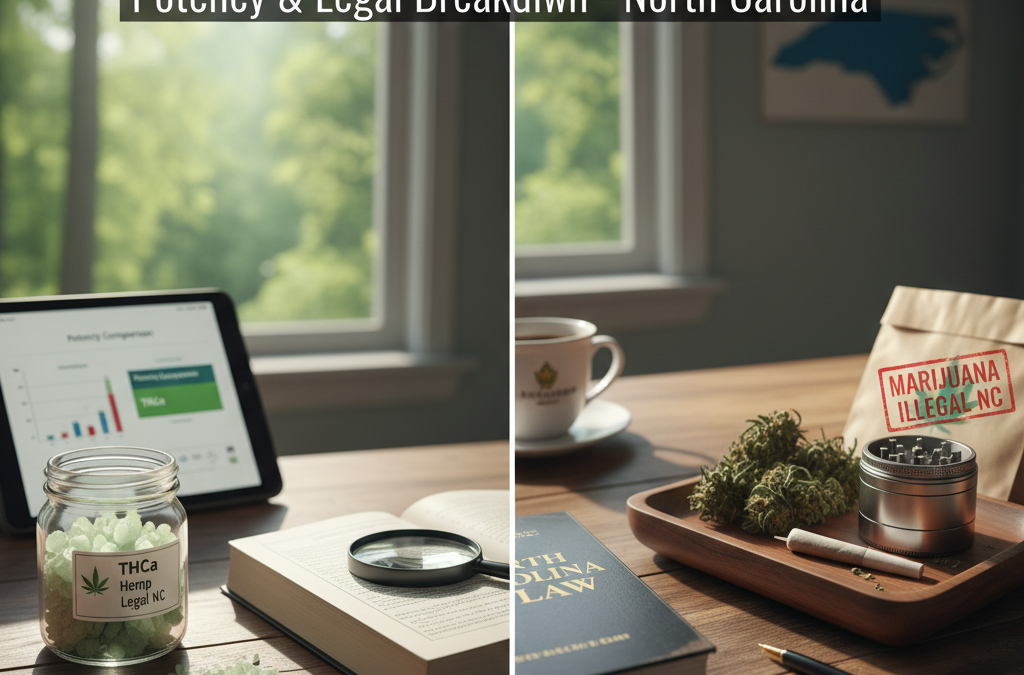
| NC Legal Status | Legal (Hemp) | Illegal (Controlled Substance) |
| Source | Licensed Hemp Farm | Illicit Market / Medical Programs |
Finding the Best Product: Local vs. Online Sourcing
For North Carolinians, access is easier than ever, but quality control is vital.
Buying Locally in NC
When you search for thca flower near me or thca flower nearby in Raleigh or Durham, you will find smoke shops and dispensaries popping up everywhere.
- Pro: You can see and smell the product before buying.
- Con: Not all local shops store the product correctly (remember, heat ruins compliance and freshness).
Buying Online
Many connoisseurs believe the best thca flower online offers superior freshness because it often ships directly from the grower or specialized climate-controlled warehouses.
- Pro: Access to fresh Lab Reports (COAs).
- Pro: Wider variety of strains.
If you are looking for the best places to buy thca flower, prioritize vendors who provide full-panel lab testing. Whether you decide to buy thca flower in-store or on the web, always verify the harvest date.
Grading the Bud: Standard vs. Exotic THCa Flower
Just like traditional cannabis, not all hemp is created equal. The market is currently seeing a surge in exotic thca flower. But what does that mean?
Exotic refers to the top-tier quality of the bud. It is defined by three main factors:
- Terpene Profile: A pungent, complex nose (smell) that indicates proper curing.
- Trichome Density: The “frosty” look. Higher trichome coverage usually means higher potency.
- Genetics: Rare or designer strains (like Runtz, Gelato, or MAC crosses) that offer unique flavor profiles.
Standard flower might get the job done, but exotic flower provides the connoisseur-level experience that many Raleigh residents are looking for.
The Future of THCa in North Carolina (2026 Outlook)
While the market is booming now, the regulatory landscape is shifting. The USDA and state lawmakers are constantly reviewing the “Total THC” testing requirements.
There are discussions regarding closing the “loophole” that allows high-THCa flower to be classified as hemp. By 2026, we may see stricter testing protocols that require testing after decarboxylation, which could change availability significantly.
To stay ahead of these changes, read our forward-looking analysis: 2026 North Carolina Hemp Law Update.
Conclusion: Buying Smart in the Tar Heel State
For now, THCa flower represents the golden standard for legal, potent cannabis consumption in North Carolina. It bridges the gap between strict prohibition and the desire for high-quality cannabis products.
Whether you are looking for relief or recreation, always buy smart. Check the COAs, ensure the Delta-9 levels are compliant (under 0.3%), and store your flower in a cool, dark place to maintain its legal status and potency. Enjoy the best the Tar Heel State has to offer, responsibly.